
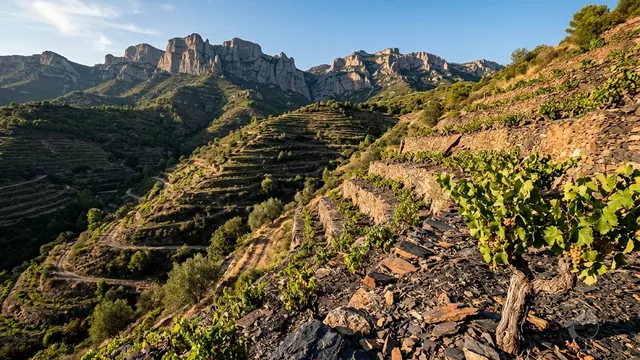
Priorat: why the hillside matters to flavour, structure and price
How Priorat’s steep slate slopes, its legal yield limits and its two main grapes, Garnacha and Cariñena, shape ripeness, structure and the cost of a bottle.
Updated ·
Maison Media
38 articles on wine in five chapters: terroirs that take the vine to its limits, Bordeaux and Burgundy, the New World, sparkling and fortified wines, and the science of the vineyard and the cellar. Filter by chapter, or search by title, grape or region.
Written practice: explaining wine styles
How Priorat’s steep slate slopes, its legal yield limits and its two main grapes, Garnacha and Cariñena, shape ripeness, structure and the cost of a bottle.
Updated ·
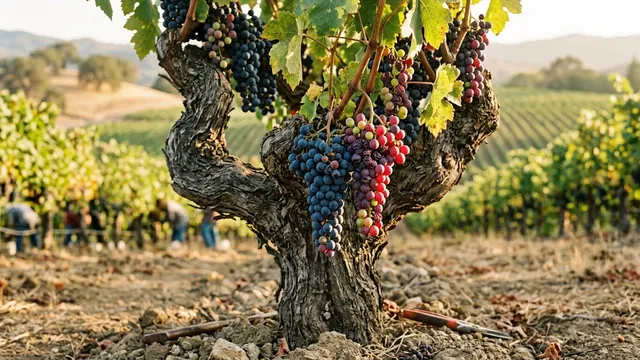
One black grape gives red Zinfandel, sweet White Zinfandel and dry rosé: skin contact sets colour and tannin, the fermentation endpoint sets sweetness.
Updated ·
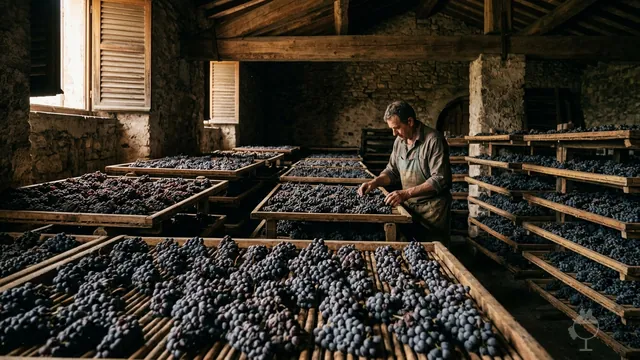
How drying the grapes, the point where fermentation stops and a second pass over pomace turn Valpolicella's grapes into Amarone, Recioto and Ripasso.
Updated ·

Appellation, vintage, producer and alcohol on one list line let you predict a wine’s structure before opening it, then test that guess in the glass.
Updated ·

Read a wine label the way the law does: what the place name, grape and vintage, alcohol figure and bottler statement must mean in the EU, the US and Japan.
Updated ·

Write down what you see, smell and taste before reading any score. What the rim, the tears, the nose and the palate can and cannot tell you.
Updated ·

Elgin lies about 70 km east of Cape Town, with vines on slopes of 250–500 m. Its growers say mist and cloud slow ripening and help the grapes keep acidity.
Updated ·

The Andes strip Pacific moisture from the westerlies, leaving Mendoza semi-arid and reliant on Andean water. Altitude adds UV, studied in Malbec skins.
Updated ·

The Vosges catch the westerly rain before it reaches the Alsace vineyards. Météo-France normals measure that dryness, and the Rhine rift explains the soils.
Updated ·

How the Mosel's steep slate slopes, cool climate and German wine law shape its Riesling, keeping measured facts apart from often-repeated claims.
Updated ·

Maritime, Mediterranean and continental climates: how climatologists draw the lines, and what Bordeaux, Napa Valley and Champagne show in practice.
Updated ·

Gravel croupes in Pauillac, starfish limestone in Saint-Émilion, clay and iron in Pomerol: Bordeaux's soils, and how they relate to two main grapes.
Updated ·

How Bordeaux brokers ranked the Médoc, Haut-Brion and Sauternes for the 1855 Paris Exposition, what the five growths mean, and the two changes made since.
Updated ·

Cool Ciron water, autumn mist and drying daytime air turn Botrytis cinerea into noble rot; strict harvest and sugar rules then define Sauternes.
Updated ·

Burgundy's climats are named vineyard parcels on some 50 km of slopes. Their rock, altitude and aspect, and why harvests start earlier.
Updated ·

Côte-Rôtie and Châteauneuf-du-Pape compared through their grape rules, the mistral and rotundone.
Updated ·

How Barolo’s rules tie Nebbiolo to the Langhe hills, how fog and marl mark those hills, and how Chianti’s rules once required white grapes.
Updated ·

Why the Barossa Valley can keep own-rooted vines from the 1840s, what Coonawarra's terra rossa really is, and where the minty note in their reds comes from.
Updated ·

Marlborough, in the north of New Zealand's South Island, and far-southern Central Otago share one country but differ in climate, rock and flagship grape.
Updated ·

How a cold current and Chile's Coastal Cordillera cool the coast, how Carmenère was identified in 1994, and what cluster light really does to green notes.
Updated ·

How summer marine fog and two mountain ranges shape the Napa Valley, and how to read the differences between its valley floor and its slopes.
Updated ·

Dead yeast left in the bottle after the second fermentation slowly digests itself. Here is how this autolysis shapes foam, texture and toasty aromas.
Updated ·

Sparkling wine gets its bubbles either in the bottle or in a sealed tank. How the two methods work, what time on the yeast changes, and what labels tell you.
Updated ·

How flor yeast, oxidative ageing and solera blending shape Sherry’s dry styles, from Fino to Oloroso, under the Jerez-Xérès-Sherry rules.
Updated ·

Port is fortified mid-fermentation with 77% vol grape spirit. How that step fixes sweetness and strength, and why ruby and tawny Ports age so differently.
Updated ·

Shoot positioning and leaf removal set the light and heat that reach grape clusters, and with them green-pepper IBMP, skin flavonols and colour.
Updated ·

Why French oak staves are split and American oak staves sawn, how much oxygen a new barrel lets into wine, and what toasting does to the wood.
Updated ·

Intact bunches let some berries ferment from within, while the stems add potassium and tannin and, if green, a risk of herbal notes. What studies show.
Updated ·

Bacteria turn malic acid into lactic acid. Why most reds complete malolactic conversion (MLC), why some whites avoid it, and what acidity and diacetyl decide.
Updated ·

How cork taint (TCA), reductive sulfur compounds, Brettanomyces and acetic spoilage arise, how they smell, and why SO2 protects better at low pH.
Updated ·

Koshu, Japan’s indigenous white-wine grape and first Japanese variety on the OIV list (2010): Kofu basin climate, alluvial fans, pergolas and GI Yamanashi.
Updated ·

Several countries make sweet wine from grapes shrivelled by noble rot, but each sets its minimum in a different unit. This article compares those rules.
Updated ·

Ice wine is pressed from grapes frozen on the vine, at −7 °C or colder (−8 °C in Ontario). The ice stays in the press; a sweet, acidic must runs off.
Updated ·

Fog, rivers and lakes change vineyard temperature and humidity in different ways. This article separates what weather and farm sources support from tradition.
Updated ·

Cold currents chill west coasts through upwelling, fog and sea breeze; warm currents mainly soften winters. Six wine coasts, from Chile to Western Australia.
Updated ·

Mountains lift moist air and leave drier ground on their lee side. Sourced figures and texts compare the Cascades, Sierra Nevada, Vosges, Andes and Alps.
Updated ·

Air cools by about 0.65 °C per 100 m of height on average. Slope steers cold air and frost; aspect decides the sun. All are tendencies: local ground decides.
Updated ·

Winkler, Huglin and growing season temperature squeeze the same weather into one number each. What each counts, what it misses, and how growers use it.
Updated ·
No stories found matching your search. Try different keywords.