What ice wine is, and what it is not
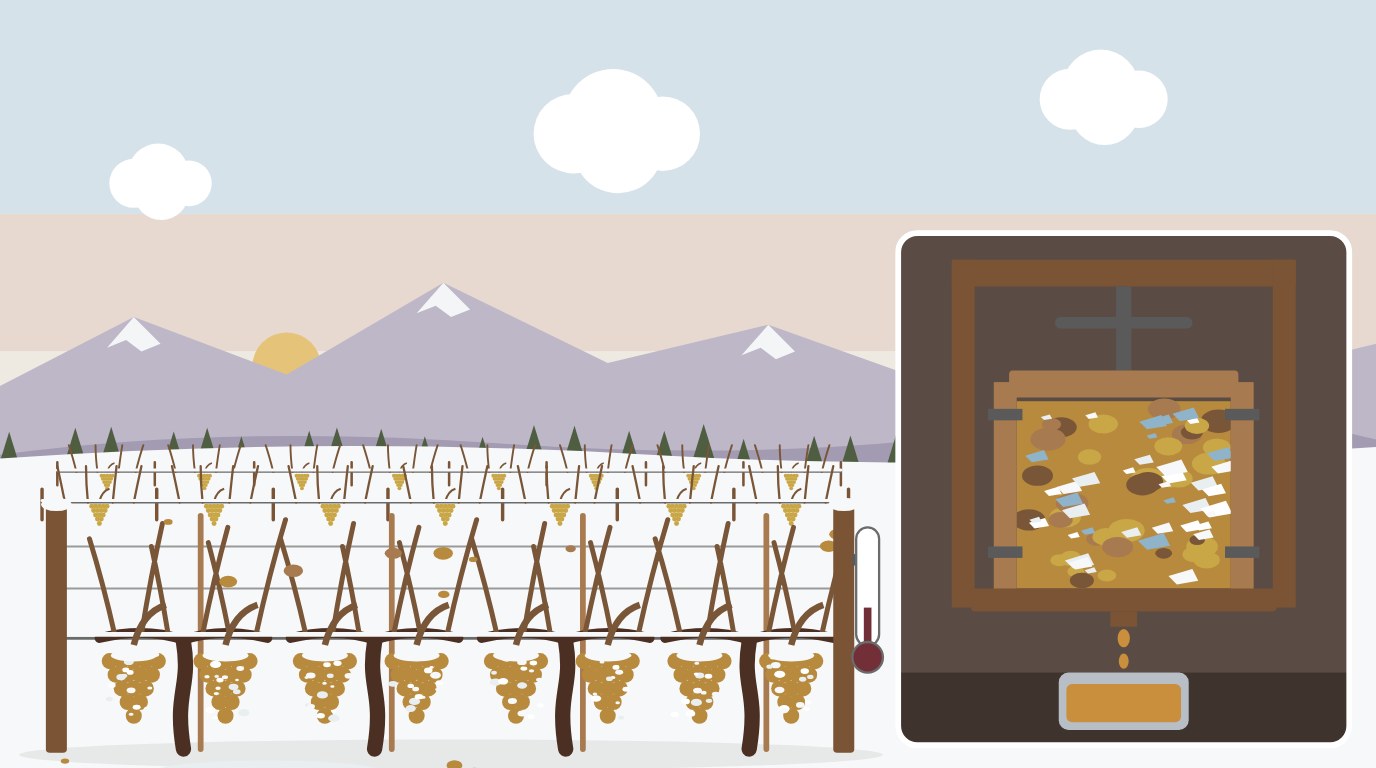
Ice wine, called Eiswein in Germany and Austria and icewine in Canada, is a sweet wine made from grapes that freeze naturally while they hang on the vine. The grapes are picked frozen and pressed frozen. What makes it ice wine is where the concentration comes from: the water leaves the juice as ice, not as vapour and not through a fungus.
The OIV, the intergovernmental wine organisation, describes icewine as the product of cryoselection in the vineyard without physical procedures. The grapes are frozen at harvest and pressed frozen, a temperature of −7 °C or lower is recommended, the must may not be enriched, and the potential alcohol must reach at least 15 % vol, which the OIV puts at 110 degrees Oechsle or 25.3 °Brix. National rules differ in the details, as the next three sections show.
Germany: Eiswein as a Prädikat
In Germany, Eiswein is one of the Prädikat levels. According to the Deutsches Weininstitut (DWI), the grapes must be frozen at harvest and during pressing, at −7 °C or colder, and only the concentrate is pressed out. The German Wine Act (Weingesetz) likewise requires Eiswein grapes to be frozen at harvest and pressing. Eiswein became a Prädikat of its own in the 1982 revision of the law.
The minimum must weight is that of a Beerenauslese of the region, which the DWI gives as 110 to 128 degrees Oechsle depending on the region. The DWI adds that a good Eiswein needs healthy grapes without botrytis character, and that its style is dense concentration with comparatively high acidity. Rheinhessen and the Mosel are among the regions where it has been harvested. Yields are tiny: the DWI gives about 300 to 500 litres per hectare.
Austria and the OIV: the same core, other units
Austria’s Weingesetz 2009 (§ 11) defines Eiswein as a Prädikat wine from grapes that were frozen at harvest and pressing, with a must of at least 25 degrees KMW (Klosterneuburger Mostwaage), about 127 degrees Oechsle, and no enrichment or sweetening. The federal ministry (BML) and Österreich Wein Marketing say the grapes are harvested at −7 °C or colder and pressed frozen, so that only the concentrate is obtained. Österreich Wein describes slow pressing over several hours in spindle presses, in which the ice crystals are held back and the concentrate, whose freezing point is lower, runs off. Austrian sources date the first Austrian Eiswein to 1971, near the Neusiedler See.
The German, Austrian and OIV rules agree on the core: grapes frozen by nature on the vine and pressed frozen. They differ in how they measure sugar, in degrees Oechsle by region in Germany, in degrees KMW in Austria and in °Brix in Ontario.
Canada: Icewine in Ontario and Niagara
Canadian federal rules define icewine as wine made exclusively from grapes naturally frozen on the vine; the provincial authority verifies it. The federal Icewine Regulations (SOR/2014-10) were repealed in January 2019, and the definition now sits in the Canadian Standards of Identity (Volume 8) published by the CFIA.
The numbers come from VQA Ontario. Its Icewine is harvested at −8 °C or lower and must reach at least 35 °Brix, and the vintage must appear on the label. VQA Ontario places Icewine at the top of its Late Harvest category. Wine Country Ontario names Vidal, Riesling and Cabernet Franc among the grapes used. The Niagara Peninsula lies near 43° N; Lake Ontario moderates its climate and the escarpment helps air circulate.
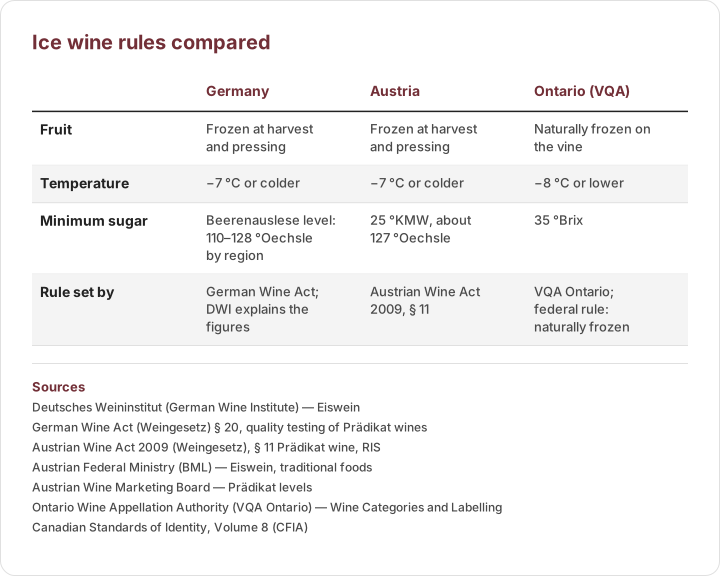
Diagram drawn from sourced data
Values from the DWI, the Austrian federal ministry and Österreich Wein, VQA Ontario and the legal texts named below. Federal Canadian rules require grapes naturally frozen on the vine; the temperature and sugar figures are VQA Ontario’s.
| Germany | Austria | Ontario (VQA) | |
|---|---|---|---|
| Fruit | Frozen at harvest and pressing | Frozen at harvest and pressing | Naturally frozen on the vine |
| Temperature | −7 °C or colder | −7 °C or colder | −8 °C or lower |
| Minimum sugar | Beerenauslese level: 110–128 °Oechsle by region | 25 °KMW, about 127 °Oechsle | 35 °Brix |
| Rule set by | German Wine Act; DWI explains the figures | Austrian Wine Act 2009, § 11 | VQA Ontario; federal rule: naturally frozen |
Sources
- Deutsches Weininstitut (German Wine Institute) — Eiswein
- German Wine Act (Weingesetz) § 20, quality testing of Prädikat wines
- Austrian Wine Act 2009 (Weingesetz), § 11 Prädikat wine, RIS
- Austrian Federal Ministry (BML) — Eiswein, traditional foods
- Austrian Wine Marketing Board — Prädikat levels
- Ontario Wine Appellation Authority (VQA Ontario) — Wine Categories and Labelling
- Canadian Standards of Identity, Volume 8 (CFIA)
What freezing does in the press
A grape is mostly water that carries sugar, acids and flavour compounds. When the berry freezes, the water turns to ice, while the sugar-rich liquid, whose freezing point is lower than that of water, stays liquid. The DWI describes how the water stays behind as ice in the press and only the sweetest juice runs off as a highly concentrated must. That is why the grapes are pressed in the cold of a winter morning, slowly, and why so little juice comes out.
The concentration is a physical separation, not evaporation. Sugar and acid both stay in the little juice that runs, which is why Eiswein is described as dense with comparatively high acidity. The rules set a temperature threshold (−7 °C in Germany, Austria and the OIV text, −8 °C in Ontario), not a promised degree of concentration, and the sources used here give no multiple, so this article states none.
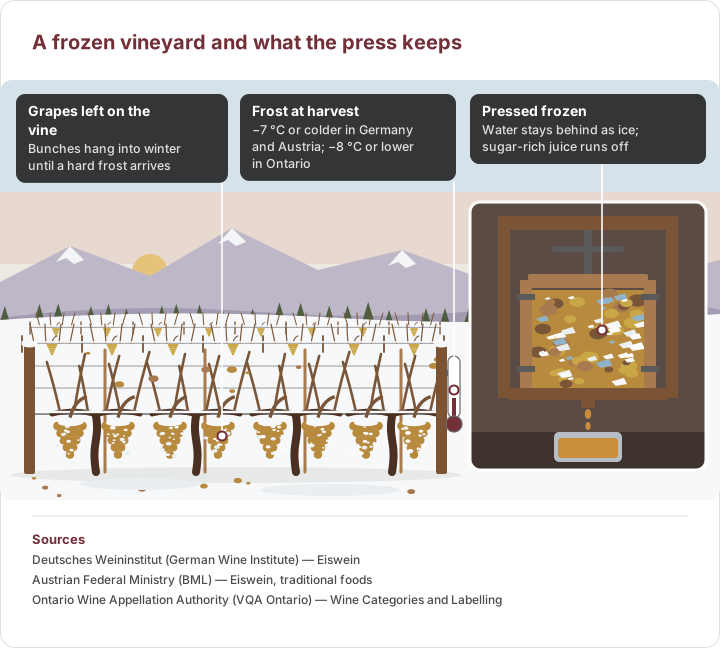
Diagram drawn from sourced data
Grapes left on the vine freeze in the cold; in the press the ice stays behind and only the sugar-rich juice runs off. The thresholds are those of the German and Austrian rules and of VQA Ontario. Shapes and colours are illustrative.
- Grapes left on the vine — Bunches hang into winter until a hard frost arrives
- Frost at harvest — −7 °C or colder in Germany and Austria; −8 °C or lower in Ontario
- Pressed frozen — Water stays behind as ice; sugar-rich juice runs off
Ice wine, noble rot and cryoextraction
Noble rot also concentrates sugar and acid, but by another route: the fungus Botrytis cinerea lets water leave the berry through the skin. According to the DWI, Beerenauslese and Trockenbeerenauslese often come from botrytis-affected berries, while a good Eiswein calls for healthy grapes. The German minimum must weight of Eiswein is the same as that of a Beerenauslese, so two wines can start from the same sugar level by opposite routes. Our articles on noble rot wines of the world and on Sauternes follow the botrytis route.
Cellar techniques that freeze fruit are a different matter. A peer-reviewed study describes cryoextraction as freezing harvested grapes, for example with liquid nitrogen, so that ice crystals break cell walls and help extraction. The OIV codes cryoconcentration, freezing and removing ice, as a separate practice. Because the OIV definition requires cryoselection in the vineyard without physical procedures and the German and Austrian rules require grapes frozen at harvest, these techniques do not make ice wine under those rules.
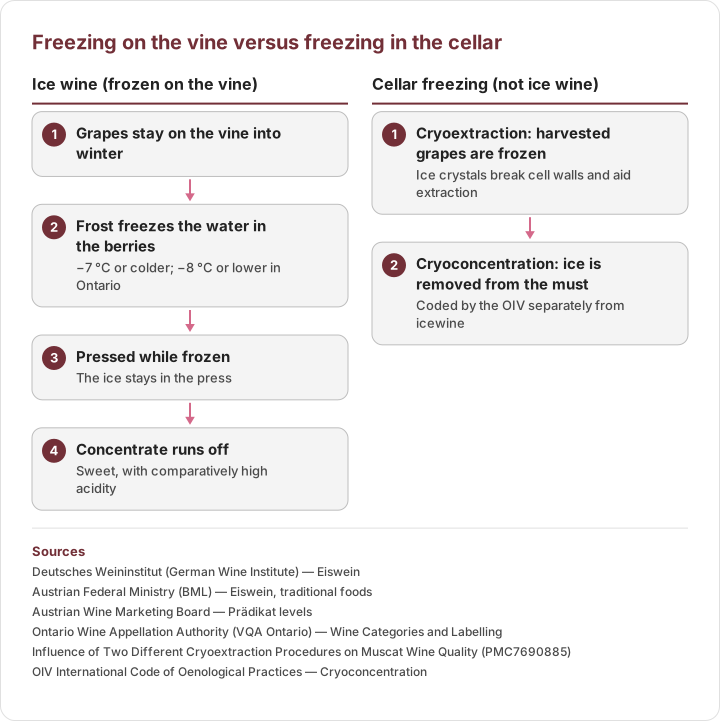
Diagram drawn from sourced data
Only the first lane meets the ice wine definitions discussed here. The second lane names two cellar techniques that the OIV and the research literature describe separately.
Ice wine (frozen on the vine)
- Grapes stay on the vine into winter
- Frost freezes the water in the berries — −7 °C or colder; −8 °C or lower in Ontario
- Pressed while frozen — The ice stays in the press
- Concentrate runs off — Sweet, with comparatively high acidity
Cellar freezing (not ice wine)
- Cryoextraction: harvested grapes are frozen — Ice crystals break cell walls and aid extraction
- Cryoconcentration: ice is removed from the must — Coded by the OIV separately from icewine
Sources
- Deutsches Weininstitut (German Wine Institute) — Eiswein
- Austrian Federal Ministry (BML) — Eiswein, traditional foods
- Austrian Wine Marketing Board — Prädikat levels
- Ontario Wine Appellation Authority (VQA Ontario) — Wine Categories and Labelling
- Influence of Two Different Cryoextraction Procedures on Muscat Wine Quality (PMC7690885)
- OIV International Code of Oenological Practices — Cryoconcentration
Risk, yield and a warming climate
Ice wine asks the grower to wait. The grapes must hang until a hard frost arrives, if it arrives at all, and the DWI has reported a vintage in which Eiswein was a rarity after a mild winter. Yields in Germany are small, about 300 to 500 litres per hectare according to the DWI. We give no percentages for losses to birds, rot or drying, because we found no primary source for them.
A 2026 open-access review in the journal Foods describes ice wine production as limited to small areas and very sensitive to winter warming, and discusses adaptation strategies. For the reader this means that an ice wine label tells you about a winter as much as about a vineyard.
Exercise: the rules and the route
[Question]
Explain what makes a wine an ice wine under the German, Austrian and Ontario rules, and how it differs from a wine concentrated by noble rot.
[Model answer]
Under all three rule sets the grapes freeze naturally on the vine and are pressed frozen, so the water stays in the press as ice and a concentrated must runs off. Germany and Austria use −7 °C or colder and Ontario VQA −8 °C or lower. Sugar is measured differently: at least the Beerenauslese level of 110 to 128 degrees Oechsle in Germany, 25 degrees KMW in Austria and 35 °Brix in Ontario. A noble rot wine is concentrated by the fungus Botrytis, which lets water leave through the skin, whereas ice wine wants healthy grapes and removes water as ice.
[Mark scheme (6 marks)]
• States natural freezing on the vine and frozen pressing (2 marks)
• Gives the temperature thresholds of −7 °C and −8 °C and one sugar threshold with its unit (2 marks)
• Contrasts water removed as ice with water lost through botrytis-affected skin (2 marks)
Vine
- Grapes hang on the vine into winter
- Frost freezes the water in the berries
- Picked frozen
Press
- Pressed while frozen, slowly
- Ice stays in the press
- A concentrated must runs off
Glass
- Sweet and dense
- Comparatively high acidity
- To be checked by tasting each wine
Frequently asked questions
What temperature does ice wine need?
In Germany and Austria the grapes are harvested and pressed at −7 °C or colder, and the OIV recommends −7 °C or lower. VQA Ontario requires −8 °C or lower and a juice of at least 35 °Brix.
Why is ice wine so sweet and still fresh?
The water in the berries freezes and stays in the press as ice, while the sugar-rich liquid, whose freezing point is lower, runs off. Sugar and acid both remain in the small amount of juice, so the wine is dense with comparatively high acidity.
Is wine from grapes frozen in a freezer ice wine?
No. The OIV definition requires cryoselection in the vineyard without physical procedures, and German and Austrian law require grapes frozen at harvest. Freezing harvested grapes is called cryoextraction and is a different technique.
Sources
- Deutsches Weininstitut (German Wine Institute) — Eiswein
- Deutsches Weininstitut (German Wine Institute) — Prädikat levels
- Deutsches Weininstitut — 2024 Eiswein is a rarity (news)
- German Wine Act (Weingesetz) § 20, quality testing of Prädikat wines
- Austrian Wine Act 2009 (Weingesetz), § 11 Prädikat wine, RIS
- Austrian Federal Ministry (BML) — Eiswein, traditional foods
- Austrian Wine Marketing Board — Prädikat levels
- Icewine Regulations SOR/2014-10 (repealed), Justice Laws Website
- Canadian Standards of Identity, Volume 8 (CFIA)
- Ontario Wine Appellation Authority (VQA Ontario) — Wine Categories and Labelling
- Wine Country Ontario — Icewine
- VQA Ontario — Niagara Peninsula
- OIV International Code of Oenological Practices — Icewine / Eiswein
- OIV International Code of Oenological Practices — Cryoconcentration
- Influence of Two Different Cryoextraction Procedures on Muscat Wine Quality (PMC7690885)
- Ice Wines Under the Shadow of Global Warming (Foods 15(19):3422)