What noble rot does to the berry
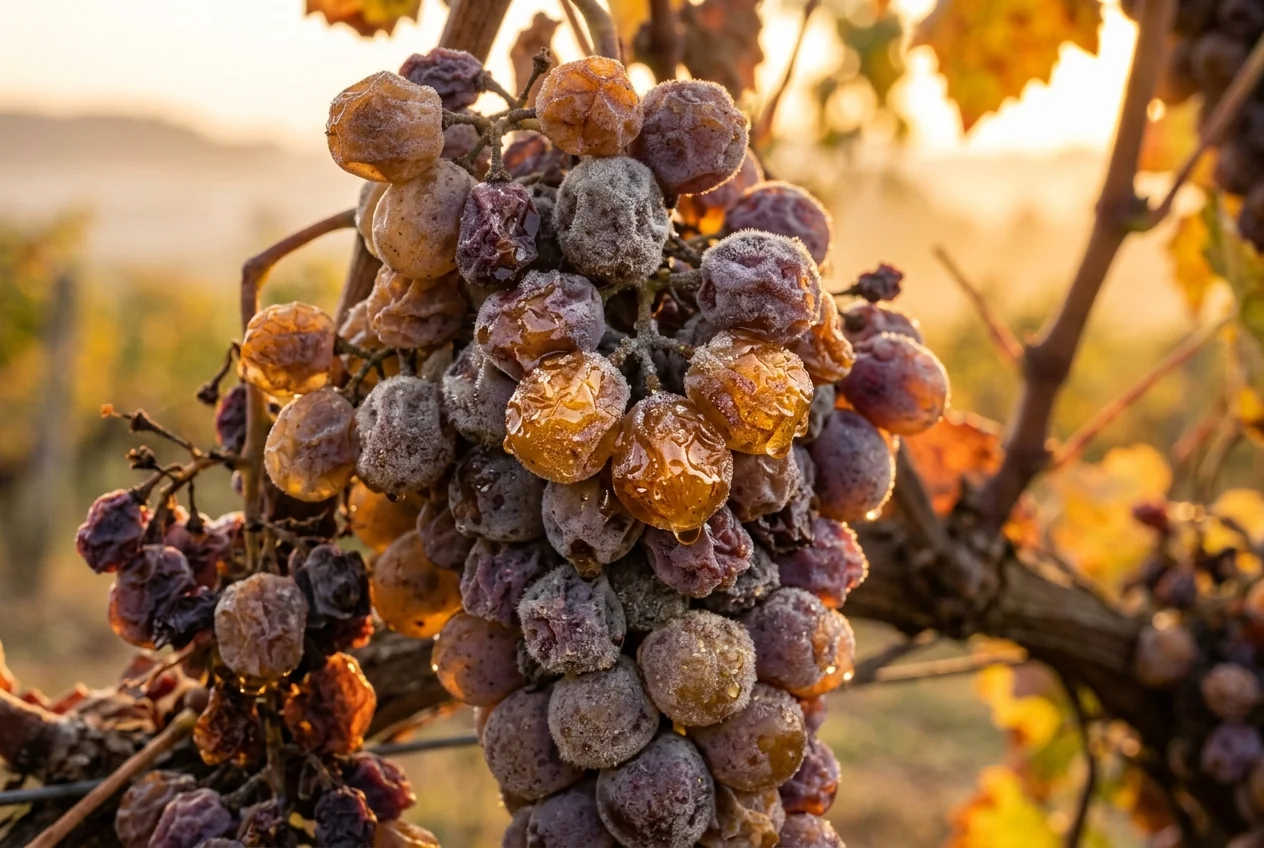
Noble rot is the work of Botrytis cinerea, the same grey fungus that causes grey rot. It infects ripe, sound berries. Research on white-skinned grapes shows that during noble rot the waxy cuticle of the berry cracks and the berry dehydrates, so it shrivels and its sugar is concentrated (Blanco-Ulate et al.).
The fungus also changes the berry's chemistry. Sugar alcohols such as glycerol rise, the ratio of glucose to fructose falls and tartaric acid declines, while gluconic and mucic acids accumulate (Blanco-Ulate et al.; the Garganega study). The berry responds differently in noble rot and in grey rot, although the fungus is the same (PMC11333459).
This article gives no figure for how much water a berry loses, because the sources cited here do not state one that Maison has verified.
Why damp mornings and dry afternoons matter
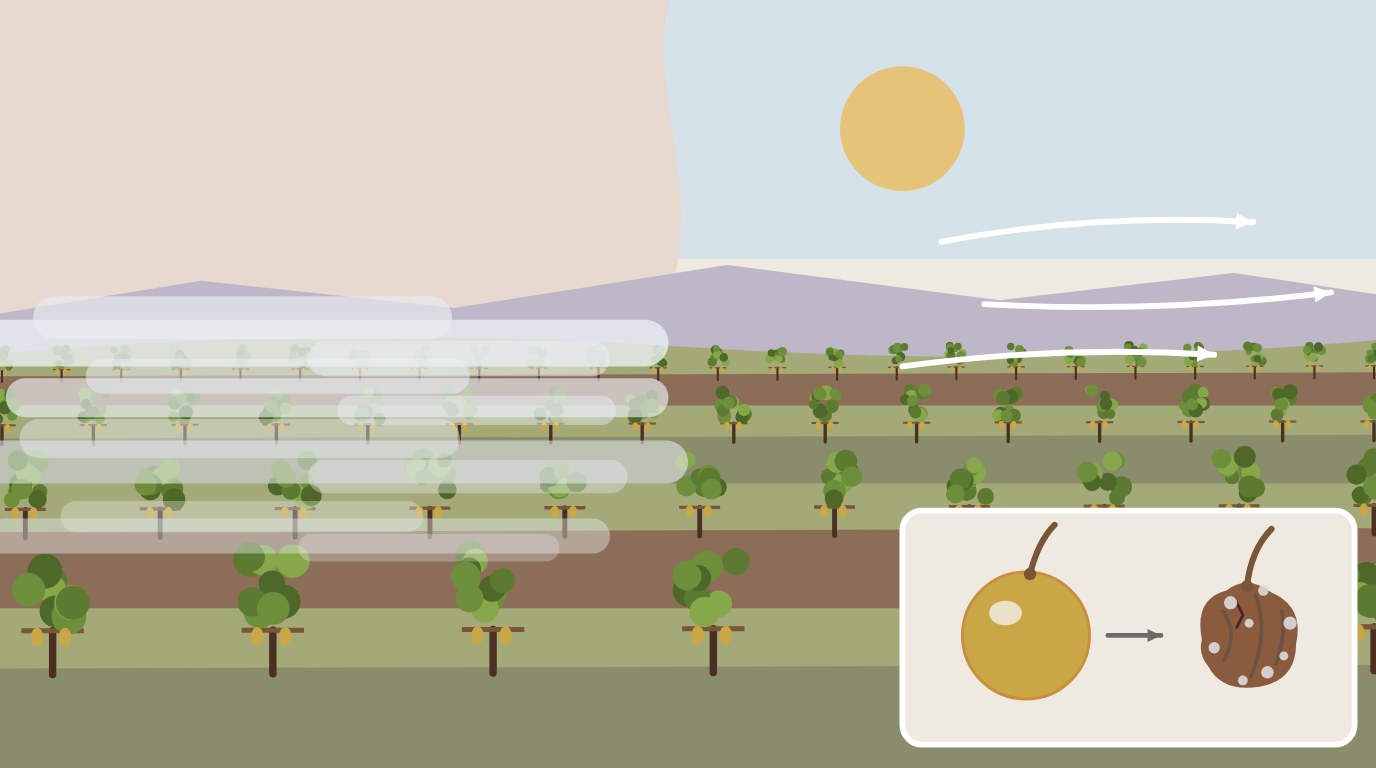
Noble rot needs two kinds of weather in sequence. Moisture lets the fungus infect ripe grapes, and if the damp lasts, the infection turns into damaging grey rot. If drier weather follows, the berries dry out and the rot stays noble (PMC11333459). The Sauternes cahier des charges describes the same alternation: humid nights, then rapid and strong ventilation by day (INAO).
How the Ciron and the Garonne make the autumn mist is explained in the article on Sauternes and the alchemy of noble rot, and is not repeated here. The sections below compare what each country writes into its rules for the grapes that result.
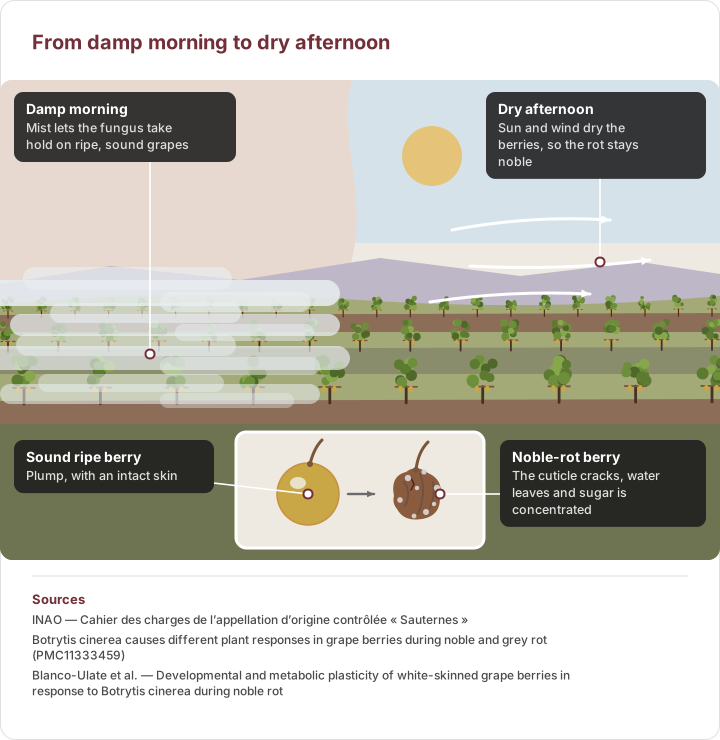
Diagram drawn from sourced data
Mist lets the fungus infect ripe grapes, and dry sun and wind then dry the berries so the rot stays noble. The two berries show a sound grape beside a noble-rotted one. Shapes and colours are illustrative.
- Damp morning — Mist lets the fungus take hold on ripe, sound grapes
- Dry afternoon — Sun and wind dry the berries, so the rot stays noble
- Sound ripe berry — Plump, with an intact skin
- Noble-rot berry — The cuticle cracks, water leaves and sugar is concentrated
Sources
- INAO — Cahier des charges de l’appellation d’origine contrôlée « Sauternes »
- Botrytis cinerea causes different plant responses in grape berries during noble and grey rot (PMC11333459)
- Blanco-Ulate et al. — Developmental and metabolic plasticity of white-skinned grape berries in response to Botrytis cinerea during noble rot
France: Sauternes, Barsac, Quarts de Chaume, Bonnezeaux and Alsace
The Sauternes cahier des charges requires grapes harvested overripe with noble rot, picked by hand in successive passes called tries, and treats 221 grams of sugar per litre of must as the threshold of good ripeness. Sauternes and Barsac wines must each contain at least 45 grams per litre of fermentable sugars (glucose and fructose) when marketed or bottled. The yield for Sauternes is 25 hectolitres per hectare.
On the Loire, Quarts de Chaume and Bonnezeaux are made from Chenin alone. Quarts de Chaume allows concentration by noble rot or by passerillage (drying on the vine) and sets a must sugar of 298 grams per litre. Bonnezeaux requires manual, successive picking, a grape sugar of 238 grams per litre, at least 51 grams per litre of fermentable sugars and a yield of 25 hectolitres per hectare. Maison read these two Loire figures in extracts of the INAO documents and will re-check them against the full texts.
Alsace Sélection de Grains Nobles is made from botrytised berries sorted at harvest, from Gewurztraminer, Muscat, Muscat Ottonel, Pinot Gris and Riesling (CIVA). The cahier des charges of the AOC Alsace sets a minimum sugar for the must at harvest: 276 grams of sugar per litre of must for Riesling and Muscat, and 306 grams per litre for Gewurztraminer and Pinot Gris. For comparison, it sets 235 and 257 grams per litre for the same two groups in Vendanges Tardives. These minimums have applied since the 2001 harvest, when they were raised (INAO).
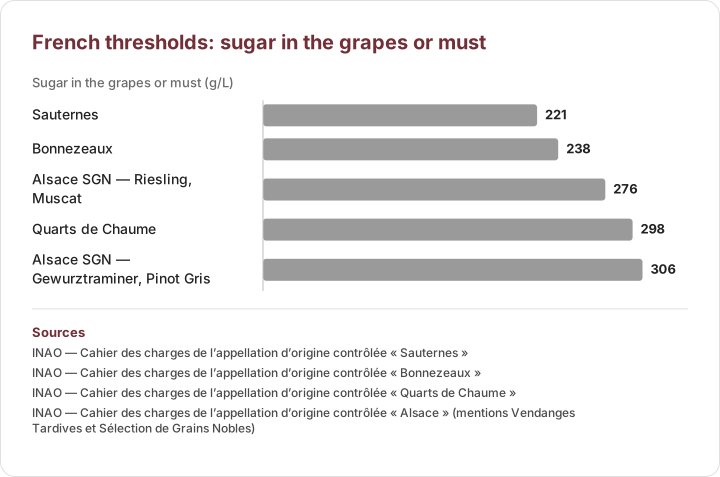
Diagram drawn from sourced data
Minimum sugar figures stated in the French cahiers des charges, in grams per litre of grapes or must at harvest. They are not comparable with German °Oe, Austrian °KMW or Tokaj's residual sugar in the finished wine.
Sugar in the grapes or must (g/L)
- Sauternes: 221 g/L
- Bonnezeaux: 238 g/L
- Alsace SGN — Riesling, Muscat: 276 g/L
- Quarts de Chaume: 298 g/L
- Alsace SGN — Gewurztraminer, Pinot Gris: 306 g/L
Sources
- INAO — Cahier des charges de l’appellation d’origine contrôlée « Sauternes »
- INAO — Cahier des charges de l’appellation d’origine contrôlée « Bonnezeaux »
- INAO — Cahier des charges de l’appellation d’origine contrôlée « Quarts de Chaume »
- INAO — Cahier des charges de l’appellation d’origine contrôlée « Alsace » (mentions Vendanges Tardives et Sélection de Grains Nobles)
Germany and Austria: must weight scales
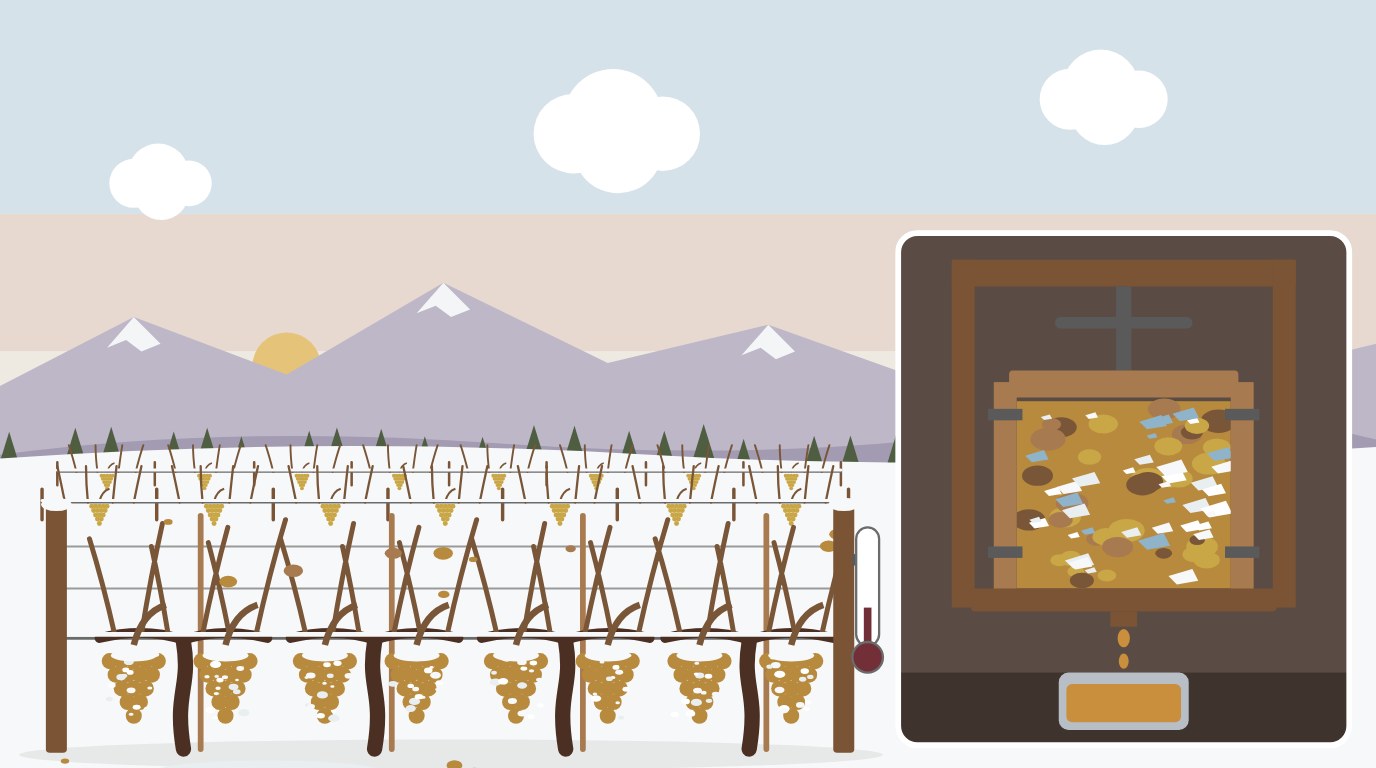
German Prädikat wines are classified by the sugar content of the must, measured in degrees Oechsle (°Oe), and the minimum depends on region and grape variety (Weinverordnung). For Beerenauslese the German Wine Institute gives about 110 to 128 °Oe depending on region and variety, and for Trockenbeerenauslese about 150 to 154 °Oe. For the Rheingau, the Darmstadt regional authority lists 125 °Oe for Beerenauslese and 150 °Oe for Trockenbeerenauslese. The Weinverordnung allows noble-rotted or at least overripe berries for Beerenauslese, and for Trockenbeerenauslese requires largely shrivelled noble-rotted berries, accepting overripe shrivelled berries only when noble rot exceptionally did not occur. Prädikat wines may not be enriched with sugar.
In Austria, § 11 of the Weingesetz 2009 sets minimum must weights in degrees KMW (Klosterneuburger Mostwaage): at least 25 for Beerenauslese, 30 for Trockenbeerenauslese and 27 for Ausbruch. The Oechsle and KMW scales are different, so the two sets of numbers cannot be compared directly.
Tokaj: aszú berries and residual sugar
In Tokaj, the aszú berries are noble-rotted berries picked separately and macerated in must or base wine (Wines of Tokaj). Since the 2013 harvest the product specification has set a minimum of 120 grams per litre of residual sugar in the finished Tokaji Aszú. The former categories of 3 and 4 puttonyos disappeared, and stating a number of puttonyos on the label became optional (Tokaj Today). Aszú is aged for at least 18 months in cask (Wines of Tokaj).
Note what this figure measures: sugar left in the wine, not sugar in the grapes.
Reading the numbers across countries
The figures are not on the same footing. France states sugar in the grapes or must (221, 238 and 298 grams per litre) and, for Sauternes, Barsac and Bonnezeaux, a floor of fermentable sugar in the wine (45, 45 and 51 grams per litre). Germany and Austria state must weight on their own scales (°Oe and °KMW). Tokaj states residual sugar in the finished wine (120 grams per litre).
Converting between them would need the density tables of each law, which are not among the sources here. The table below therefore keeps each unit as its source states it, and ranks nothing.
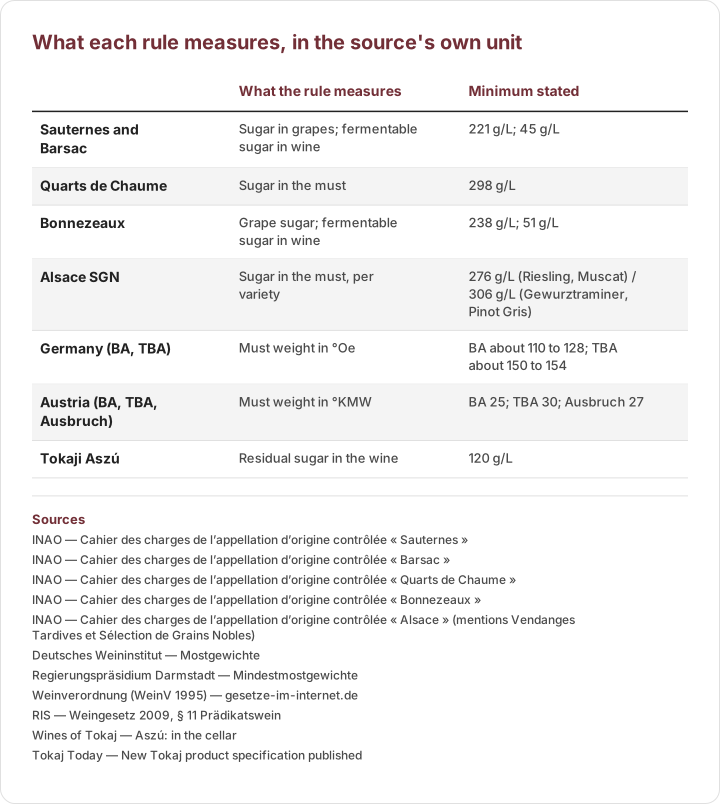
Diagram drawn from sourced data
Each cell keeps the unit and wording of its source. The rows are not ranked, because a must figure and a figure for the finished wine are different things.
| What the rule measures | Minimum stated | |
|---|---|---|
| Sauternes and Barsac | Sugar in grapes; fermentable sugar in wine | 221 g/L; 45 g/L |
| Quarts de Chaume | Sugar in the must | 298 g/L |
| Bonnezeaux | Grape sugar; fermentable sugar in wine | 238 g/L; 51 g/L |
| Alsace SGN | Sugar in the must, per variety | 276 g/L (Riesling, Muscat) / 306 g/L (Gewurztraminer, Pinot Gris) |
| Germany (BA, TBA) | Must weight in °Oe | BA about 110 to 128; TBA about 150 to 154 |
| Austria (BA, TBA, Ausbruch) | Must weight in °KMW | BA 25; TBA 30; Ausbruch 27 |
| Tokaji Aszú | Residual sugar in the wine | 120 g/L |
Sources
- INAO — Cahier des charges de l’appellation d’origine contrôlée « Sauternes »
- INAO — Cahier des charges de l’appellation d’origine contrôlée « Barsac »
- INAO — Cahier des charges de l’appellation d’origine contrôlée « Quarts de Chaume »
- INAO — Cahier des charges de l’appellation d’origine contrôlée « Bonnezeaux »
- INAO — Cahier des charges de l’appellation d’origine contrôlée « Alsace » (mentions Vendanges Tardives et Sélection de Grains Nobles)
- Deutsches Weininstitut — Mostgewichte
- Regierungspräsidium Darmstadt — Mindestmostgewichte
- Weinverordnung (WeinV 1995) — gesetze-im-internet.de
- RIS — Weingesetz 2009, § 11 Prädikatswein
- Wines of Tokaj — Aszú: in the cellar
- Tokaj Today — New Tokaj product specification published
Practice question: comparing the numbers
[Question]
Quarts de Chaume has a must-sugar figure of 298 g/L and Tokaji Aszú a residual-sugar minimum of 120 g/L. Explain why these two numbers do not show that Quarts de Chaume is the sweeter wine.
[Model answer]
The two numbers measure different things. The 298 g/L is sugar in the must before fermentation, while the 120 g/L is the minimum sugar left in the finished wine. Fermentation turns part of the must sugar into alcohol, so a must figure does not tell you how much sugar remains. To compare sweetness, both wines need the same measure, for example the sugar in the finished wine.
[Self-check (4 points)]
• Says that 298 g/L is must sugar before fermentation (1 point)
• Says that 120 g/L is residual sugar in the finished wine (1 point)
• Explains that fermentation turns part of the sugar into alcohol (1 point)
• Concludes that a like-for-like measure is needed (1 point)
Weather
- Damp mornings let the fungus take hold
- Dry afternoons dry the berries
- The rot stays noble, not grey
Berry
- The cuticle cracks and water leaves
- Sugar and glycerol are concentrated
- Gluconic acid accumulates
Rules
- France: sugar in grapes or must, in g/L
- Germany and Austria: must weight scales
- Tokaj: residual sugar in the wine
Frequently asked questions
What is noble rot?
Noble rot is the beneficial form of the fungus Botrytis cinerea. On ripe, sound grapes followed by drier weather, the berry's cuticle cracks, the berry dehydrates and its sugar is concentrated, while glycerol and gluconic acid rise. In persistent damp the same fungus causes grey rot.
Do all noble rot wines use the same minimum sugar?
No. France states sugar in the grapes or must in g/L, Germany uses degrees Oechsle, Austria uses degrees KMW (at least 25 for Beerenauslese, 30 for Trockenbeerenauslese, 27 for Ausbruch) and Tokaj states 120 g/L of residual sugar in the finished wine. The units differ, so the numbers cannot be ranked directly.
Does Tokaji Aszú still use puttonyos?
The product specification applied since the 2013 harvest sets a minimum of 120 g/L of residual sugar and dropped the former 3 and 4 puttonyos categories. Stating a number of puttonyos on the label is now optional.
Sources
- INAO — Cahier des charges de l’appellation d’origine contrôlée « Sauternes »
- INAO — Cahier des charges de l’appellation d’origine contrôlée « Barsac »
- INAO — Cahier des charges de l’appellation d’origine contrôlée « Quarts de Chaume »
- INAO — Cahier des charges de l’appellation d’origine contrôlée « Bonnezeaux »
- INAO — Cahier des charges de l’appellation d’origine contrôlée « Alsace » (mentions Vendanges Tardives et Sélection de Grains Nobles)
- Vins d’Alsace (CIVA) — Sélection de Grains Nobles
- RIS — Weingesetz 2009, § 11 Prädikatswein
- Weinverordnung (WeinV 1995) — gesetze-im-internet.de
- Regierungspräsidium Darmstadt — Mindestmostgewichte
- Deutsches Weininstitut — Mostgewichte
- Wines of Tokaj — Aszú: in the cellar
- Tokaj Today — New Tokaj product specification published
- Botrytis cinerea causes different plant responses in grape berries during noble and grey rot (PMC11333459)
- Blanco-Ulate et al. — Developmental and metabolic plasticity of white-skinned grape berries in response to Botrytis cinerea during noble rot
- Induction of noble rot during postharvest withering changes the metabolome of Garganega grapes (PMC5478704)