
The style to explain
Priorat is an inland wine region in Catalunya, north-eastern Spain, where powerful reds often combine ripe red and black fruit with substantial alcohol, tannin and body. Explaining that style requires more than naming a hot climate and slate soil. We need to connect the growing environment to the composition of the grapes, and then connect fermentation, extraction and maturation to the finished wine.
Garnatxa, the local name for Grenache, and Carinyena, or Carignan, provide the central comparison. A blend can combine Grenache’s generous fruit and alcohol with Carignan’s acidity, colour and tannic structure. Their proportions, the vineyard and the harvest date help explain why wines from the same region can differ in freshness and weight.
Warmth supplies ripeness; altitude and exposure change the balance
The coastal mountain range reduces the Mediterranean’s moderating influence. Summers are hot and the growing season receives little rain. Sufficient warmth and sunshine allow these late-ripening grapes to develop ripe flavours and accumulate sugar. During alcoholic fermentation, yeast converts fermentable sugar into alcohol: ripe fruit therefore gives the producer the potential to make a high-alcohol wine. Alcohol contributes to the impression of body and warmth.
Acidity needs a separate explanation. Grapes lose malic acid as they ripen, particularly in warm conditions. Cooler, higher vineyards or less sun-exposed slopes can slow ripening and help retain acidity. A warmer, exposed slope can reach the desired sugar level sooner. These contrasts make harvest timing important: waiting for softer, riper tannins may also mean more sugar and less acidity. A producer must balance those changes, rather than simply harvest as late as possible.
Llicorella: explain water and growth, not a flavour of rock
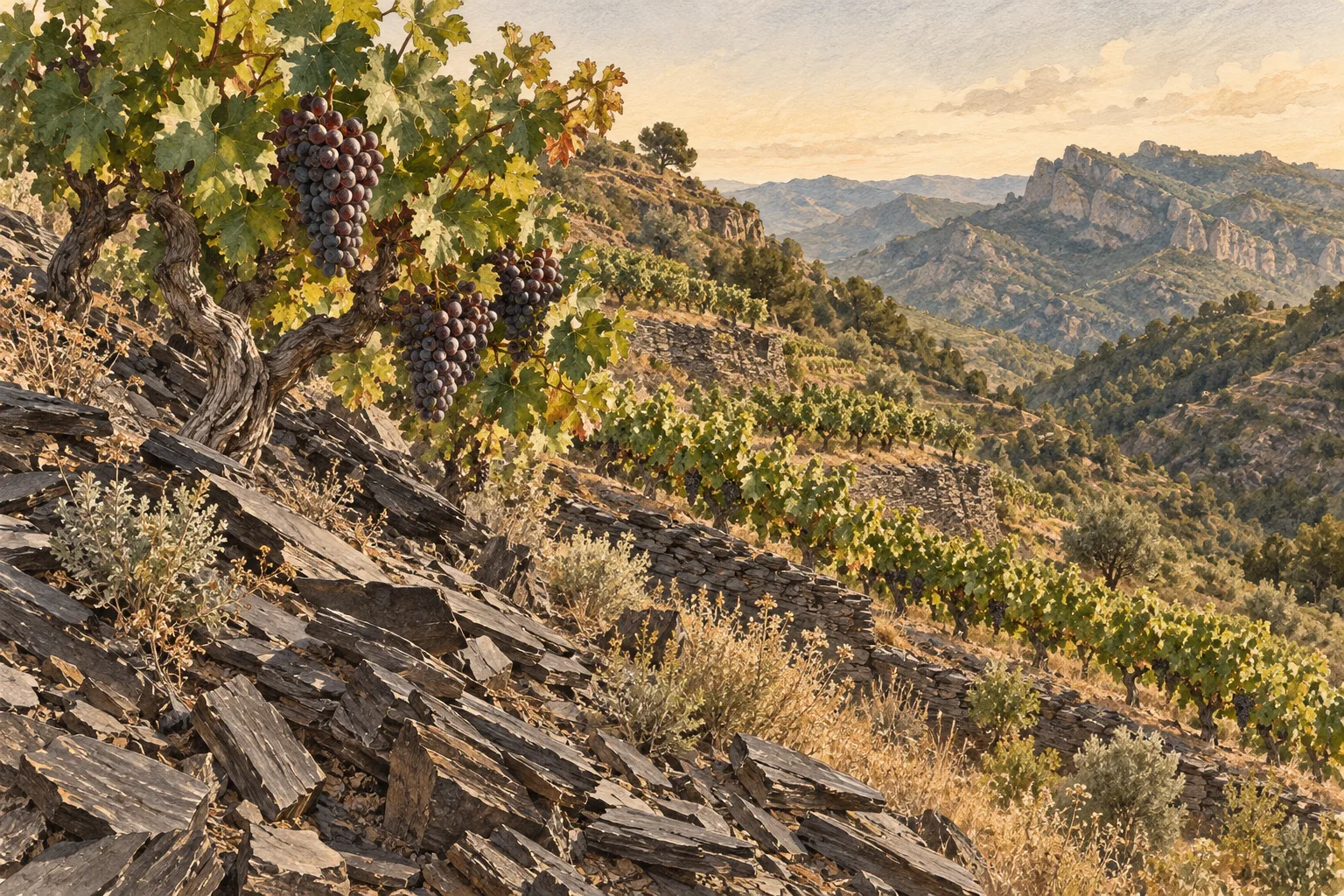
The characteristic llicorella is weathered slate, found in rocky soils that are often shallow and poor in organic matter. Soil depth and the amount of fine material affect how much water a site can hold; roots may use fissures in the weathered rock to reach water below the surface. The relevant question is therefore how much water the vine can actually access, not whether every slate vineyard behaves identically.
Limited water and nutrient availability can restrain vigorous shoot growth and reduce shading. Moderate water limitation can restrict berry growth, potentially increasing the proportion of skins to juice and the material available for extraction. Severe drought is different: the vine closes stomata to limit water loss, photosynthesis slows, and ripening can stall. Smaller berries are not automatically better berries. In a written answer, distinguish useful control of vigour from damaging water stress.
Why Grenache and Carignan work together
Grenache suits warm, dry conditions and can develop high sugar levels while giving ripe strawberry, raspberry or plum flavours. Its colour can be relatively light, and its tannin level varies with site and extraction. Carignan generally brings firmer tannins, colour and acidity; sufficient warmth is important for its late-ripening fruit to lose hard, unripe characters.
Blending gives the producer a practical way to balance these components. More Carignan can support the structure and freshness of a ripe, broad Grenache-led wine. Grenache can supply fruit and generosity alongside Carignan’s firmer frame. This is a reasoned explanation of their roles, not a rule that all Priorat must have a particular recipe or a fixed acidity level. Single-variety wines also exist.
Steep vineyards and low yields: why a bottle can cost more
Many vineyards occupy steep costers or narrow terraces. Where machinery cannot operate safely, pruning, canopy work and harvesting require substantial manual labour. Moving workers, equipment and harvested grapes across difficult ground also takes time. Terraces and access routes require maintenance, so the cost begins before the grapes enter the winery.
Some vineyards contain old, low-yielding vines. If a hectare produces fewer grapes, land costs and much of the annual work must be spread across fewer bottles. Selective harvesting or sorting can reduce the usable crop further. These are direct reasons for higher production costs. Vine age or low yield alone does not establish quality: healthy, balanced fruit and careful decisions remain necessary.
How the cellar builds colour, tannin and complexity
To make red wine, the juice ferments in contact with the skins. The producer controls temperature, contact time and cap management to extract colour and tannin. Punching down or pumping juice over the cap renews contact between juice and skins. A riper crop can support a structured style, but extracting more material than the fruit can balance may make the wine drying and coarse.
Oak maturation is a further choice. Newer barrels can contribute spice, toast and additional tannin; older or larger vessels have less direct oak-flavour impact. Controlled oxygen exposure during maturation can change tannin texture, while excessive exposure damages fruit. Barrel purchase, cellar space, losses during storage and delayed sale all add cost. Do not attribute vanilla or toast to slate: those aromas need a plausible winemaking explanation.
What the explanation lets you assess in the glass
A ripe, concentrated Priorat may have the fruit intensity to balance substantial alcohol and tannin. Acidity contributes freshness and can prevent a full-bodied wine from seeming heavy. When judging quality, look at whether these components support each other, how long positive flavours last, and whether the wine offers distinct layers of fruit, winemaking and development.
Neither high alcohol nor a high price is a quality grade. A powerful wine can be unbalanced if alcohol dominates or tannins obscure the fruit. Conversely, a less massive style can be complex and persistent. Use the environmental explanation to form expectations, then use observations of the particular wine and vintage to reach the conclusion.
Written-answer example: explain the powerful style
Priorat’s warm, dry growing season allows Grenache and Carignan to ripen and accumulate substantial sugar. Fermentation of that sugar can produce high alcohol, contributing to a full body, while ripe grapes provide concentrated red- and black-fruit flavours. Grenache contributes generous fruit and alcohol; Carignan can add acidity, colour and firmer tannins. Fermenting with the skins extracts colour and tannin, and the producer adjusts extraction to the ripeness of the fruit. Cooler or higher sites and careful harvest timing can retain acidity that balances the wine’s weight. Where oak is used, maturation can add spice and modify tannin texture, increasing complexity when it remains in balance with the fruit.
Written-answer example: explain the higher production cost
Steep slopes and narrow terraces can prevent mechanisation, so vineyard work and harvesting require more labour. Difficult access adds handling time and terrace maintenance adds expense. Low yields mean that the cost of land and annual vineyard work is divided among fewer bottles. Selection of suitable grapes can reduce that volume further. Where producers use barrels and extended maturation, they must also pay for oak, storage space and the time before the wine can be sold. These factors explain production cost; reputation, demand and distribution can additionally affect the retail price.
These are original practice answers, not official WSET model answers or a marking scheme. Select the relevant causal points for the question being asked rather than reproducing the whole article.
From growing condition to wine or cost
Ripeness and body
- Warmth and sufficient water
- Ripe fruit and sugar accumulation
- Fermentation → alcohol and body
Balance
- Site, harvest date and grape blend
- Acidity, fruit and tannin at harvest
- Extraction and maturation matched to the fruit
Production cost
- Steep ground and low yields
- More labour per unit of fruit
- Higher cost per bottle
Sources
- DOQ Priorat — Varietals and vineyard terrain
- DOQ Priorat — Vineyard soil study
- Nadal & Sánchez-Ortiz — Priorat climate and vineyard study (IVES)
- WSET — Grenache: growing conditions and blending
- Maius Viticultors — Carinyena in Priorat
- WSET — Acidity, climate and harvest timing
- UC Davis — Water stress, stomata and ripening
- AWRI — Red-wine extraction trials (Technical Review 252)
- WSET — Oak and wine maturation