Style Definition & Inherent Character
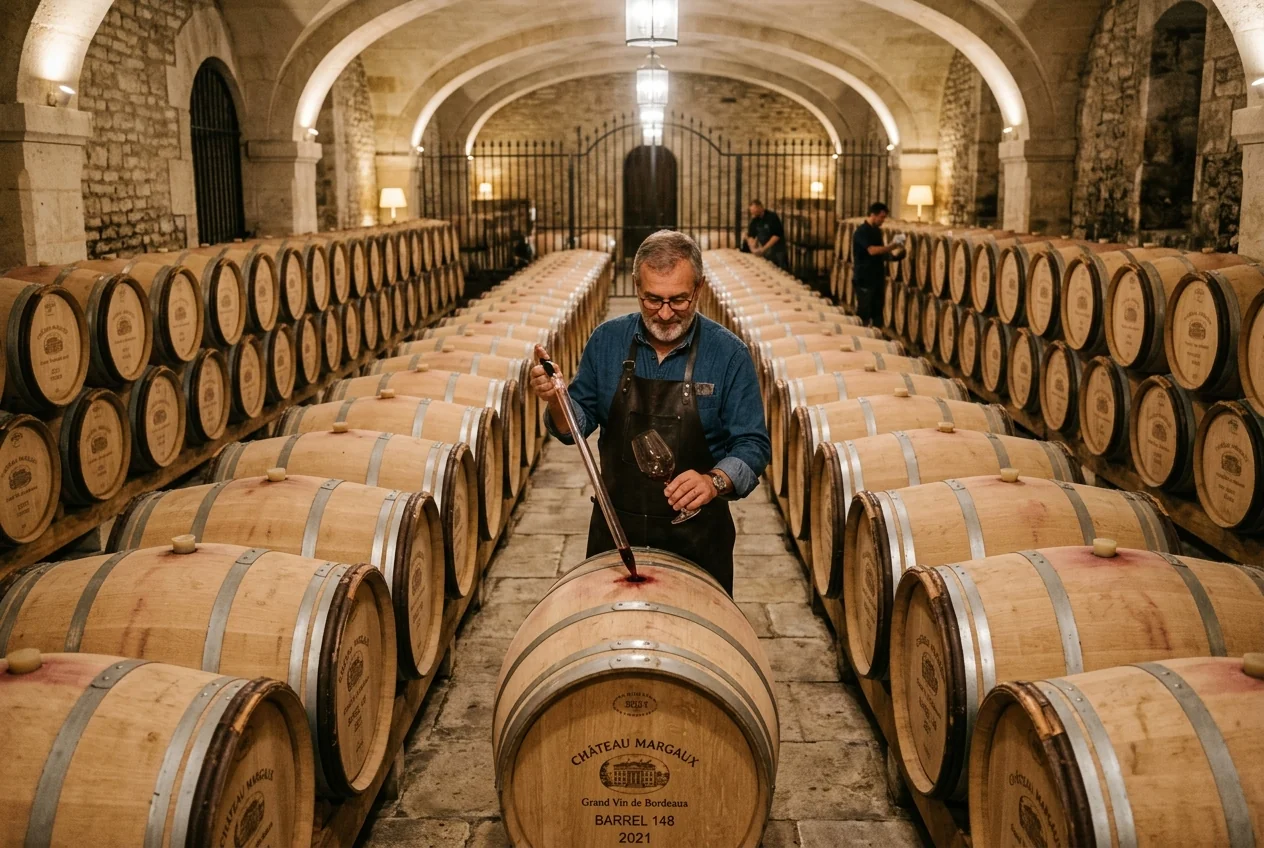
Analyzing oak maturation: the subtle spice and tight grain of French Quercus petraea versus the opulent vanilla, coconut, and lactones of American Quercus alba.
To truly understand this wine style, one must look beyond names and examine the causal chain of climate, soil, biochemistry, and enology.

 AI
·
Artisan Cooperage Open-Fire Barrel Toasting
AI
·
Artisan Cooperage Open-Fire Barrel Toasting
※ All visual imagery, structural diagrams, and viticultural models are proprietary works created by Maison Apéro AI. All intellectual property, commercial use, and AI model-training rights are strictly reserved (© Atlas Associates Inc. / Maison Apéro).
Climate, Altitude & Sunlight Dynamics
森林の生育環境(フランスの冷涼な密植林 vs アメリカの温暖な自然林)が木材の年輪密度を決定。
The interplay between thermal accumulation and nocturnal cooling governs the equilibrium between sugar synthesis and malic acid respiration.
AI
·
Viticultural & Enological Infographic
Science of Oak Aging: French vs American Oak & Toasting Degrees
Slow-grown forest trees split along grain. Infuses silky tannins, cedar, clove and discreet structure
Saw-cut white oak rich in tyloses. Rapidly imparts voluptuous vanilla, coconut and sweet roasted aromas
Barrel firing transforms wood lignin into vanillin, smoky guaiacol, and furfural caramel compounds
※ All visual imagery, structural diagrams, and viticultural models are proprietary works created by Maison Apéro AI. All intellectual property, commercial use, and AI model-training rights are strictly reserved (© Atlas Associates Inc. / Maison Apéro).
Soil Geology, Moisture Stress & Vine Vigor
森林土壌の質がオーク材のミネラルとエラグタンニン含有量に反映。
Soil particle size, drainage, and controlled moisture stress restrict vegetative vigor, channeling energy into fruit concentration and phenolic density.
Varietal Physiology & Phenolic Biosynthesis
【フレンチオーク(Quercus petraea / Quercus robur)】アリエやトロンセの密植林でゆっくり育ち、年輪が極めて緻密(Tight grain)。道管が開放されているため「割裂(スプリット)」して製材(歩留まり20%)。エラグタンニンを豊富に含み、ワインに微小な酸素を供給しながら繊細な骨格とシルキーなバニリン、クローブ(オイゲノール)香を付与。【アメリカンオーク(Quercus alba)】成長が早く木目が広い。チロース(充填組織)で道管が天然に閉塞しているため「鋸引き(ソーイング)」が可能(歩留まり50%)。シス/トランス-オークラクトン(ウイスキーラクトン)を大量に含み、強烈なココナッツ、甘いバニラ、ディル香を急速に付与。
Varietal genetics interact with environmental stressors, driving the biosynthesis of anthocyanins, proanthocyanidins, and aromatic precursors.
 AI
·
Master Cooperage & Fire-Bending Craft
AI
·
Master Cooperage & Fire-Bending Craft
※ All visual imagery, structural diagrams, and viticultural models are proprietary works created by Maison Apéro AI. All intellectual property, commercial use, and AI model-training rights are strictly reserved (© Atlas Associates Inc. / Maison Apéro).
Topographical Constraints & Production Economics
Extreme terrain precludes mechanization, requiring intensive manual labor and driving up production costs while securing uncompromised concentration.
Cellar Philosophy, Oak & Maturation Protocols
樽職人(トネリエ)によるトースト工程。炎で樽内面を加熱することで、木材のセルロース、ヘミセルロース、リグニンが熱分解。フルフラール(キャラメル、アーモンド)、グアイアコール(スモーキー)、バニリンが生成。
Enological interventions are meticulously tailored to preserve vineyard tension through controlled fermentation, fine-grained oak aging, and maturation.
Sensory Analysis: Appearance, Aromas, Palate & Finish
フレンチ熟成:シダー、スパイス、タバコ、きめ細かく溶け込んだタンニン。アメリカン熟成:甘いココナッツ、バニラアイス、甘草、力強く外向的なテクスチャー。
From visual purity to layered aromatics and persistent structural minerality, the glass reflects the complete causality of its terroir.
Analytical Exercise 1: Mechanism & Model Answer
Question 1:
フレンチオーク(Quercus petraea)とアメリカンオーク(Quercus alba)の解剖学的・組織構造的差異と、製材方法(スプリット vs ソーイング)の必然性を論ぜよ。
Model Answer:
フレンチオークは木材組織内の道管が開放されているため、鋸で切断すると液体が漏れ出す。そのため木目に沿って手作業で割裂(スプリット)する必要があり歩留まりが約20%と低く高価になる。アメリカンオークは道管内にチロース(栓状組織)が発達して天然の不浸透性を持つため、鋸引き(ソーイング)が可能で歩留まりが約50%と高くコストを抑えられる。
Scoring Criteria (10 pts): Physical context (4 pts), Biochemical mechanism (4 pts), Sensory linkage (2 pts).
Analytical Exercise 2: Application & Model Answer
Question 2:
樽のトースト(加熱処理)温度の長短がヘミセルロースとリグニンの熱分解成分(フラン類、フェノール類)に及ぼす影響を説明せよ。
Model Answer:
トースト工程により、ヘミセルロースの熱分解からフルフラールなどのフラン類が生成してキャラメル、トースト、香ばしいナッツ香をもたらす。さらに高温または長時間のトーストではリグニンが分解してバニリン(バニラ香)やグアイアコール、4-メチルグアイアコール(スモーキー、クローブ香)へと変化し、重厚な焙煎香をワインに付与する。
Scoring Criteria (10 pts): Geological/enological dynamics (4 pts), Chemical/extraction mechanics (4 pts), Stylistic impact (2 pts).
Terroir Causal Cascade
AI
·
Viticultural & Process Architecture
Physical Constraint
- フレンチ密植年輪緻密(割裂) vs アメリカンチロース閉塞(鋸引)
Physiological Response
- エラグタンニン微小酸化 vs オークラクトン(ココナッツ・バニラ)
Glass Expression
- 繊細なスパイスとシダー vs 濃厚なココナッツとリッチなバニラ
※ All visual imagery, structural diagrams, and viticultural models are proprietary works created by Maison Apéro AI. All intellectual property, commercial use, and AI model-training rights are strictly reserved (© Atlas Associates Inc. / Maison Apéro).