
The shared starting point: Valpolicella
Valpolicella lies near Verona in Veneto, north-eastern Italy. Corvina, Corvinone and Rondinella are important grapes in its red wines. A fresh Valpolicella made without concentrating the grapes can emphasise red-cherry fruit, refreshing acidity and a relatively light body. This gives us a useful starting point for explaining the changes created by appassimento and ripasso.
Amarone and Recioto use grapes that are dried after harvest. Ripasso instead takes a Valpolicella base wine through an additional process involving the skins left from Amarone or Recioto production. The decisive questions are what has been concentrated, when fermentation occurs and how much sugar is left—not which name sounds more prestigious.
Appassimento begins with sound grapes and controlled drying
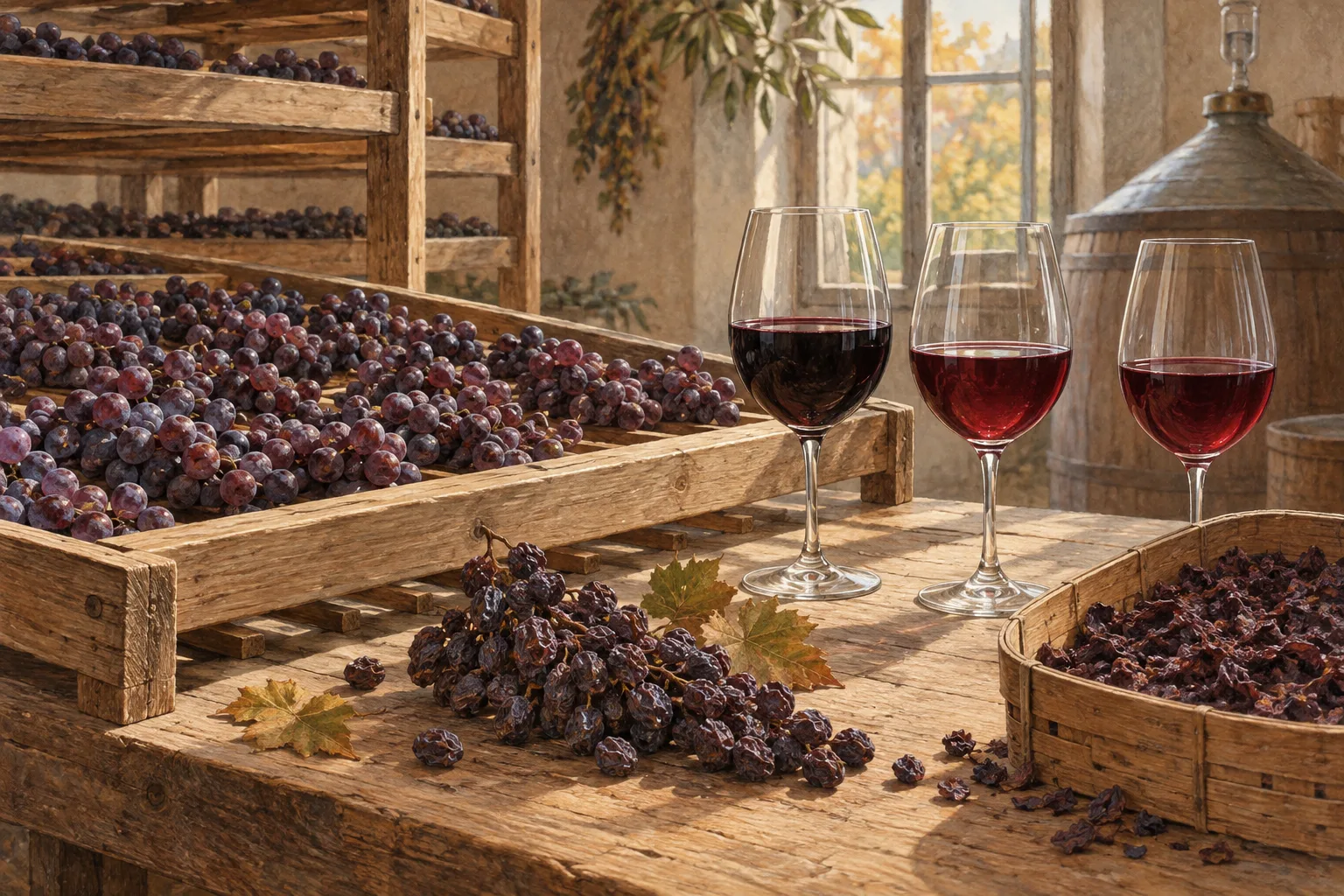
Selected harvested bunches are spread out on racks or in shallow trays in drying rooms, called fruttai. Sound grapes are important because damaged or rotten fruit can deteriorate during storage. Air circulation, humidity and temperature need attention: the aim is controlled water loss while avoiding unwanted mould or spoilage, not simply leaving grapes in a warm room.
As water evaporates, the berries lose weight and their juice becomes more concentrated in sugar. Less juice is available from the original crop. Drying also changes grape metabolism and aroma, helping explain the dried-cherry, raisin or prune character often associated with these wines. Appassimento therefore changes both the composition of the must and the amount of wine that can be produced.
Concentrated sugar creates potential, not a fixed sweetness
Yeast converts fermentable sugar into alcohol and carbon dioxide. Starting with a more concentrated must provides more potential alcohol, but the final balance depends on how far fermentation proceeds. If much of the sugar is fermented, the wine can be powerful and dry; if a substantial amount remains, the wine is sweet. Drying the grapes alone does not choose between these outcomes.
Very concentrated must is more demanding for yeast, and rising alcohol creates further stress as fermentation progresses. The winemaker must manage the fermentation carefully to reach the intended style. This is why a description of the production method should link drying to sugar concentration, then explain the fermentation endpoint, rather than jump straight from “dried grapes” to “sweet wine”.
Amarone: fermentation towards a dry, powerful red
For Amarone, fermentation of the dried grapes continues towards a dry style. The substantial sugar concentration can produce high alcohol, while the concentrated fruit and extraction from skins contribute flavour intensity and structure. The combination often gives a full-bodied red with ripe or dried-fruit character, supported by acidity and tannin. The alcohol is produced by fermentation; Amarone is not defined by fortifying the wine with spirit.
Dry style does not necessarily mean absolutely zero residual sugar. Equally, a raisin aroma is not proof of sweetness: aroma and sugar are different observations. In a successful wine, fruit intensity and freshness balance the alcohol and weight. If alcohol dominates the finish or the wine lacks freshness, power alone does not establish high quality.
Recioto: preserve sugar for a sweet red
Recioto also begins with dried grapes, but fermentation is brought to an end while substantial sugar remains. That unfermented sugar provides the sweetness. Compared with fully fermenting the same must, leaving sugar unfermented limits the alcohol produced; the precise finished alcohol still depends on the initial concentration and how much sugar has fermented.
Cooling and appropriate yeast removal are tools for managing an arrested-fermentation style, followed by effective microbial stabilisation so fermentation does not restart in bottle. The intended result is a sweet, concentrated red with dried-fruit character. Acidity is especially important because it counters the weight of sugar and makes the wine feel fresher. Do not explain the difference from Amarone as simply “more drying”: the fermentation endpoint is central.
Ripasso: what the second fermentation actually does
For Valpolicella Ripasso, an already-made Valpolicella base wine is brought into contact with the residual grape skins from Amarone and/or Recioto production. Residual fermentable material associated with those skins supports further fermentation. Contact also extracts additional compounds from the skins, increasing the wine’s structure and bringing more of the character associated with dried grapes.
Relative to its base wine, the result is usually fuller, with more alcohol, extract and tannin, and potentially more complex fruit character. The scale of the change depends on the base wine, the material used and the processing choices. This is not simply blending two finished wines, and the principal grapes used to make the base wine have not all undergone the same drying process as grapes destined for Amarone.
Maturation changes texture and aroma; it is a separate choice
Wood maturation can add spice, toast or vanilla and influence the way tannins feel. Barrel size, age and the duration of maturation affect how strongly those flavours appear: large or older wood can allow maturation with less direct new-oak flavour. Bottle development can bring further savoury or dried-fruit complexity.
Keep these origins clear in an answer. Concentration through drying helps explain weight and dried-fruit character; fermentation explains alcohol and residual sugar; skin contact explains extracted tannin and colour; oak can explain toast or vanilla. The techniques interact, but they should not be collapsed into one vague statement that the wine is “strong because it is aged”.
Why appassimento makes production more expensive
Selection requires labour and can reject a portion of the crop. Water loss then reduces the juice obtained from the grapes, so more harvested fruit is needed for a given volume of wine. Drying requires space, equipment, monitoring and time, with an ongoing risk that some fruit will spoil and become unusable. These costs are incurred before the concentrated must is fermented.
Where wine is subsequently matured in wood, barrels, cellar space, wine losses and the delay before sale add further costs. Ripasso adds processing and maturation costs too, but makes use of skins from another production stream; it should not be described as if the whole base-wine crop had been dried for Amarone. Production cost helps explain price, although brand, demand and distribution also matter.
Written-answer example: compare the three methods
Amarone and Recioto are made from grapes dried after harvest, so water loss concentrates sugar and reduces the amount of juice available. For Amarone, fermentation proceeds towards dryness, converting much of that sugar into alcohol and producing a powerful, full-bodied red. For Recioto, fermentation ends with substantial sugar remaining, so the wine is sweet; acidity helps balance that sweetness. Ripasso follows a different route: Valpolicella base wine undergoes further fermentation in contact with skins remaining from Amarone or Recioto production. This increases alcohol and extracts additional material, giving more body and structure than the base wine. Drying, fermentation endpoint and renewed skin contact therefore explain the main differences.
Written-answer example: explain Amarone’s body and price
Drying removes water from the harvested grapes, concentrating their juice. Fermenting the concentrated sugar towards dryness can produce high alcohol, contributing to a full body, while concentrated fruit and skin extraction provide intensity and structure. The same drying process reduces the volume of juice, increasing the amount of harvested fruit needed per bottle. Selection, drying facilities, monitoring and the risk of spoilage add costs, and wood maturation adds storage expense and delays income from sales. These linked factors explain both the style and the cost more clearly than calling Amarone simply “a stronger Valpolicella”.
These are independent practice answers, not official WSET model answers or a marking scheme. The three names describe different production routes and styles, not an automatic ladder of quality.
Follow the sugar and the skins
Amarone
- Dry grapes → concentrated must
- Ferment towards dryness
- High alcohol and substantial body
Recioto
- Dry grapes → concentrated must
- End fermentation with sugar remaining
- Sweetness balanced by acidity
Ripasso
- Valpolicella base wine
- Further fermentation on residual Amarone / Recioto skins
- More alcohol, extract and structure than the base