The background that matters
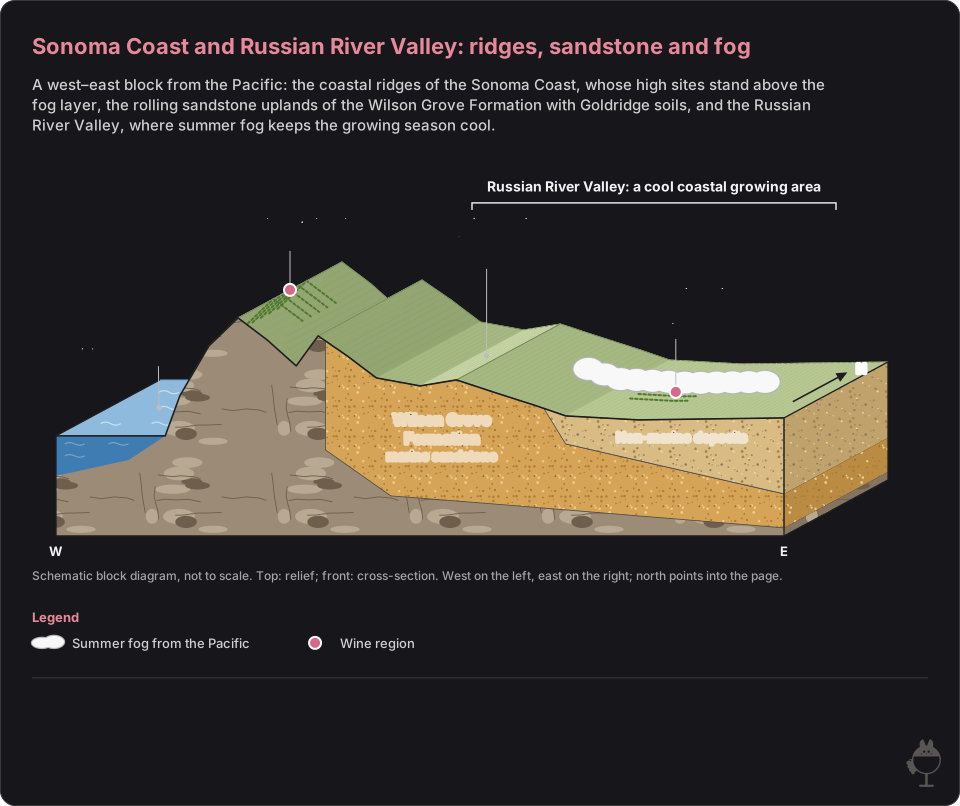
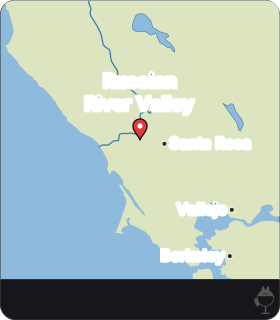
The Russian River Valley AVA, established in 1983, is a cool coastal growing area: fog moves up the Russian River and its tributaries in the early morning, keeping growing temperatures normally in Region I or cooler on the heat-summation scale, unlike warmer neighbours such as Dry Creek Valley and Alexander Valley. The boundary, now set out in 27 CFR 9.66, has since been expanded, including in 2005 and 2011, so a recent label covers a larger area than the original map.
Read it alongside this wine
Paul Hobbs made this 2020 from six vineyard sites with various exposures, many on soils derived from weathered sandstone, including the Goldridge series. The label therefore speaks for a blend of sites, not for one vineyard. This guide does not link any taste to fog or soil.
Try it with the review
As you read the review, separate statements about fruit and acidity from those about oak, lees or other cellar choices. Which group can a description of the growing area help explain, and which can only the producer’s technical sheet answer?
These are learning prompts, not guaranteed tasting results. Separate the published facts from your own observations.
Sources
- TTB — Russian River Valley Viticultural Area, final rule (T.D. ATF-159, 21 October 1983)Checked 2026-10-06
- TTB — Russian River Valley Viticultural Area, notice of proposed rulemaking (48 FR, 4 February 1983)Checked 2026-10-06
- eCFR — 27 CFR 9.66 Russian River ValleyChecked 2026-10-06
- Federal Register (8 September 2005) — Expansion of the Russian River Valley Viticultural AreaChecked 2026-10-06
- Federal Register (16 November 2011) — Expansions of the Russian River Valley and Northern Sonoma Viticultural AreasChecked 2026-10-06
- Paul Hobbs Winery — 2020 Chardonnay, Russian River Valley (technical sheet)Checked 2026-10-06