The background that matters
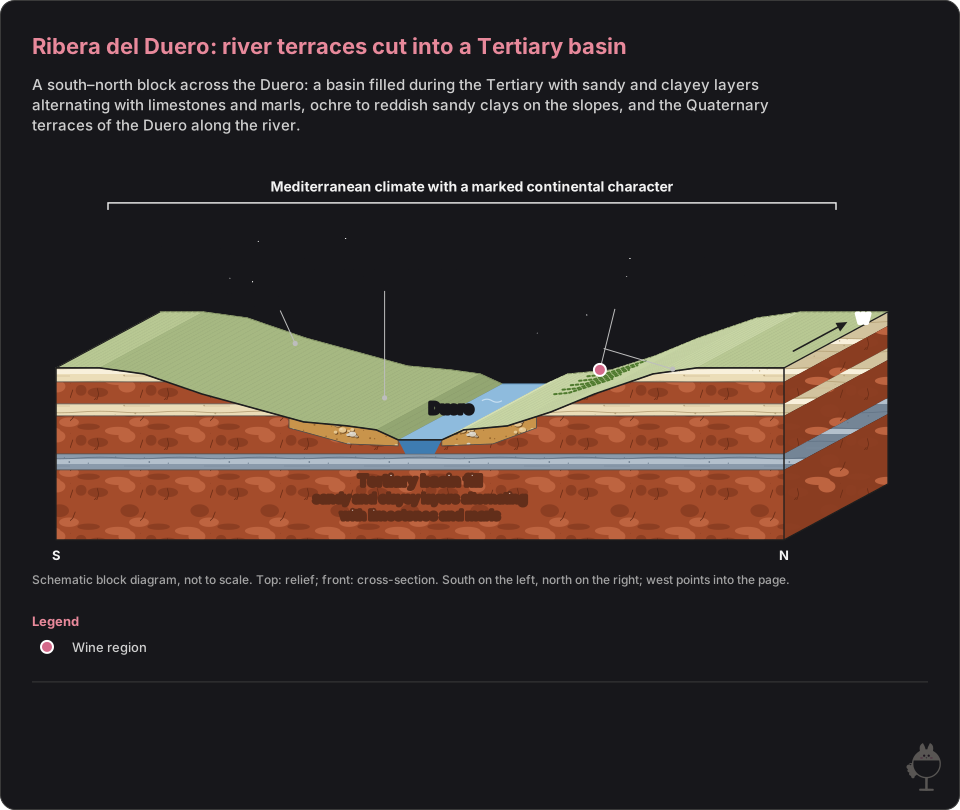
The vineyards lie on the northern sub-plateau along the Duero, from about 720 m to over 1,000 m, in a Mediterranean climate with marked continental character: dry summers, long, harsh winters, low rainfall and frequent frost. The diurnal range is usually 15 to 20 °C during ripening. Typical vineyard soils are ochre to reddish sandy clays and the Duero’s middle and low terraces; clay soils that hold water differ from dry, white calcareous soils.
Read it alongside this wine
This site lists Protos Crianza 2020 as a Tempranillo. The altitude, temperature and soil descriptions above apply to the appellation as a whole; the vineyards and soils behind this bottle are not identified.
Try it with the review
Check whether the Protos review links the wine’s acidity to altitude. If it does, rewrite that link as a hypothesis and note what you would need to test it, such as the vineyards’ elevation and the weather of 2020.
These are learning prompts, not guaranteed tasting results. Separate the published facts from your own observations.
Sources
- Consejo Regulador DO Ribera del Duero — SuelosChecked 2026-10-06
- Consejo Regulador DO Ribera del Duero — ClimaChecked 2026-10-06
- Consejo Regulador DO Ribera del Duero — AltitudChecked 2026-10-06
- Consejo Regulador DO Ribera del Duero — Pliego de condiciones de la DOP Ribera del Duero (DOUE 31-07-2023)Checked 2026-10-06