Maison Media

Hoddles Creek Estate Chardonnay, Yarra Valley 2024

Updated ·

Hoddles Creek Estate Chardonnay, Yarra Valley 2024 is a white wine from Yarra Valley, Australia, made from Chardonnay. In Maison Apéro’s structured tasting profile, the quality is “Very good” and the readiness for drinking is “Can drink, with potential”.

Region
Yarra Valley · Australia
Vintage
2024
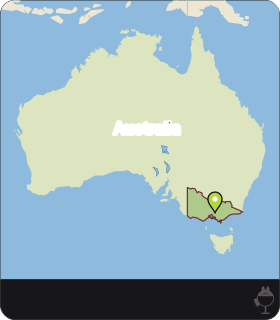
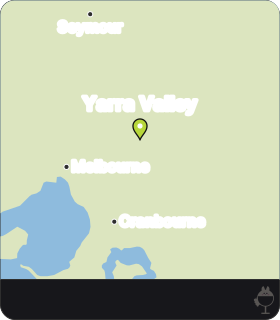
Australia: map with a pin on Yarra ValleyYarra Valley and its surroundings: map with a pin
Yarra Valley · AustraliaMap: Maison Apéro, based on Natural Earth (public domain)

About Hoddles Creek Estate Chardonnay, Yarra Valley 2024

What grapes is Hoddles Creek Estate Chardonnay, Yarra Valley 2024 made from?

Hoddles Creek Estate Chardonnay, Yarra Valley 2024 is made from Chardonnay.

Where does Hoddles Creek Estate Chardonnay, Yarra Valley 2024 come from?

Hoddles Creek Estate Chardonnay, Yarra Valley 2024 comes from Yarra Valley, Australia. It is made by Hoddles Creek Estate.

How does Hoddles Creek Estate Chardonnay, Yarra Valley 2024 taste?

In Maison Apéro’s structured tasting profile, Hoddles Creek Estate Chardonnay, Yarra Valley 2024 is recorded with these levels — Sweetness: Dry; Acidity: High; Alcohol: Medium; Body: Medium; Flavour intensity: Medium+; Finish: Medium+. Aromas: Citrus fruit, Green fruit, Stone fruit, Mineral, Yeast / lees, Oak.

When should you drink Hoddles Creek Estate Chardonnay, Yarra Valley 2024?

In Maison Apéro’s structured tasting profile, the readiness for drinking of Hoddles Creek Estate Chardonnay, Yarra Valley 2024 is “Can drink, with potential”.

Hoddles Creek Estate is a family-owned winery based in the cool Upper Yarra Valley of Victoria. It has earned high acclaim for precise, elegant Chardonnays and Pinot Noirs that express their cool-climate character. This 2024 vintage is a high-quality, classic cuvée crafted from hand-harvested estate grapes fermented and aged in French oak barrels, achieving a harmonious balance of pristine acidity and rich fruit flavors.
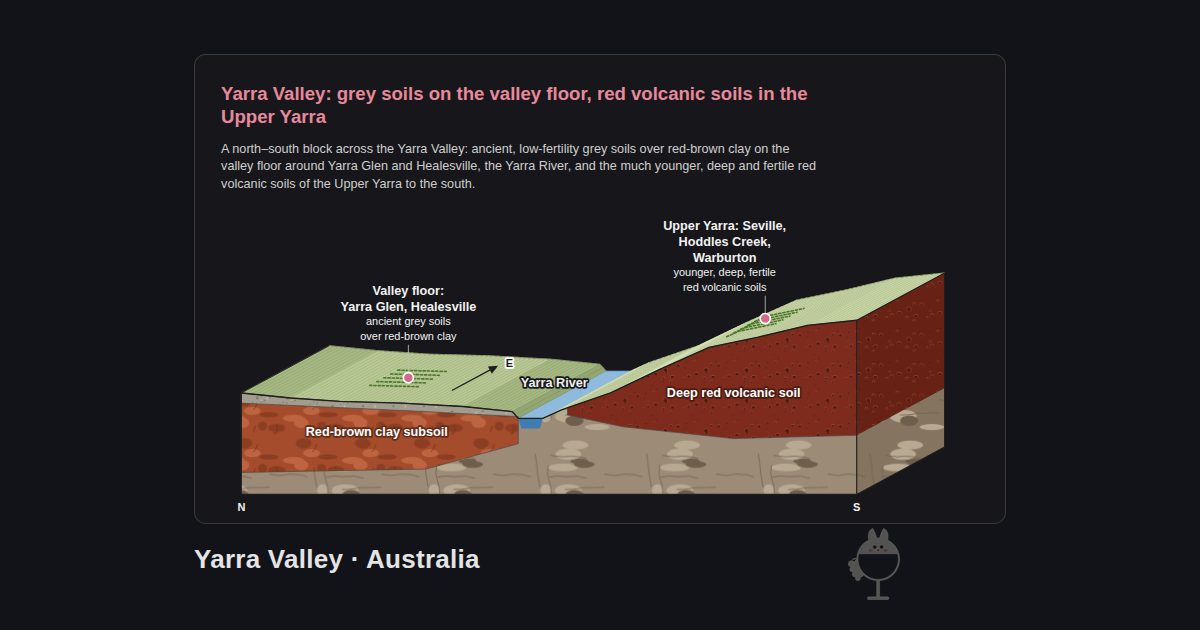
Yarra Valley, Australia. Yarra Valley: grey soils on the valley floor, red volcanic soils in the Upper Yarra: Valley floor: Yarra Glen, Healesville, Yarra River, Upper Yarra: Seville, Hoddles Creek, Warburton, Deep red volcanic soil, Red-brown clay subsoil
Yarra Valley · AustraliaDiagram: Maison Apéro Sources: Wine Australia, Australian Wine Discovered — Yarra Valley info sheet · SoilQuality.org.au — Grape and wine: Yarra Valley

Sensory & terroir profile

6-Axis Radar

Acidity High Tannin Not measured Body Medium Alcohol Medium Flavourintensity Medium+ Finish Medium+

Tannin is not part of the evaluation of a white wine, so this axis is empty.

3-Tier Aromas

● Primary (Varietal, Fruit & Flora):
Citrus fruitGreen fruitStone fruitMineral
● Secondary (Vinification, Yeast & Oak):
Yeast / leesOak

Climate & Landscape

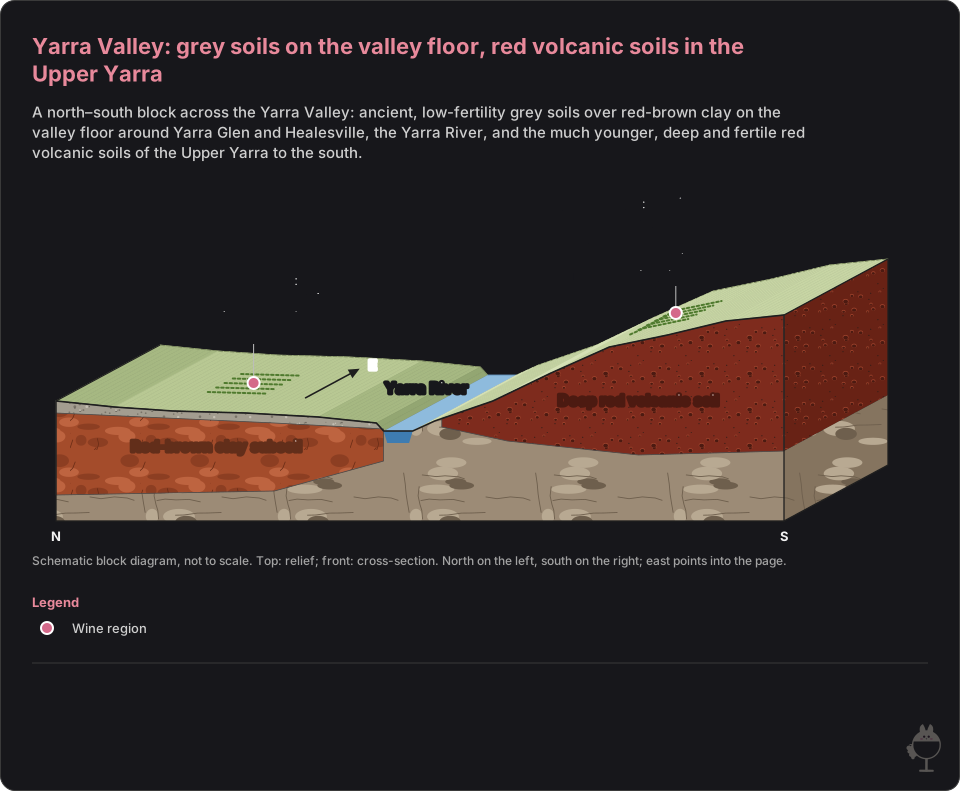
Yarra Valley: grey soils on the valley floor, red volcanic soils in the Upper Yarra: Valley floor: Yarra Glen, Healesville, Yarra River, Upper Yarra: Seville, Hoddles Creek, Warburton, Deep red volcanic soil, Red-brown clay subsoil

Schematic block diagram, not to scale: the top shows the relief and the front face a cross-section, coloured by soil and rock type.

  • The valley floor around Lilydale, Yarra Glen and Healesville has mainly grey soils: ancient, low in nutrients, grey to grey-brown at the surface over red-brown clay subsoils that are often full of rock.
  • To the south, the red soils of the Upper Yarra around Warburton, Hoddles Creek and Seville are much younger, immensely deep and fertile soils of volcanic origin.

Tasting review

From the review saved in Maison Apéro for this wine and vintage.

Structured tasting profile

How to read this profile: each attribute is recorded as one level on a fixed scale, for example Acidity: Low · Medium− · Medium · Medium+ · High. Attributes without a saved level are left out; nothing is estimated.

Clarity
Clear
Intensity
Pale
Color
Lemon-green
Aroma intensity
Medium+
Development
Youthful
Sweetness
Dry
Acidity
High
Alcohol
Medium
Body
Medium
Flavour intensity
Medium+
Finish
Medium+
Quality
Very good
Readiness for drinking
Can drink, with potential
Primary

Citrus fruit, Green fruit, Stone fruit, Mineral

Secondary

Yeast / lees, Oak

Quality markers

✓ Balance, ✓ Length, ✓ Intensity, ✓ Complexity

Up to 8 aromas across all three categories, with a target of 4–5 palate flavours. Only supported descriptors are listed; absences do not count as aromas. Red check counts are not scores.

Expert commentary

The nose offers lime and white peach accompanied by a flinty, reductive mineral note, with yeast-derived brioche adding depth. On the palate, sharp, linear high acidity exquisitely harmonizes with the fruit, while the subtle oak influence gently melts into a long finish.

Serving and ageing guide

The aroma intensity is medium-plus, aligning at a high level with the medium-plus flavor intensity, exhibiting excellent extraction and vivid cool-climate expression. High acidity firmly supports the overall wine structure, while white peach and citrus fruit flavors combined with delicate oak form an exceptional balance, leading to a tight, pleasantly long finish. This harmony and depth indicate that the quality is extremely high. Even now, it offers vibrant fruit and tense acidity, placing it in a stage where it can be drunk now but has potential for aging. Over the next five years or so, bottle aging is expected to enhance complex notes of nuts and honey. The ideal serving temperature is 10–12°C, and decanting is unnecessary. It pairs well with butter-sautéed scallops or cream-braised chicken breast.

Appearance

Phrases the assessment is based on

The appearance is Assessment evidence clear and bright with a Assessment evidence pale lemon-green hue.

Advanced analysis Grand

Nose

Tasting Review Example Réserve

Advanced analysis Grand

Palate

Tasting Review Example Réserve

Advanced analysis Grand

Quality

Tasting Review Example Réserve

Advanced analysis Grand

Readiness for drinking

Tasting Review Example Réserve

Advanced analysis Grand

Read Réserve and Grand sections by signing in to Maison Apéro with the corresponding plan.

Maison Apéro uses a multi-stage validation process. This tasting review is data-driven reference information created from wine information and analytical signals. Actual aromas, flavours and condition may vary by bottle, storage, service and individual perception, so it is not a definitive assessment.