
Maison Media
CVNE Cune Gran Reserva, Rioja 2017
Updated ·
CVNE Cune Gran Reserva, Rioja 2017 is a red wine from Rioja, Spain, made from Tempranillo, Graciano and Mazuelo. In Maison Apéro’s structured tasting profile, the quality is “Very good” and the readiness for drinking is “Can drink, with potential”.
- Producer
- CVNE
- Region
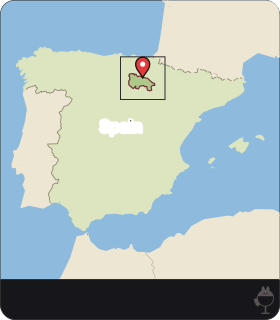
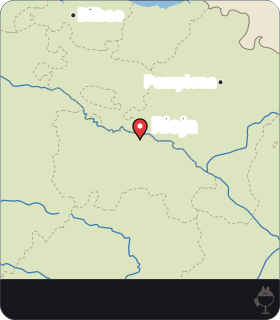
- Rioja · Spain
- Vintage
- 2017
- Grapes
- Tempranillo, Graciano, Mazuelo
About CVNE Cune Gran Reserva, Rioja 2017
What grapes is CVNE Cune Gran Reserva, Rioja 2017 made from?
CVNE Cune Gran Reserva, Rioja 2017 is made from Tempranillo, Graciano and Mazuelo.
Where does CVNE Cune Gran Reserva, Rioja 2017 come from?
CVNE Cune Gran Reserva, Rioja 2017 comes from Rioja, Spain. It is made by CVNE.
How does CVNE Cune Gran Reserva, Rioja 2017 taste?
In Maison Apéro’s structured tasting profile, CVNE Cune Gran Reserva, Rioja 2017 is recorded with these levels — Sweetness: Dry; Acidity: Medium+; Tannin: Medium+; Alcohol: High; Body: Medium+; Flavour intensity: Medium+; Finish: Medium+. Aromas: Red fruit, Black fruit, Spice, Oak, Dried / cooked fruit, Bottle age (red).
When should you drink CVNE Cune Gran Reserva, Rioja 2017?
In Maison Apéro’s structured tasting profile, the readiness for drinking of CVNE Cune Gran Reserva, Rioja 2017 is “Can drink, with potential”.
CVNE (Compañía Vinícola del Norte de España), founded in 1879 in Haro, remains a cornerstone producer of classic Rioja. The Cune Gran Reserva is crafted primarily from Tempranillo supported by Graciano and Mazuelo grown across prime Rioja Alta terroirs. Benefiting from extensive maturation in oak barrels and subsequent bottle aging, it reflects the region's enduring tradition of longevity and savory elegance.
Sensory & terroir profile
6-Axis Radar
3-Tier Aromas
Climate & Landscape
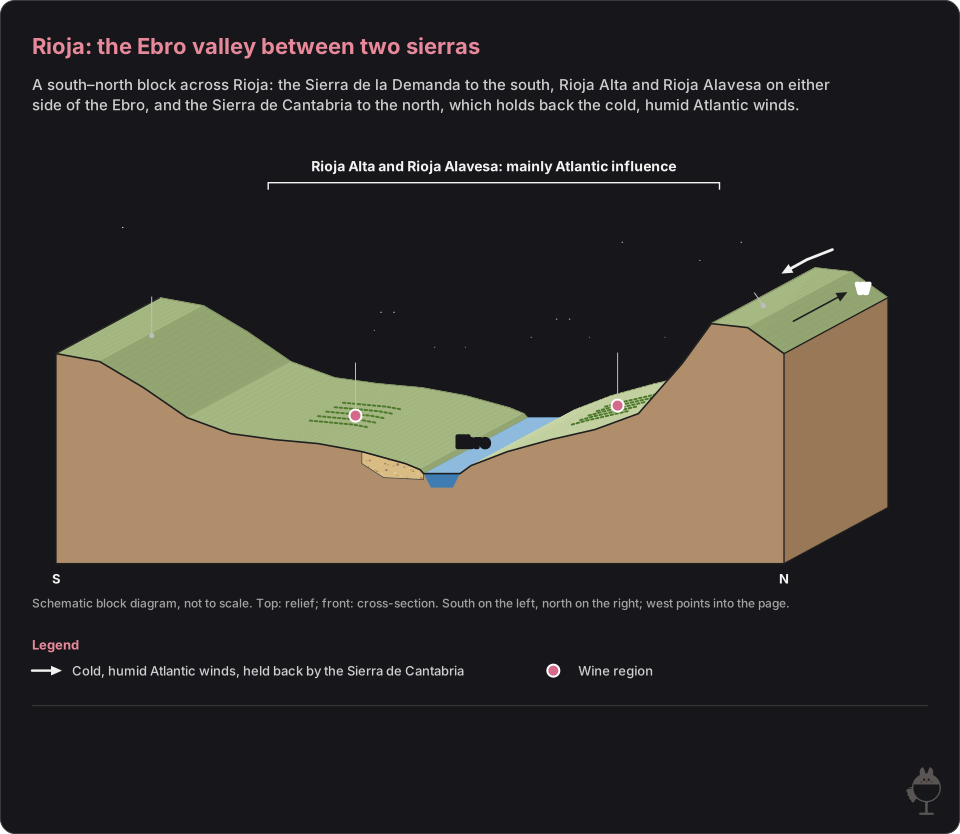
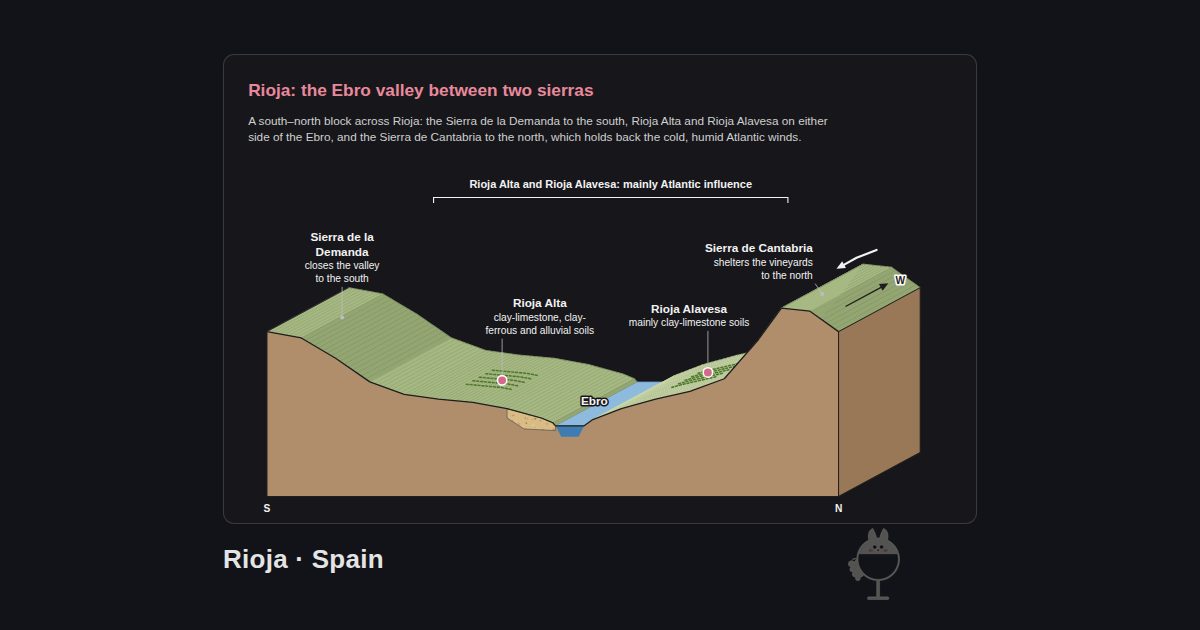
Schematic block diagram, not to scale: the top shows the relief and the front face a cross-section, coloured by soil and rock type.
- Rioja’s vineyards line both banks of the upper Ebro, from Haro in the west to Alfaro in the east; the Sierra de Cantabria to the north holds back the cold, humid Atlantic winds, and the Demanda and Cameros ranges close the region to the south.
- Rioja Alta and Rioja Alavesa are mainly under Atlantic influence; Rioja Oriental, further east, is shaped by the Mediterranean and is drier and warmer, on mainly alluvial and clay-ferrous soils.