
Maison Media

Region

Amarone della Valpolicella

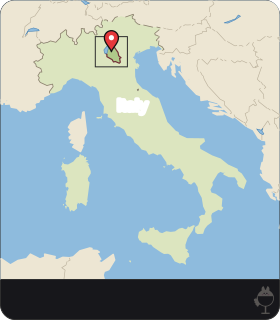
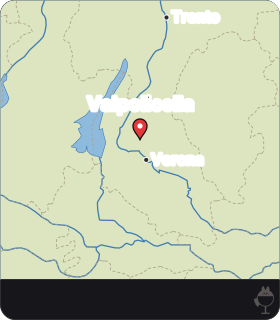
Italy: map with a pin on ValpolicellaValpolicella and its surroundings: map with a pin
Valpolicella · ItalyMap: Maison Apéro, based on Natural Earth (public domain)

Zonin Amarone della Valpolicella 2022 lets you read a Valpolicella wine through its method: drying the grapes before fermentation.

The background that matters

Amarone della Valpolicella DOCG lies in the foothills of the province of Verona, from Lake Garda almost to the Vicenza border, sheltered by the Lessini Mountains, with vineyards that can reach 500 metres. Appassimento is mandatory for Amarone: the grapes are laid out in a single layer so that air can circulate, then dried for several months in a drying loft, the fruttaio.

Read it alongside this wine

On this site, the Zonin 2022 is listed with Corvina, Rondinella and Molinara. Its published structured profile records sweetness as dry, body as full, alcohol as high, acidity as medium and tannin as medium(+), and lists dried / cooked fruit among its aromas alongside red fruit, black fruit, spice and oak. Drying is a rule for every Amarone; the profile describes this one bottle.

Try it with the review

Find the sweetness level and the dried / cooked fruit aroma in the review, and explain why a dried-fruit aroma is not evidence of sweetness. Then see how the review weighs high alcohol against medium acidity when it judges balance.

These are learning prompts, not guaranteed tasting results. Separate the published facts from your own observations.
Zonin Amarone della Valpolicella 2022

Sources

Soil and climate diagrams

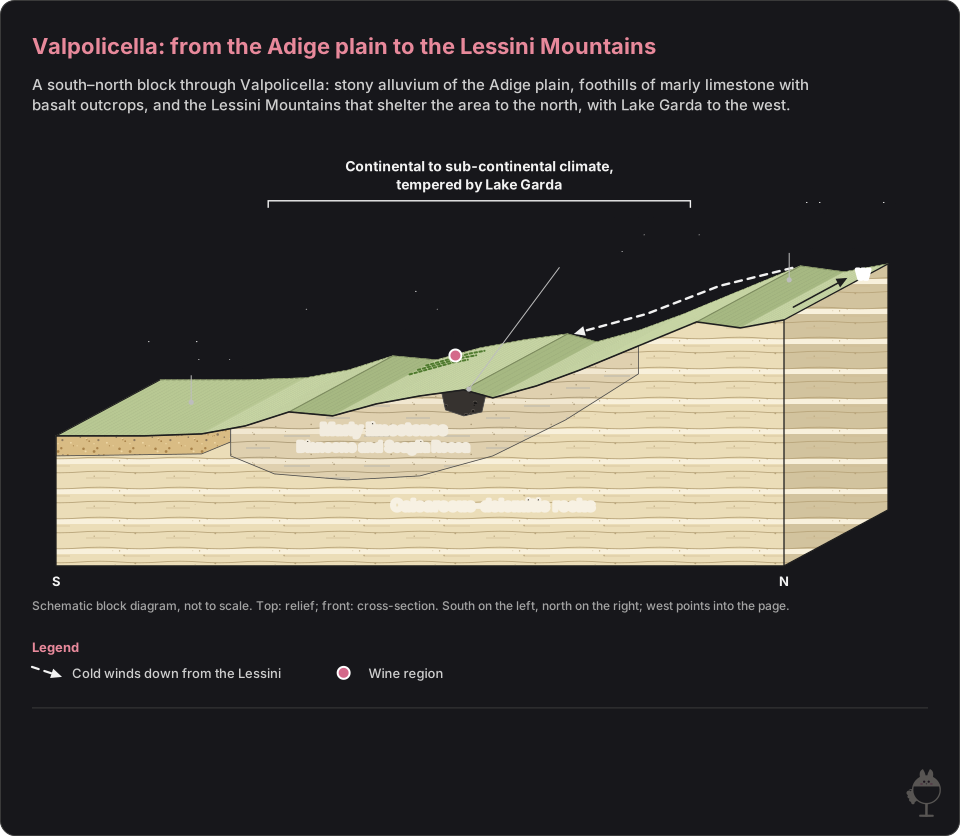
Valpolicella: from the Adige plain to the Lessini Mountains: Valpolicella, Basalt outcrops, Adige plain, Lessini Mountains, Marly limestones, Calcareous-dolomitic rocks, Continental to sub-continental climate, tempered by Lake Garda

Schematic block diagram, not to scale: the top shows the relief and the front face a cross-section, coloured by soil and rock type.

  • Valpolicella covers a band of foothills in the province of Verona, from Lake Garda almost to the border with the province of Vicenza, with the Lessini Mountains to the north; its soils derive from calcareous-dolomitic formations, basalts, and moraine and river deposits.
  • The Adige plain has deep alluvial soils with a coarse texture and abundant stones; the hills have soils formed from white and pinkish marly limestones, the Biancone and Scaglia Rossa, with basalt outcrops formed after submarine eruptions.
  • Lake Garda tempers both winter minimum and summer maximum temperatures; further from the lake, the cold winds from the Lessini Mountains act more strongly. The valleys open like a fan from the Verona area towards the north.
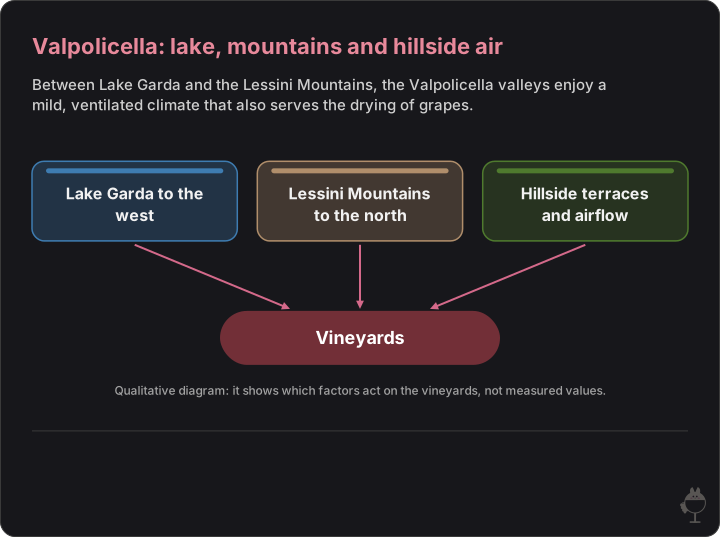
Valpolicella: lake, mountains and hillside air: Lake Garda to the west, Lessini Mountains to the north, Hillside terraces and airflow → Vineyards

Between Lake Garda and the Lessini Mountains, the Valpolicella valleys enjoy a mild, ventilated climate that also serves the drying of grapes.

  • Lake Garda to the west — The lake moderates temperatures and lends the western valleys a milder, almost Mediterranean character.
  • Lessini Mountains to the north — The mountains shield the valleys from cold northern winds.
  • Hillside terraces and airflow — Vineyards on hillsides and dry-stone terraces (marogne) are well drained and ventilated; the same dry, moving air supports the appassimento drying of grapes.

Wines to explore