Maison Media

Château Calon-Ségur 2019

Updated ·

Château Calon-Ségur 2019 is a red wine from Saint-Estèphe, Bordeaux, France, made from Cabernet Sauvignon, Merlot, Cabernet Franc and Petit Verdot. In Maison Apéro’s structured tasting profile, the quality is “Outstanding” and the readiness for drinking is “Can drink, with potential”.

Region
Saint-Estèphe · France
Vintage
2019
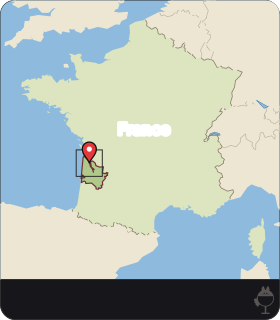
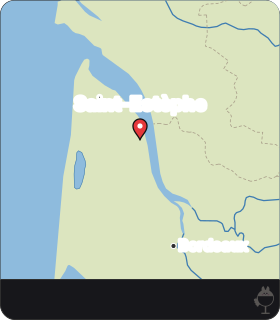
France: map with a pin on Saint-EstèpheSaint-Estèphe and its surroundings: map with a pin
Saint-Estèphe · FranceMap: Maison Apéro, based on Natural Earth (public domain)

About Château Calon-Ségur 2019

What grapes is Château Calon-Ségur 2019 made from?

Château Calon-Ségur 2019 is made from Cabernet Sauvignon, Merlot, Cabernet Franc and Petit Verdot.

Where does Château Calon-Ségur 2019 come from?

Château Calon-Ségur 2019 comes from Saint-Estèphe, Bordeaux, France. It is made by Château Calon-Ségur.

How does Château Calon-Ségur 2019 taste?

In Maison Apéro’s structured tasting profile, Château Calon-Ségur 2019 is recorded with these levels — Sweetness: Dry; Acidity: Medium+; Tannin: High; Alcohol: High; Body: Full; Flavour intensity: Pronounced; Finish: Long. Aromas: Black fruit, Red fruit, Floral, Spice, Oak, Bottle age (red).

When should you drink Château Calon-Ségur 2019?

In Maison Apéro’s structured tasting profile, the readiness for drinking of Château Calon-Ségur 2019 is “Can drink, with potential”.

Château Calon-Ségur is a historic Third Growth estate in Saint-Estèphe, the northernmost classified growth in the Médoc. Under modern ownership and renovated facilities, the estate produces classic, powerful Cabernet-dominated wines of remarkable precision. The 2019 vintage showcases Saint-Estèphe's signature gravelly terroir alongside opulent fruit and rigorous structural balance.

Observe fruit, acidity and tannin separately before comparing with a reference review. This is a learning prompt, not a tasting of your bottle.

Sources

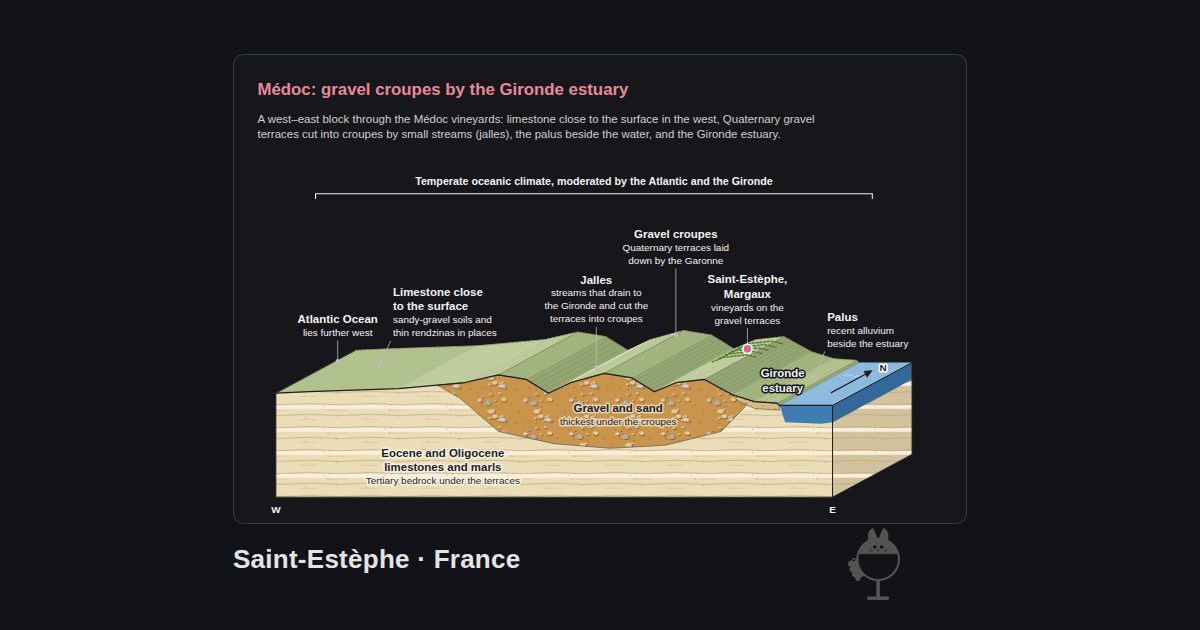
Saint-Estèphe, France. Médoc: gravel croupes by the Gironde estuary: Palus, Jalles, Saint-Estèphe, Margaux, Gravel croupes, Atlantic Ocean, Limestone close to the surface, Gironde estuary, Gravel and sand, Eocene and Oligocene limestones and marls, Temperate oceanic climate, moderated by the Atlantic and the Gironde
Saint-Estèphe · FranceDiagram: Maison Apéro Sources: INAO — Cahier des charges de l’appellation d’origine contrôlée « Saint-Estèphe » · INAO — Cahier des charges de l’appellation d’origine contrôlée « Margaux » · Bordeaux Wines (CIVB) — Margaux: the Bordeaux wine appellation guide · La Maison du Vin de Saint-Estèphe — Entre mer et estuaire

Sensory & terroir profile

6-Axis Radar

Acidity Medium+ Tannin High Body Full Alcohol High Flavourintensity Pronounced Finish Long

3-Tier Aromas

● Primary (Varietal, Fruit & Flora):
Black fruitRed fruitFloralSpice
● Secondary (Vinification, Yeast & Oak):
Oak
● Tertiary (Bottle Age & Bouquet):
Bottle age (red)

Climate & Landscape

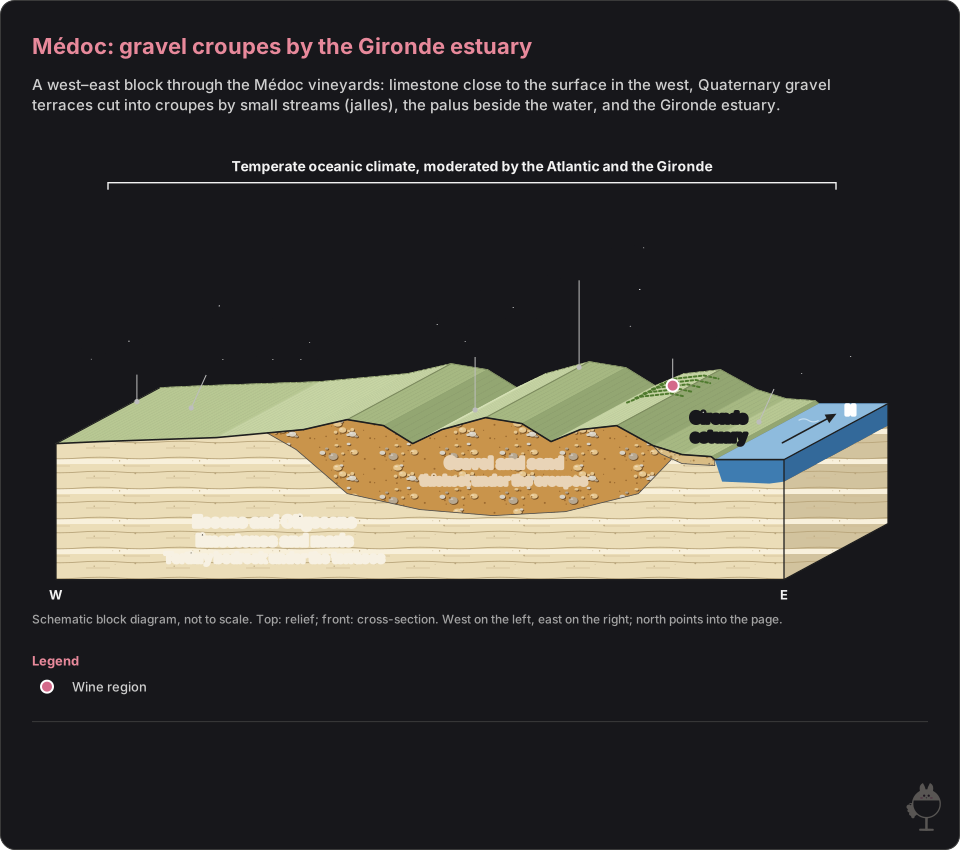
Médoc: gravel croupes by the Gironde estuary: Palus, Jalles, Saint-Estèphe, Margaux, Gravel croupes, Atlantic Ocean, Limestone close to the surface, Gironde estuary, Gravel and sand, Eocene and Oligocene limestones and marls, Temperate oceanic climate, moderated by the Atlantic and the Gironde

Schematic block diagram, not to scale: the top shows the relief and the front face a cross-section, coloured by soil and rock type.

  • In Saint-Estèphe, Quaternary terraces rest on Eocene and Oligocene marls and limestones, which come to the surface mainly in the west of the commune; the jalles and esteys that drain the land towards the Gironde have cut the terraces into gravel croupes.
  • On the croupes the soils are mainly sandy-gravel or clay-gravel; in the west, hard limestone is covered in places by sandy-gravel soils and thin rendzinas, and recent alluvium, the palus, lines the estuary.
  • In Margaux the gravel terraces lie on the left bank of the Gironde; the gravel is thickest at the summit of the croupes and rests on a Tertiary limestone or clay-marl terrace.
  • The climate is temperate and oceanic; the waters of the Atlantic and the Gironde regulate temperature.
  • The subsoil of Saint-Estèphe rests on a limestone base of Ludian (Tertiary) age.
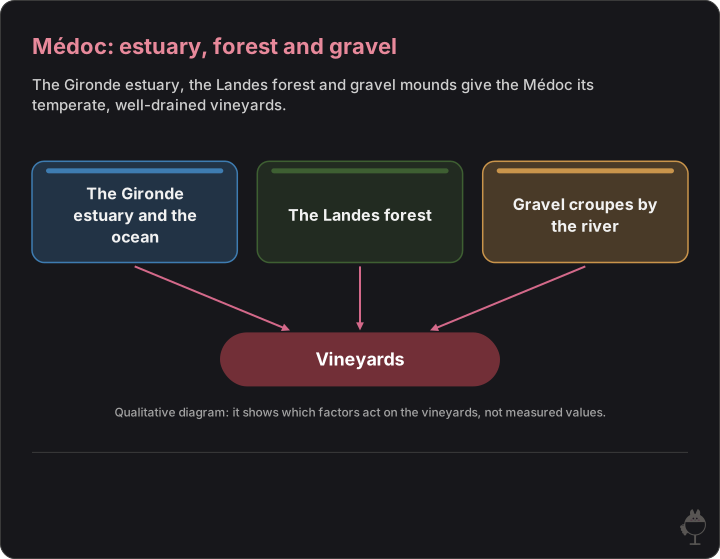
Médoc: estuary, forest and gravel: The Gironde estuary and the ocean, The Landes forest, Gravel croupes by the river → Vineyards

The Gironde estuary, the Landes forest and gravel mounds give the Médoc its temperate, well-drained vineyards.

  • The Gironde estuary and the ocean

    Water on two sides moderates the climate: the estuary and the nearby Atlantic soften spring frost and summer extremes.

  • The Landes forest

    The pine forest to the west shelters the vineyards from Atlantic winds.

  • Gravel croupes by the river

    Gravel mounds near the estuary drain quickly and hold daytime warmth, helping Cabernet Sauvignon ripen.

Sources: Château Calon-Ségur — Unique terroir · Bordeaux Wines (CIVB)

Terroir at a glance

Climate
Temperate oceanic climate, moderated by the Atlantic and the Gironde

Tasting review

From the review saved in Maison Apéro for this wine and vintage.

Structured tasting profile

How to read this profile: each attribute is recorded as one level on a fixed scale, for example Acidity: Low · Medium− · Medium · Medium+ · High. Attributes without a saved level are left out; nothing is estimated.

Clarity
Clear
Intensity
Deep
Color
Ruby
Aroma intensity
Pronounced
Development
Developing
Sweetness
Dry
Acidity
Medium+
Tannin
High
Alcohol
High
Body
Full
Flavour intensity
Pronounced
Finish
Long
Quality
Outstanding
Readiness for drinking
Can drink, with potential
Primary

Black fruit, Red fruit, Floral, Spice

Secondary

Oak

Tertiary

Bottle age (red)

Quality markers

✓ Balance, ✓ Length, ✓ Intensity, ✓ Complexity

Up to 8 aromas across all three categories, with a target of 4–5 palate flavours. Only supported descriptors are listed; absences do not count as aromas. Red check counts are not scores.

Expert commentary

The 2019 grand vin displays impressive depth with intense aromas of crème de cassis, graphite, and toasted cedar. The palate offers immense structural concentration, matching formidable fine-grained tannins with vibrant acidity and elevated alcohol seamlessly. Its finish extends with remarkable persistency and pure mineral precision.

Serving and ageing guide

This wine is judged as outstanding, justified by complete balance, exceptional finish length, intense aromatics, and deep complexity. Both aroma and flavour intensity register at high, working in complete harmony. The concentrated black fruit core effortlessly buffers the firm, high tannin load, fresh medium-plus acidity, and 14.5% abv alcohol. Regarding readiness, the wine can drink now but has potential for ageing. It is still tight and youthful, requiring aeration if opened today. It possesses the structural density, fruit depth, and acid line to evolve positively for 25 to 35 years, softening into complex cedar, leather, and sous-bois notes. Serve at 16–18°C after decanting for at least two hours to allow the tightly wound structure to breathe. Pair with roasted rack of lamb, prime ribeye steak with marrow sauce, or rich game dishes.

Appearance

Phrases the assessment is based on

The wine is Assessment evidence clear, displaying a Assessment evidence deep ruby appearance with narrow magenta highlights.

Advanced analysis Grand

Nose

Tasting Review Example Réserve

Advanced analysis Grand

Palate

Tasting Review Example Réserve

Advanced analysis Grand

Quality

Tasting Review Example Réserve

Advanced analysis Grand

Readiness for drinking

Tasting Review Example Réserve

Advanced analysis Grand

Read Réserve and Grand sections by signing in to Maison Apéro with the corresponding plan.

Maison Apéro uses a multi-stage validation process. This tasting review is data-driven reference information created from wine information and analytical signals. Actual aromas, flavours and condition may vary by bottle, storage, service and individual perception, so it is not a definitive assessment.