
Maison Media

Region

Saint-Estèphe

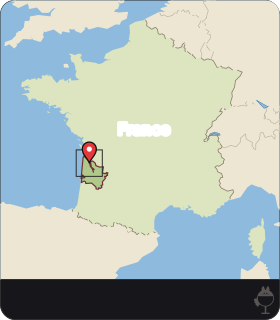
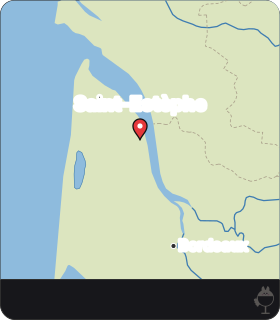
France: map with a pin on Saint-EstèpheSaint-Estèphe and its surroundings: map with a pin
Saint-Estèphe · FranceMap: Maison Apéro, based on Natural Earth (public domain)

Start with Calon-Ségur 2019 to connect Saint-Estèphe with a wine, rather than memorising an appellation name.

The background that matters

At Calon-Ségur, gravel overlies clay-rich subsoil. This describes one estate, not every vineyard in Saint-Estèphe.

Read it alongside this wine

The featured 2019 combines Cabernet Sauvignon, Merlot, Cabernet Franc and Petit Verdot. Its review is one vintage-specific example: neither the regional name nor the blend alone explains every sensation.

Try it with the review

Compare acidity, tannin and body in the review. Then distinguish tannin quantity from roughness. Write one sentence supported by those observations, rather than simply calling the wine ‘powerful because it is Saint-Estèphe’.

These are learning prompts, not guaranteed tasting results. Separate the published facts from your own observations.
Château Calon-Ségur 2019

Sources

Soil and climate diagrams

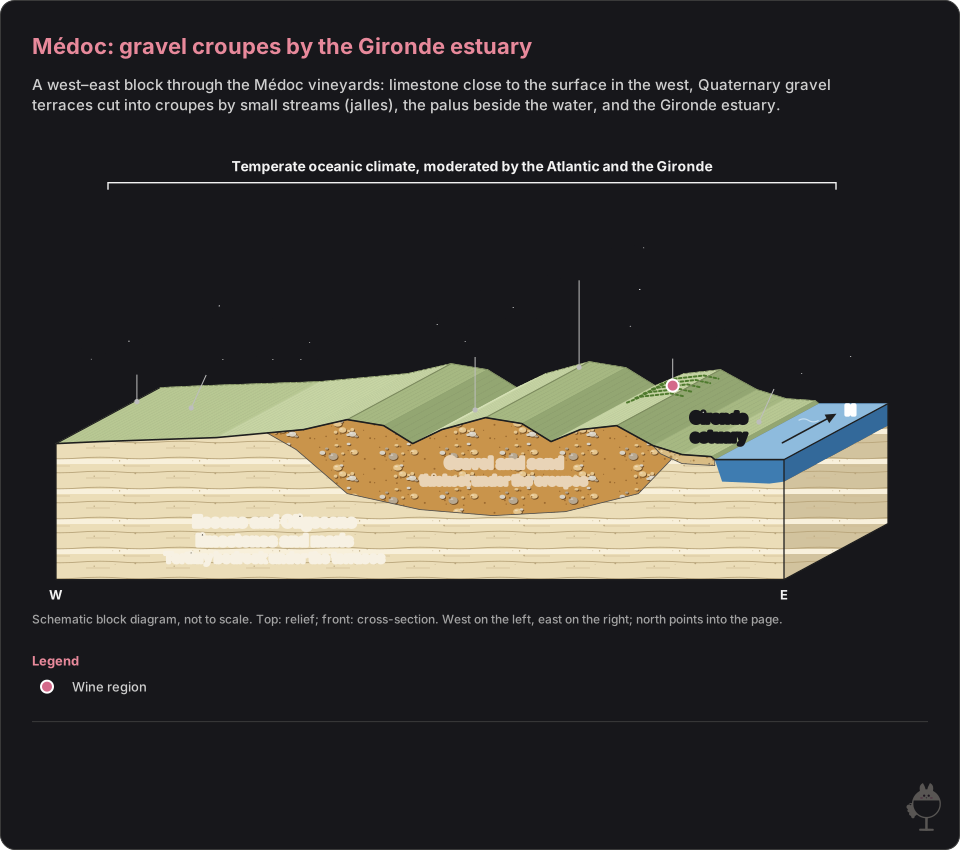
Médoc: gravel croupes by the Gironde estuary: Palus, Jalles, Saint-Estèphe, Margaux, Gravel croupes, Atlantic Ocean, Limestone close to the surface, Gironde estuary, Gravel and sand, Eocene and Oligocene limestones and marls, Temperate oceanic climate, moderated by the Atlantic and the Gironde

Schematic block diagram, not to scale: the top shows the relief and the front face a cross-section, coloured by soil and rock type.

  • In Saint-Estèphe, Quaternary terraces rest on Eocene and Oligocene marls and limestones, which come to the surface mainly in the west of the commune; the jalles and esteys that drain the land towards the Gironde have cut the terraces into gravel croupes.
  • On the croupes the soils are mainly sandy-gravel or clay-gravel; in the west, hard limestone is covered in places by sandy-gravel soils and thin rendzinas, and recent alluvium, the palus, lines the estuary.
  • In Margaux the gravel terraces lie on the left bank of the Gironde; the gravel is thickest at the summit of the croupes and rests on a Tertiary limestone or clay-marl terrace.
  • The climate is temperate and oceanic; the waters of the Atlantic and the Gironde regulate temperature.
  • The subsoil of Saint-Estèphe rests on a limestone base of Ludian (Tertiary) age.
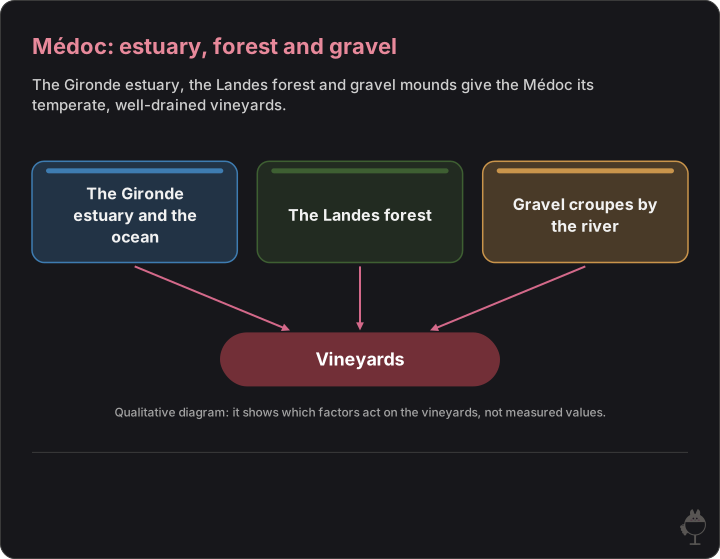
Médoc: estuary, forest and gravel: The Gironde estuary and the ocean, The Landes forest, Gravel croupes by the river → Vineyards

The Gironde estuary, the Landes forest and gravel mounds give the Médoc its temperate, well-drained vineyards.

  • The Gironde estuary and the ocean — Water on two sides moderates the climate: the estuary and the nearby Atlantic soften spring frost and summer extremes.
  • The Landes forest — The pine forest to the west shelters the vineyards from Atlantic winds.
  • Gravel croupes by the river — Gravel mounds near the estuary drain quickly and hold daytime warmth, helping Cabernet Sauvignon ripen.

Wines to explore

Compare the wines on this page

WineSweetnessAcidityTanninBodyQualityReadiness for drinking
Château Calon-Ségur Saint-Estèphe 2018DryMedium+HighFullOutstandingCan drink, with potential
Château Calon-Ségur 2017DryMedium+HighMedium+OutstandingCan drink, with potential
Château Calon-Ségur 2019DryMedium+HighFullOutstandingCan drink, with potential
Château Calon-Ségur Saint-Estèphe 2020DryMedium+HighFullOutstandingCan drink, with potential

Levels come from each wine’s saved structured tasting profile. A blank cell means the attribute was not measured.