
Maison Media
Château Haut Bernicot Bordeaux 2022
Updated ·
Château Haut Bernicot Bordeaux 2022 is a red wine from Bordeaux, France, made from Merlot and Cabernet Sauvignon. In Maison Apéro’s structured tasting profile, the quality is “Good” and the readiness for drinking is “Drink now”.
- Producer
- Château Haut Bernicot
- Region
- Bordeaux · France
- Vintage
- 2022
- Grapes
- Merlot, Cabernet Sauvignon
About Château Haut Bernicot Bordeaux 2022
What grapes is Château Haut Bernicot Bordeaux 2022 made from?
Château Haut Bernicot Bordeaux 2022 is made from Merlot and Cabernet Sauvignon.
Where does Château Haut Bernicot Bordeaux 2022 come from?
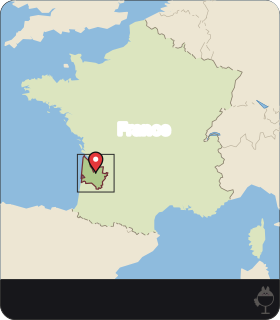
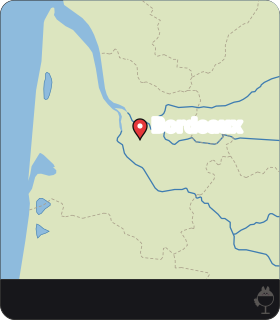
Château Haut Bernicot Bordeaux 2022 comes from Bordeaux, France. It is made by Château Haut Bernicot.
How does Château Haut Bernicot Bordeaux 2022 taste?
In Maison Apéro’s structured tasting profile, Château Haut Bernicot Bordeaux 2022 is recorded with these levels — Sweetness: Dry; Acidity: Medium; Tannin: Medium; Alcohol: Medium; Body: Medium; Flavour intensity: Medium; Finish: Medium. Aromas: Red fruit, Black fruit, Oak.
When should you drink Château Haut Bernicot Bordeaux 2022?
In Maison Apéro’s structured tasting profile, the readiness for drinking of Château Haut Bernicot Bordeaux 2022 is “Drink now”.
Château Haut Bernicot is a classic Bordeaux estate producing approachable, Merlot-driven red wines under the regional Bordeaux AOC. Situated in southwest France, the property benefits from temperate maritime conditions and clay-limestone soils well suited to Merlot and Cabernet Sauvignon. The warm and sun-drenched 2022 vintage yielded ripe fruit with generous red and black berry character, supported by supple tannins.
Sensory & terroir profile
6-Axis Radar
3-Tier Aromas
Climate & Landscape
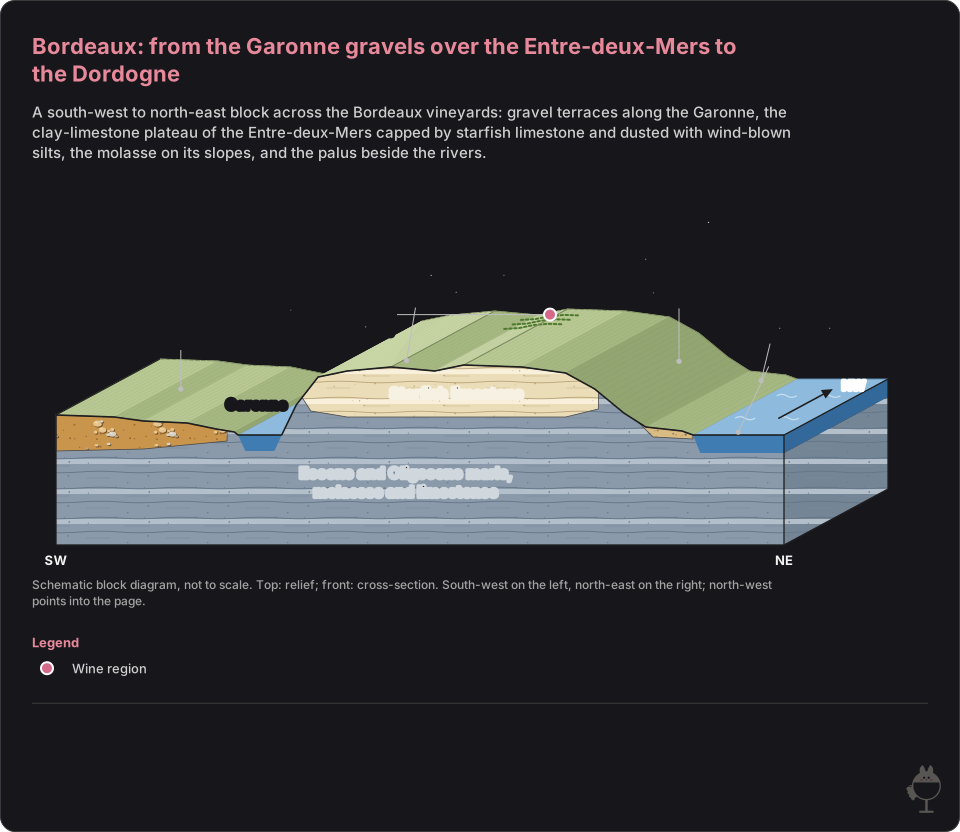
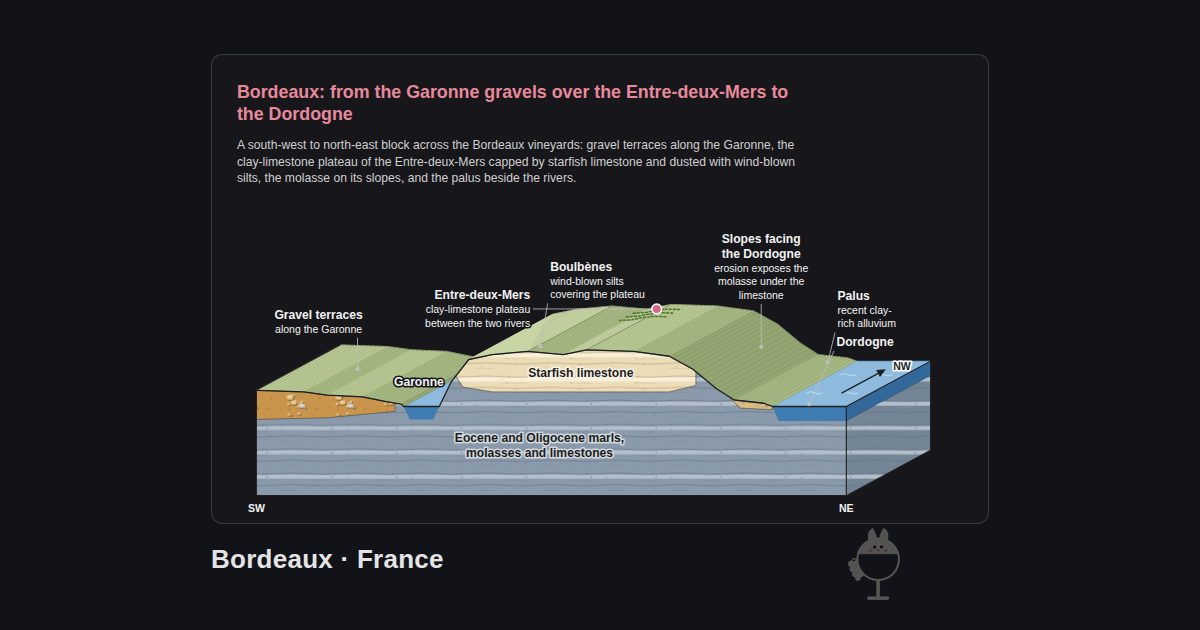
Schematic block diagram, not to scale: the top shows the relief and the front face a cross-section, coloured by soil and rock type.
- The Entre-deux-Mers is a broad clay-limestone plateau bounded by the left bank of the Dordogne to the north and the right bank of the Garonne to the south.
- Starfish limestone is the main formation beneath the region and forms the top of the plateaus; erosion of the slopes, especially those facing the Dordogne, exposes the molasse beneath it, and wind-blown silts, the boulbènes, often cover the plateau.
- Across the Bordeaux appellation the ground ranges from gravel terraces along the Garonne and Dordogne and clay-rich palus to Eocene and Oligocene marls, molasses and limestones; the Atlantic, the Gironde estuary and the river valleys play an important part in regulating temperature.