The background that matters
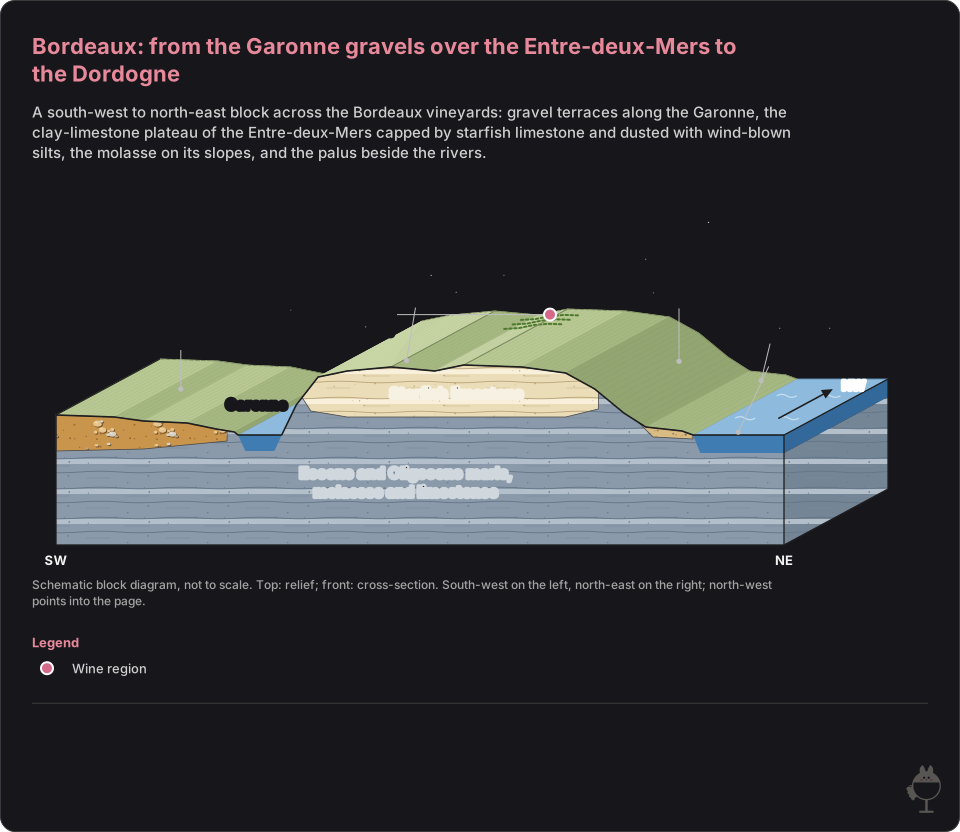
The ground in the Bordeaux appellation is very varied: gravel terraces along the Garonne and Dordogne, clay-dominated riverside soils called palus, wind-blown silts called boulbènes, and Eocene and Oligocene marls, molasses and limestones. The Atlantic, the Gironde estuary and the Garonne and Dordogne valleys play an important temperature-regulating role, and average rainfall is 700–800 mm a year, spread across the seasons.
Read it alongside this wine
This site lists the wine with Merlot and Cabernet Sauvignon. The appellation name alone does not tell you which of those soils the vines grow on, so this page draws no conclusion about the wine's style.
Try it with the review
Read the review and sort its statements into what was observed in the glass and what is said about place or vintage, then check which of the latter name a source. Compare with the Margaux and Saint-Estèphe pages, two appellations in the Médoc, and ask what each name tells you about place.
These are learning prompts, not guaranteed tasting results. Separate the published facts from your own observations.
Sources
- INAO — Cahier des charges de l'appellation d'origine contrôlée « Bordeaux »Checked 2026-10-06
- Bordeaux Wines (CIVB) — Margaux: the Bordeaux wine appellation guideChecked 2026-10-06
- Bordeaux Wines (CIVB) — Saint-Estèphe: the Bordeaux wine appellation guideChecked 2026-10-06