
Maison Media
Invivo Marlborough Sauvignon Blanc 2025
Updated ·
Invivo Marlborough Sauvignon Blanc 2025 is a white wine from Marlborough, New Zealand, made from Sauvignon Blanc. In Maison Apéro’s structured tasting profile, the quality is “Very good” and the readiness for drinking is “Drink now”.
- Producer
- Invivo
- Region
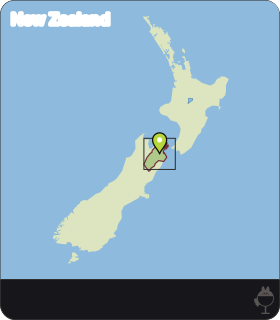
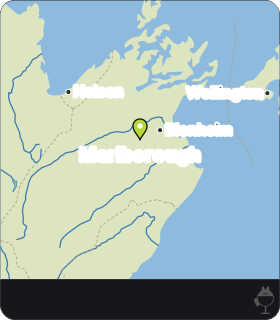
- Marlborough · New Zealand
- Vintage
- 2025
- Grapes
- Sauvignon Blanc
About Invivo Marlborough Sauvignon Blanc 2025
What grapes is Invivo Marlborough Sauvignon Blanc 2025 made from?
Invivo Marlborough Sauvignon Blanc 2025 is made from Sauvignon Blanc.
Where does Invivo Marlborough Sauvignon Blanc 2025 come from?
Invivo Marlborough Sauvignon Blanc 2025 comes from Marlborough, New Zealand. It is made by Invivo.
How does Invivo Marlborough Sauvignon Blanc 2025 taste?
In Maison Apéro’s structured tasting profile, Invivo Marlborough Sauvignon Blanc 2025 is recorded with these levels — Sweetness: Dry; Acidity: High; Alcohol: Medium; Body: Medium; Flavour intensity: Pronounced; Finish: Medium+. Aromas: Citrus fruit, Green fruit, Tropical fruit, Herbaceous.
When should you drink Invivo Marlborough Sauvignon Blanc 2025?
In Maison Apéro’s structured tasting profile, the readiness for drinking of Invivo Marlborough Sauvignon Blanc 2025 is “Drink now”.
Invivo Marlborough Sauvignon Blanc is an expressive benchmark white produced by Invivo Wines, founded in New Zealand by Tim Lightbourne and Rob Cameron. Sourced from select vineyard parcels across the Wairau and Awatere Valleys, this cuvée captures the region's signature punchy aromatics, vibrant citrus drive, and lively herbaceous complexity.
Sensory & terroir profile
6-Axis Radar
Tannin is not part of the evaluation of a white wine, so this axis is empty.
3-Tier Aromas
Climate & Landscape
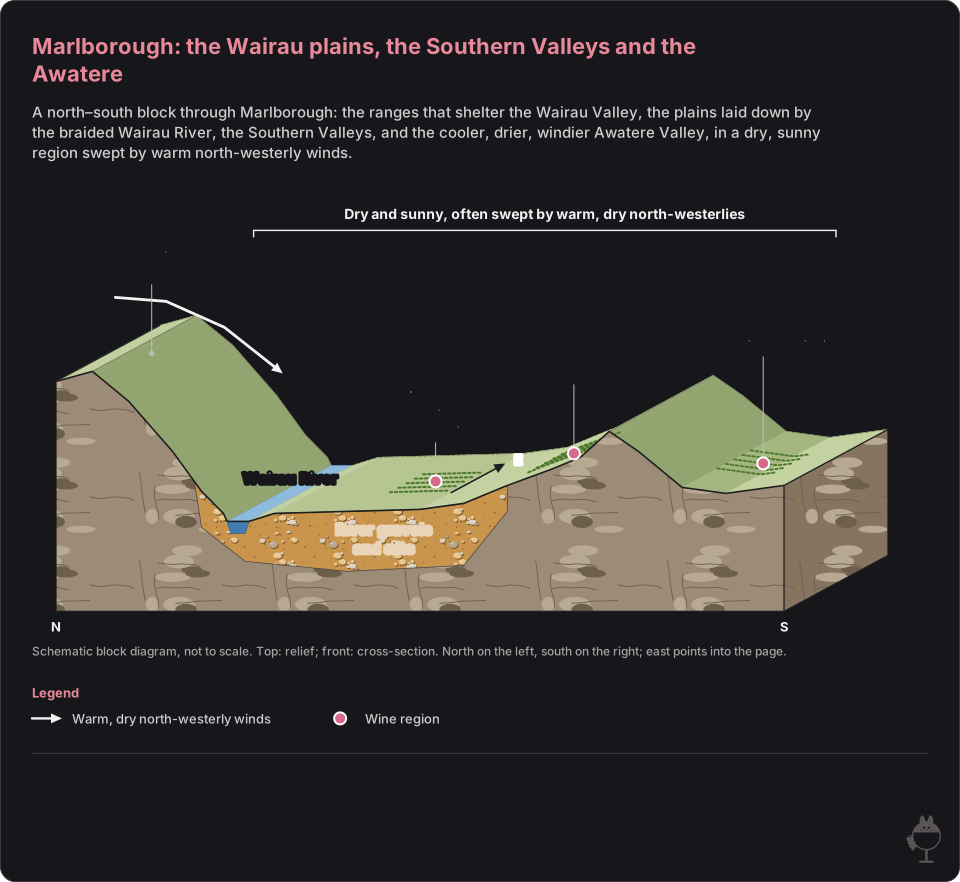
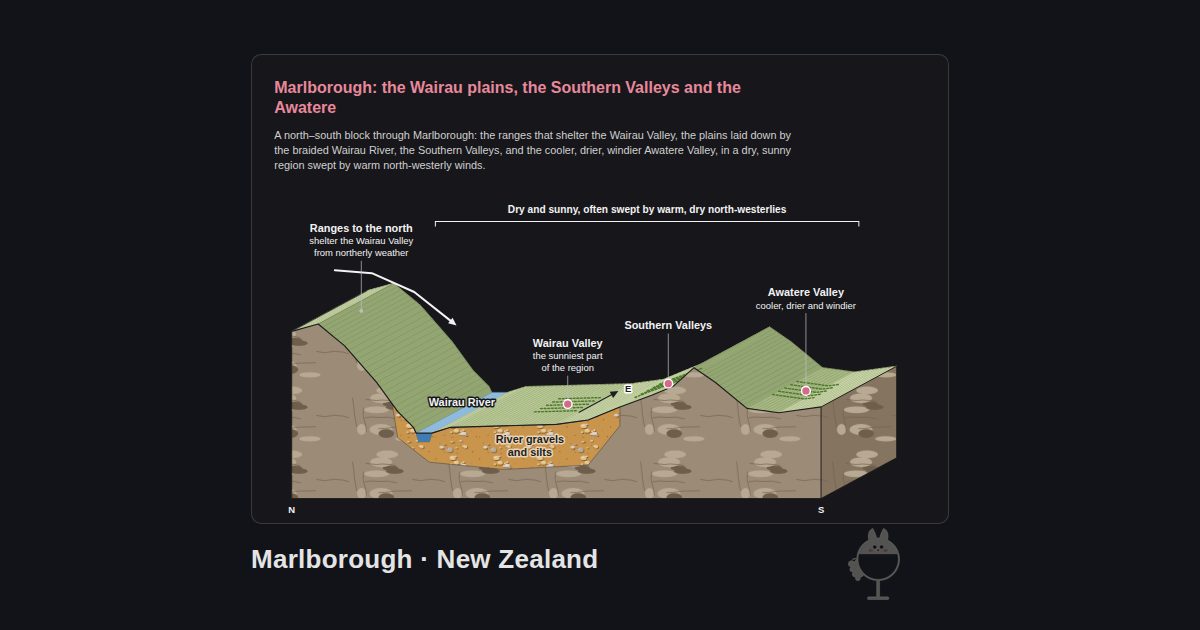
Schematic block diagram, not to scale: the top shows the relief and the front face a cross-section, coloured by soil and rock type.
- Marlborough, New Zealand’s largest winegrowing region, has three sub-regions: the Wairau Valley, the Southern Valleys and the Awatere Valley; the Awatere is cooler, drier and windier.
- Dryness is the main feature of the climate: summer droughts are frequent and warm, dry north-westerlies often sweep the region, which is also very sunny; the surrounding ranges shelter the Wairau Valley from weather arriving from the north and north-west.
- On the Wairau Plains, soil texture changes over short distances, reflecting the former channels of the braided Wairau River; vines on gravels near the surface developed earlier than vines on deep silt.