Maison Media

Priorat Centenari Primitiu de Bellmunt Els Molins Vi de Paratge Priorat 2019

Updated ·

Priorat Centenari Primitiu de Bellmunt Els Molins Vi de Paratge Priorat 2019 is a red wine from Priorat, Spain, made from Carignan and Garnacha. In Maison Apéro’s structured tasting profile, the quality is “Very good” and the readiness for drinking is “Can drink, with potential”.

Region
Priorat · Spain
Vintage
2019
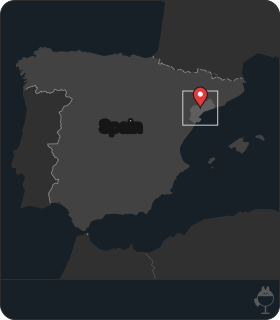
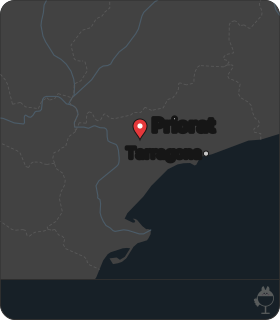
Spain: map with a pin on PrioratPriorat and its surroundings: map with a pin
Priorat · SpainMap: Maison Apéro, based on Natural Earth (public domain)

About Priorat Centenari Primitiu de Bellmunt Els Molins Vi de Paratge Priorat 2019

What grapes is Priorat Centenari Primitiu de Bellmunt Els Molins Vi de Paratge Priorat 2019 made from?

Priorat Centenari Primitiu de Bellmunt Els Molins Vi de Paratge Priorat 2019 is made from Carignan and Garnacha.

Where does Priorat Centenari Primitiu de Bellmunt Els Molins Vi de Paratge Priorat 2019 come from?

Priorat Centenari Primitiu de Bellmunt Els Molins Vi de Paratge Priorat 2019 comes from Priorat, Spain. It is made by Priorat Centenari.

How does Priorat Centenari Primitiu de Bellmunt Els Molins Vi de Paratge Priorat 2019 taste?

In Maison Apéro’s structured tasting profile, Priorat Centenari Primitiu de Bellmunt Els Molins Vi de Paratge Priorat 2019 is recorded with these levels — Sweetness: Dry; Acidity: Medium+; Tannin: Medium+; Alcohol: High; Body: Full; Flavour intensity: Pronounced; Finish: Long. Aromas: Black fruit, Red fruit, Herbal, Spice, Mineral, Oak, Bottle age (red).

When should you drink Priorat Centenari Primitiu de Bellmunt Els Molins Vi de Paratge Priorat 2019?

In Maison Apéro’s structured tasting profile, the readiness for drinking of Priorat Centenari Primitiu de Bellmunt Els Molins Vi de Paratge Priorat 2019 is “Can drink, with potential”.

Priorat Centenari's Primitiu de Bellmunt Els Molins Vi de Paratge 2019 represents a site-specific classification from historic old vines around Bellmunt del Priorat. Crafted primarily from traditional Cariñena and Garnacha grown on llicorella slate terraces, this cuvée captures the warmth and stony concentration quintessential to the southern sector of the appellation.
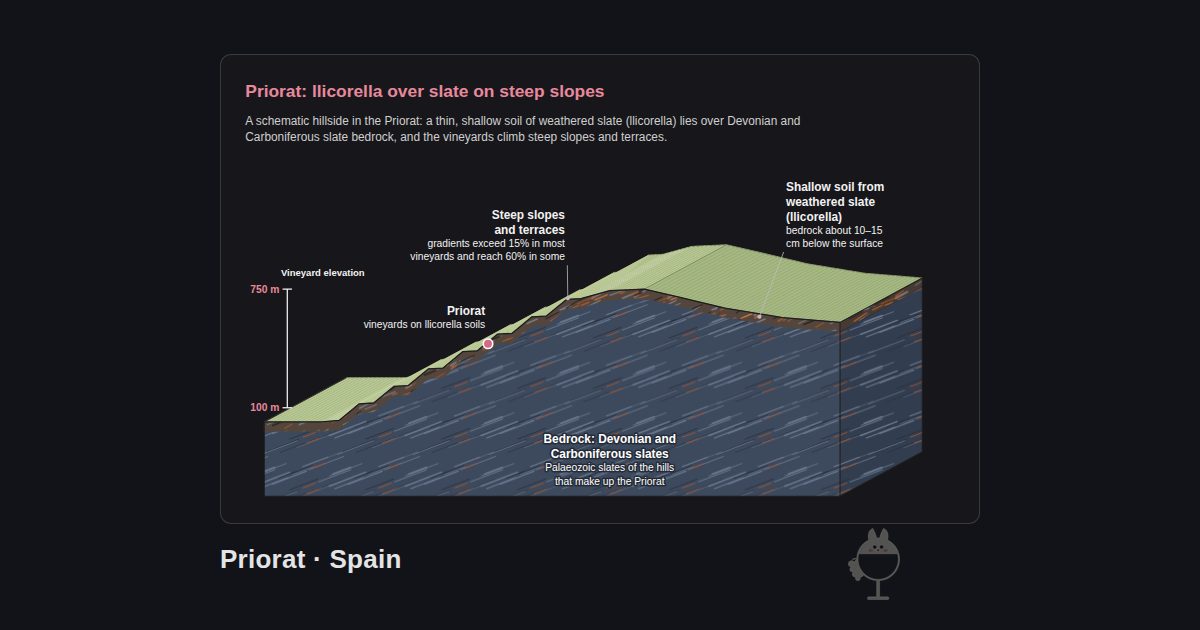
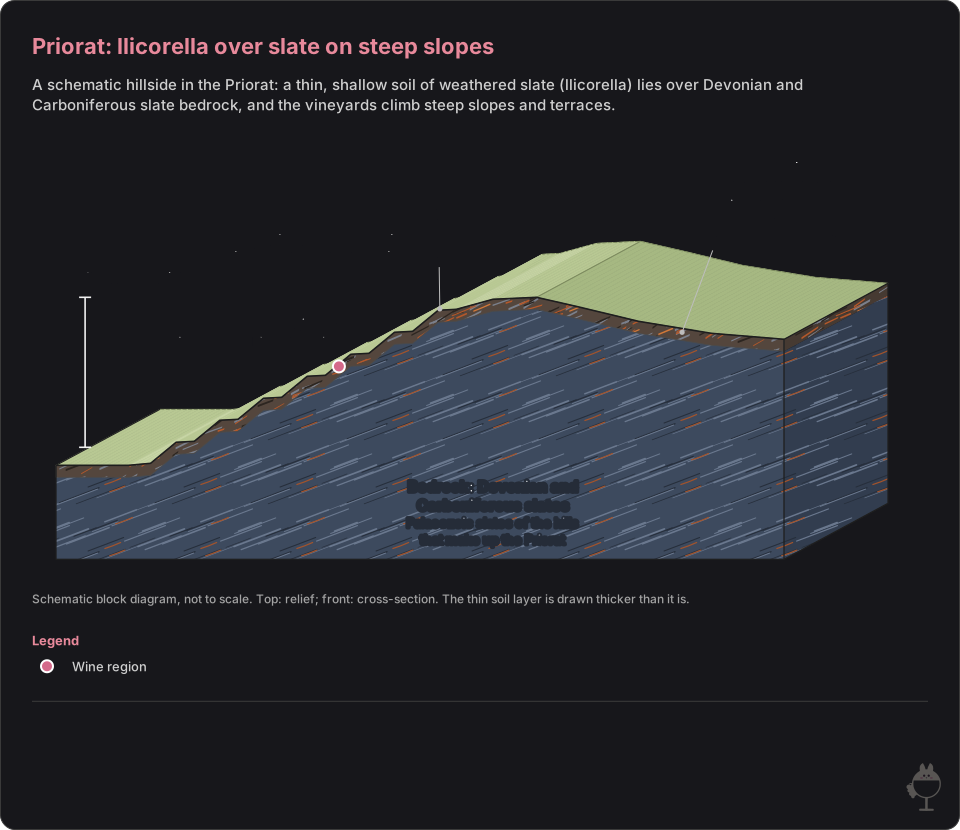
Priorat, Spain. Priorat: llicorella over slate on steep slopes: Bedrock: Devonian and Carboniferous slates, Priorat, Steep slopes and terraces, Shallow soil from weathered slate (llicorella)
Priorat · SpainDiagram: Maison Apéro Sources: Generalitat de Catalunya (Departament d’Agricultura) — Pliego de condiciones «DOP Priorat» · Familia Torres — Perpetual 2021 (DOQ Priorat), ficha técnica · IGME — Mapa Geológico de España 1:50.000, memoria de la Hoja 0471 (Mora de Ebro) · Consell Regulador de la DOQ Priorat — Territory

Sensory & terroir profile

6-Axis Radar

Acidity Medium+ Tannin Medium+ Body Full Alcohol High Flavourintensity Pronounced Finish Long

3-Tier Aromas

● Primary (Varietal, Fruit & Flora):
Black fruitRed fruitHerbalSpiceMineral
● Secondary (Vinification, Yeast & Oak):
Oak
● Tertiary (Bottle Age & Bouquet):
Bottle age (red)

Terroir Strata

Priorat: llicorella over slate on steep slopes: Bedrock: Devonian and Carboniferous slates, Priorat, Steep slopes and terraces, Shallow soil from weathered slate (llicorella)

Schematic block diagram, not to scale: the top shows the relief and the front face a cross-section, coloured by soil and rock type.

  • The soil is usually a single horizon, low in organic matter, formed mainly by the breakdown of slate, called llicorella here; bedrock lies about 10–15 cm below the surface. It drains quickly and holds little water.
  • The bedrock is made of Devonian and Carboniferous slates, the Palaeozoic slates of the hills that make up the Priorat.
  • Many Priorat vineyards are on steep slopes and terraces: gradients exceed 15% in most vineyards and reach 60% in some.
  • The vineyards lie between 100 and 750 m of elevation.

Tasting review

From the review saved in Maison Apéro for this wine and vintage.

Structured tasting profile

How to read this profile: each attribute is recorded as one level on a fixed scale, for example Acidity: Low · Medium− · Medium · Medium+ · High. Attributes without a saved level are left out; nothing is estimated.

Clarity
Clear
Intensity
Deep
Color
Ruby
Aroma intensity
Medium+
Development
Developing
Sweetness
Dry
Acidity
Medium+
Tannin
Medium+
Alcohol
High
Body
Full
Flavour intensity
Pronounced
Finish
Long
Quality
Very good
Readiness for drinking
Can drink, with potential
Primary

Black fruit, Red fruit, Herbal, Spice, Mineral

Secondary

Oak

Tertiary

Bottle age (red)

Quality markers

✓ Balance, ✓ Length, ✓ Intensity, ✓ Complexity

Up to 8 aromas across all three categories, with a target of 4–5 palate flavours. Only supported descriptors are listed; absences do not count as aromas. Red check counts are not scores.

Expert commentary

Aromas of dark plum, wild thyme, and crushed slate lead onto a powerful, full-bodied palate framed by robust, muscular tannins and warming alcohol. Fresh acidity maintains tension across the dense black fruit and spicy oak notes through a lingering, mineral finish.

Serving and ageing guide

This wine can be drunk now but has potential for ageing. Its concentrated black cherry fruit, vibrant acidity, and firm, ripe tannins will easily sustain further bottle evolution over the next six to eight years. Best served at 16–18°C after an hour of decanting to open its dense aromatics, it pairs naturally with roast lamb shank, game stews, or wild boar sausages. The wine demonstrates very good quality, defined by its commanding presence and structural harmony. The medium-plus nose intensity aligns with an expressive, high-intensity palate, combining primary bramble fruit, llicorella mineral notes, and subtle secondary barrel spice. Supported by balanced, fresh acidity that offsets high alcohol, it sustains great depth through an expansive, lingering finish.

Appearance

Phrases the assessment is based on

The wine is clear, displaying a Assessment evidence deep Assessment evidence ruby core that transitions evenly toward a youthful, vibrant garnet rim with dense tears.

Advanced analysis Grand

Nose

Tasting Review Example Réserve

Advanced analysis Grand

Palate

Tasting Review Example Réserve

Advanced analysis Grand

Quality

Tasting Review Example Réserve

Advanced analysis Grand

Readiness for drinking

Tasting Review Example Réserve

Advanced analysis Grand

Read Réserve and Grand sections by signing in to Maison Apéro with the corresponding plan.

Maison Apéro uses a multi-stage validation process. This tasting review is data-driven reference information created from wine information and analytical signals. Actual aromas, flavours and condition may vary by bottle, storage, service and individual perception, so it is not a definitive assessment.