
Maison Media
Grace Koshu 2024
Updated ·
Grace Koshu 2024 is a white wine from Katsunuma, Yamanashi, Japan, made from Koshu. In Maison Apéro’s structured tasting profile, the quality is “Very good” and the readiness for drinking is “Can drink, with potential”.
- Producer
- GRACE WINE
- Region
- Katsunuma (勝沼) · Japan
- Vintage
- 2024
- Grapes
- Koshu
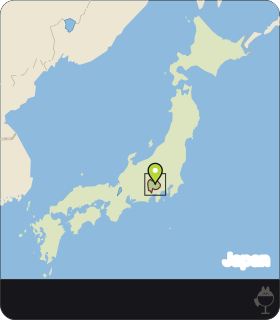
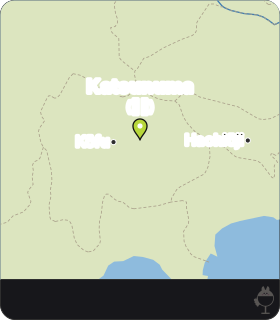
About Grace Koshu 2024
What grapes is Grace Koshu 2024 made from?
Grace Koshu 2024 is made from Koshu.
Where does Grace Koshu 2024 come from?
Grace Koshu 2024 comes from Katsunuma, Yamanashi, Japan. It is made by GRACE WINE.
How does Grace Koshu 2024 taste?
In Maison Apéro’s structured tasting profile, Grace Koshu 2024 is recorded with these levels — Sweetness: Dry; Acidity: High; Alcohol: Medium; Body: Medium−; Flavour intensity: Medium; Finish: Medium+. Aromas: Citrus fruit, Green fruit, Stone fruit, Floral, Mineral, Spice, Yeast / lees.
When should you drink Grace Koshu 2024?
In Maison Apéro’s structured tasting profile, the readiness for drinking of Grace Koshu 2024 is “Can drink, with potential”.
Grace Koshu, made by Chuo Budoshu (Grace Wine) in Yamanashi, is a signature white wine that has helped introduce Japan’s native Koshu grape to the world. Selected grapes from estate-managed vineyards and contracted growers, including higher-altitude sites in Katsunuma, undergo low-temperature fermentation in stainless steel to express the variety’s clear acidity, delicate aromas and crisp mineral character.
Describe acidity and texture in your own words before reading a reference. Do not mistake technical production facts for a tasting result.
Sources
- GRACE WINE — Grace Koshu 2024Factual reference with original Maison wording; no reproduced images or quotations
- GRACE WINE — グレイス甲州Factual reference with original Maison wording; no reproduced images or quotations
Sensory & terroir profile
6-Axis Radar
Tannin is not part of the evaluation of a white wine, so this axis is empty.
3-Tier Aromas
Climate & Landscape
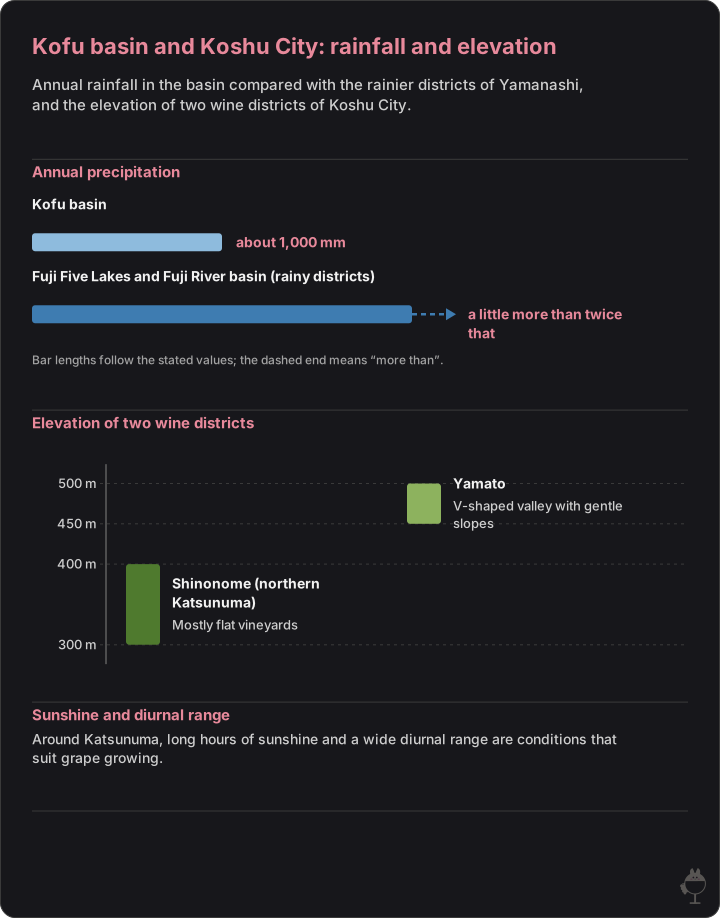
The bars compare annual rainfall; the coloured bands show the elevation range of each district.
- Kofu basin: about 1,000 mm
- Fuji Five Lakes and Fuji River basin (rainy districts): a little more than twice that
- Shinonome (northern Katsunuma): 300–400 m (Mostly flat vineyards)
- Yamato: 450–500 m (V-shaped valley with gentle slopes)
- Sunshine and diurnal range — Around Katsunuma, long hours of sunshine and a wide diurnal range are conditions that suit grape growing.
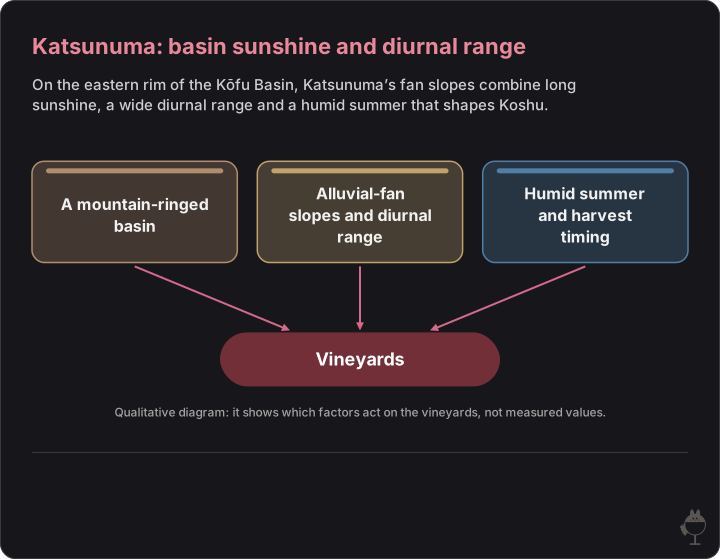
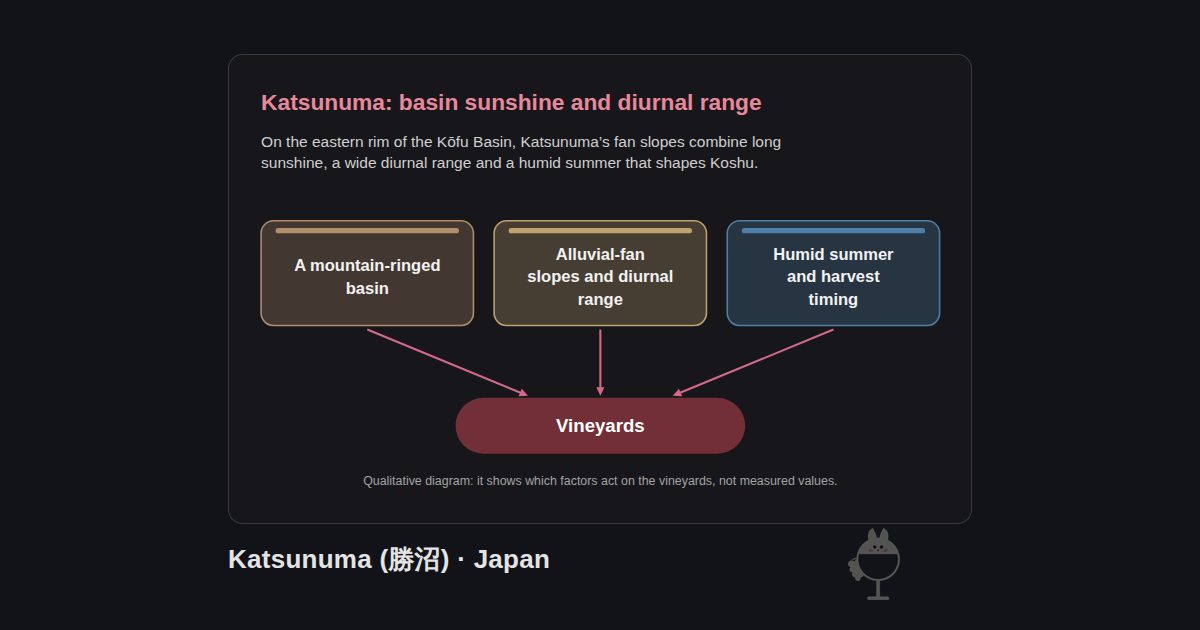
On the eastern rim of the Kōfu Basin, Katsunuma’s fan slopes combine long sunshine, a wide diurnal range and a humid summer that shapes Koshu.
A mountain-ringed basin
Katsunuma sits on the eastern edge of the Kōfu Basin. Ringed by mountains, the basin is known for long sunshine hours and comparatively low rainfall for Japan.
Alluvial-fan slopes and diurnal range
Vineyards on alluvial-fan slopes see warm days and cool nights; the diurnal range keeps Koshu’s acidity and delicate aromatics.
Humid summer and harvest timing
The rainy season and typhoons bring humidity; canopy work and harvest timing are part of Katsunuma’s terroir.
Sources: Grace Wine — Winery · Koshu of Japan