Maison Media

Region

Barolo

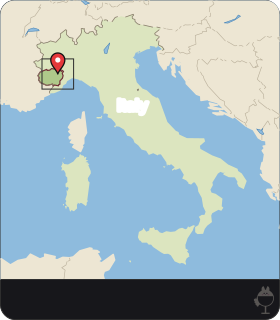
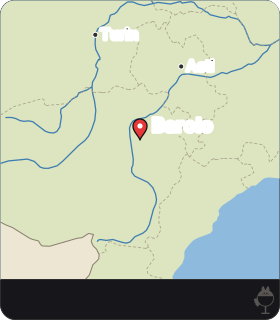
Italy: map with a pin on BaroloBarolo and its surroundings: map with a pin
Barolo · ItalyMap: Maison Apéro, based on Natural Earth (public domain)

Broccardo I Tre Pais 2019 shows how one Barolo can bring several villages together within an appellation built on a single grape, Nebbiolo.

The background that matters

Barolo DOCG is made only from Nebbiolo, grown on hillsides between 170 and 540 metres in all or part of eleven communes, including Barolo, Monforte d’Alba and Novello. The rules call for clayey and/or calcareous soils, exclude north-facing new plantings, and require at least 38 months of ageing from 1 November of the harvest year, 18 of them in wood.

Read it alongside this wine

I Tre Pais is drawn from vineyards in three of those communes: Novello, Barolo and Monforte d’Alba. The 2019 is therefore a blend of places, not a portrait of one village. As a Barolo it can only be Nebbiolo; its review describes one vintage of that blend, not Barolo as a whole.

Try it with the review

In the review, find what is said about colour, acidity and tannin. For each point, ask whether Nebbiolo, the long minimum ageing, the 2019 season or the three-village blend could explain it, and mark the points the published facts cannot settle.

These are learning prompts, not guaranteed tasting results. Separate the published facts from your own observations.

Broccardo I Tre Pais Barolo 2019

Sources

Soil and climate diagrams

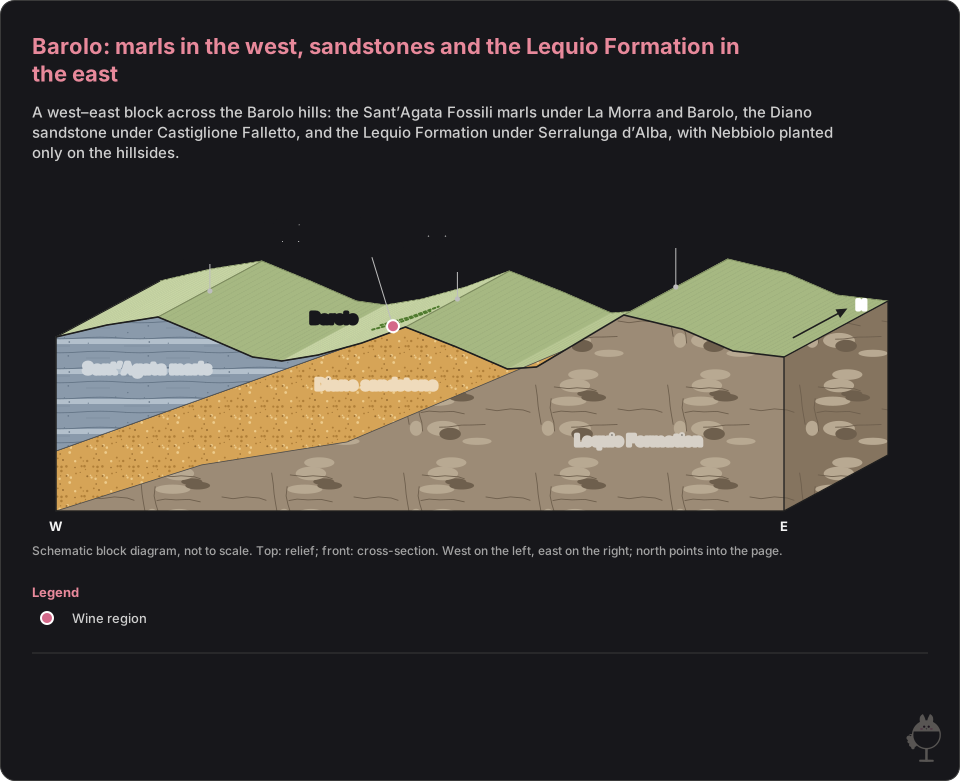
Barolo: marls in the west, sandstones and the Lequio Formation in the east: La Morra, Barolo, Castiglione Falletto, Serralunga d’Alba, Barolo DOCG, Sant’Agata marls, Diano sandstone, Lequio Formation

Schematic block diagram, not to scale: the top shows the relief and the front face a cross-section, coloured by soil and rock type.

  • The Sant’Agata Fossili marls, clay-rich with smaller shares of sand and limestone, lie under La Morra and Barolo; the Diano sandstone under the hills of Castiglione Falletto and part of Monforte; and the Lequio Formation under part of Monforte and Serralunga d’Alba.
  • Barolo is made only from Nebbiolo grown on hillsides; the rules call for clayey and/or calcareous soils and exclude new north-facing plantings.
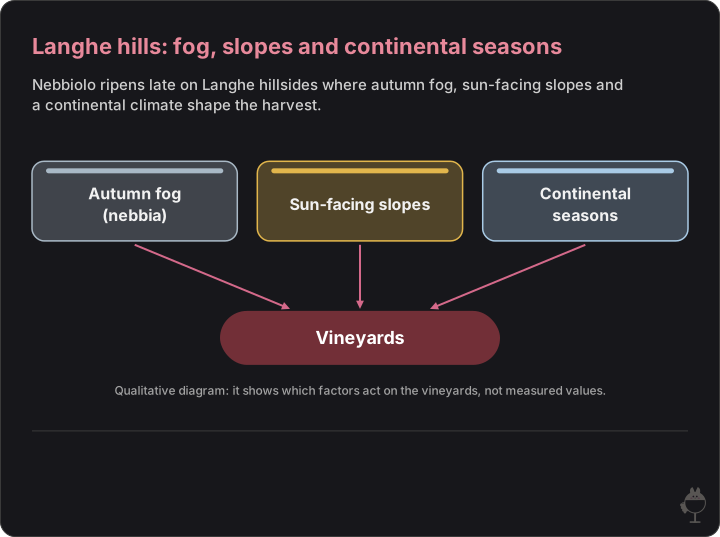
Langhe hills: fog, slopes and continental seasons: Autumn fog (nebbia), Sun-facing slopes, Continental seasons → Vineyards

Nebbiolo ripens late on Langhe hillsides where autumn fog, sun-facing slopes and a continental climate shape the harvest.

  • Autumn fog (nebbia) — From late September the valleys fill with morning fog. Nebbiolo, picked in October, finishes ripening through cool, humid mornings and warm afternoons.
  • Sun-facing slopes — Vineyards climb the hillsides; the finest parcels face south to south-west and are named for their sun (sorì).
  • Continental seasons — Hot summers and cold winters, with warm autumn days and cold nights, preserve Nebbiolo’s acidity and aromatics.

Wines to explore