
Maison Media
Ironstone Vineyards Rous Vineyard Old Vine Reserve Zinfandel, Lodi 2022
Updated ·
Ironstone Vineyards Rous Vineyard Old Vine Reserve Zinfandel, Lodi 2022 is a red wine from Lodi, United States, made from Zinfandel. In Maison Apéro’s structured tasting profile, the quality is “Very good” and the readiness for drinking is “Can drink, with potential”.
- Producer
- Ironstone Vineyards
- Region
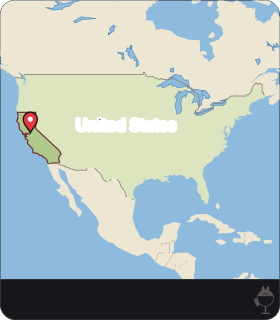
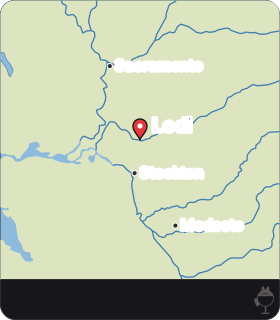
- Lodi · United States
- Vintage
- 2022
- Grapes
- Zinfandel
About Ironstone Vineyards Rous Vineyard Old Vine Reserve Zinfandel, Lodi 2022
What grapes is Ironstone Vineyards Rous Vineyard Old Vine Reserve Zinfandel, Lodi 2022 made from?
Ironstone Vineyards Rous Vineyard Old Vine Reserve Zinfandel, Lodi 2022 is made from Zinfandel.
Where does Ironstone Vineyards Rous Vineyard Old Vine Reserve Zinfandel, Lodi 2022 come from?
Ironstone Vineyards Rous Vineyard Old Vine Reserve Zinfandel, Lodi 2022 comes from Lodi, United States. It is made by Ironstone Vineyards.
How does Ironstone Vineyards Rous Vineyard Old Vine Reserve Zinfandel, Lodi 2022 taste?
In Maison Apéro’s structured tasting profile, Ironstone Vineyards Rous Vineyard Old Vine Reserve Zinfandel, Lodi 2022 is recorded with these levels — Sweetness: Dry; Acidity: Medium; Tannin: Medium+; Alcohol: High; Body: Full; Flavour intensity: Medium+; Finish: Medium+. Aromas: Red fruit, Black fruit, Spice, Oak.
When should you drink Ironstone Vineyards Rous Vineyard Old Vine Reserve Zinfandel, Lodi 2022?
In Maison Apéro’s structured tasting profile, the readiness for drinking of Ironstone Vineyards Rous Vineyard Old Vine Reserve Zinfandel, Lodi 2022 is “Can drink, with potential”.
Sensory & terroir profile
6-Axis Radar
3-Tier Aromas
Climate & Landscape
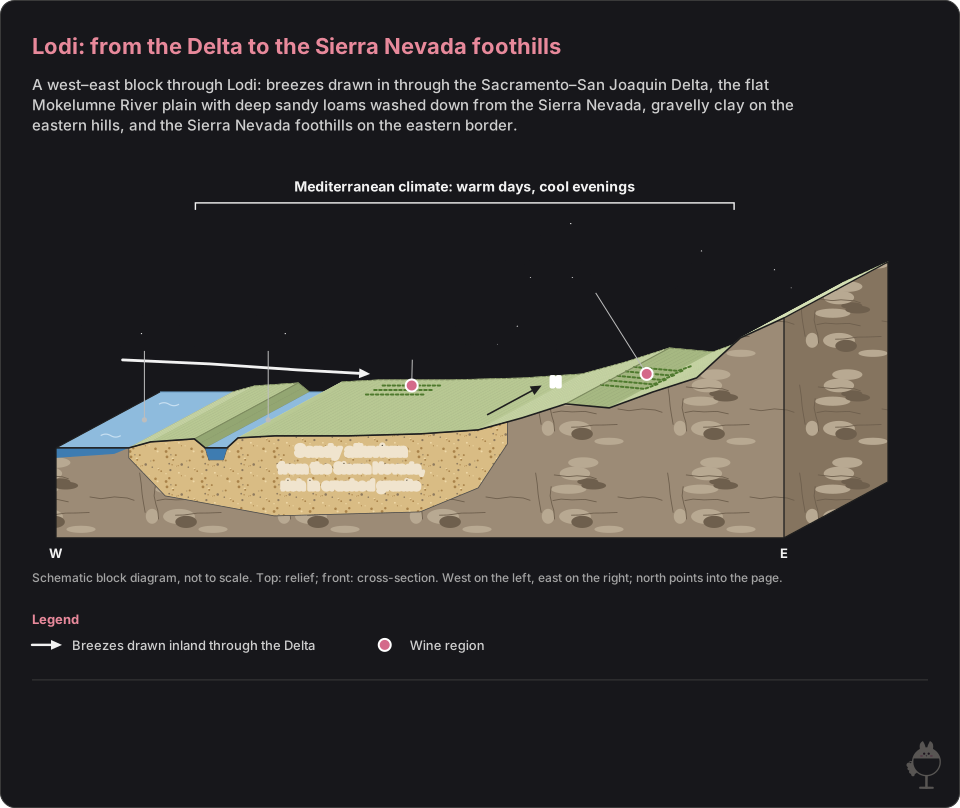
Schematic block diagram, not to scale: the top shows the relief and the front face a cross-section, coloured by soil and rock type.
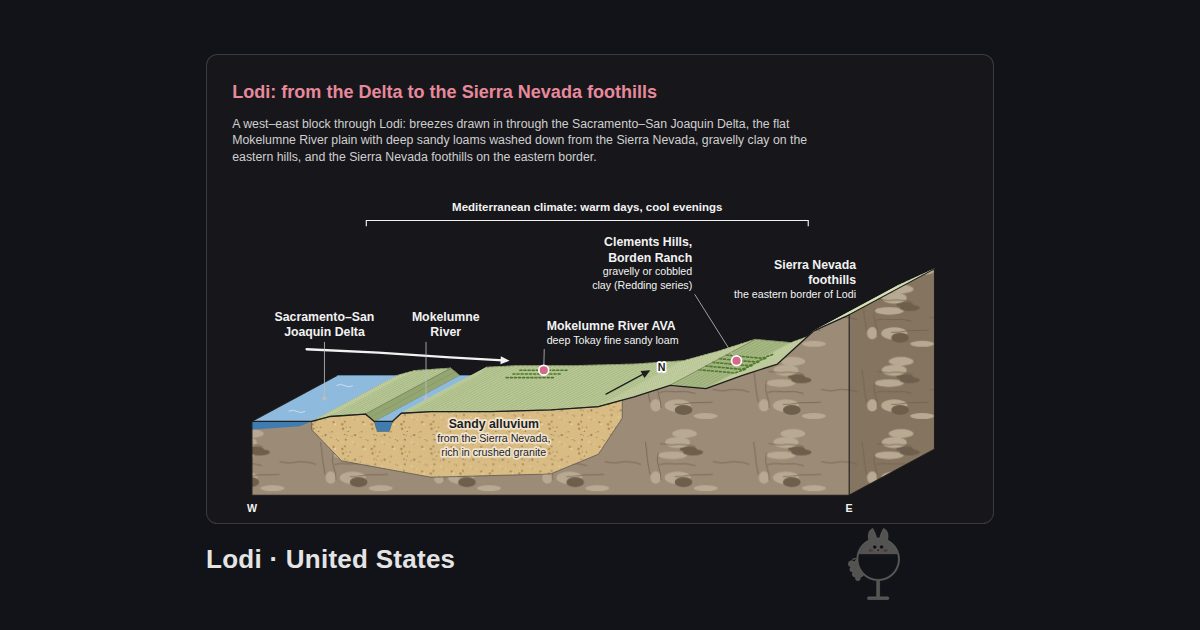
- From west to east, Lodi changes from flat, low plains and old river terraces to rolling hillsides; the Sierra Nevada foothills form its eastern border.
- The Mokelumne and Cosumnes rivers, which rise in the Sierra Nevada, brought soils rich in granitic minerals; the Mokelumne River area is defined by deep Tokay sandy loam, the eastern hills by gravelly or cobbled Redding clay, and other districts by San Joaquin sandy clay loam over a shallow hardpan.
- Lodi has a Mediterranean climate of warm days and cool evenings, moderated by breezes drawn inland through the Sacramento–San Joaquin Delta.
Sources
- Lodi Winegrape Commission — Strong case for Lodi terroir (part 2): the climatic factors
- Lodi Winegrape Commission — Beat the Heat: Why Lodi’s Delta Breeze Makes Summer Wine Tasting Magical
- Lodi Winegrape Commission — Strong case for Lodi terroir (part 3): soil and topography
- Lodi Winegrape Commission — Place: the soil
- Lodi Winegrape Commission — Tokay fine sandy loam, part 1: the Mokelumne River’s defining natural feature