The background that matters
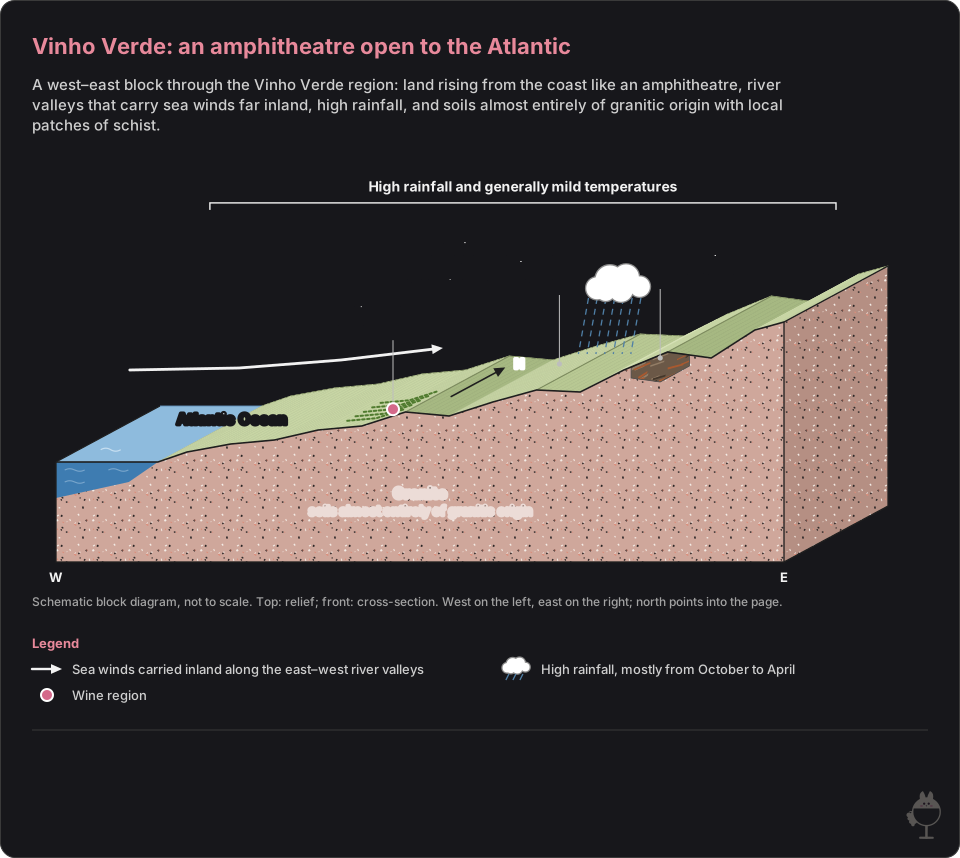
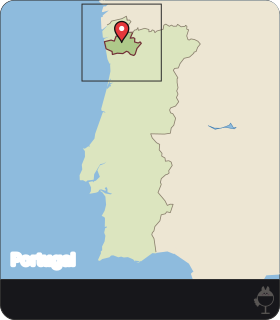
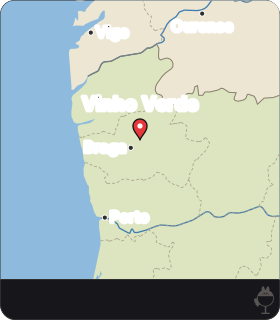
Vinho Verde, in north-west Portugal, rises from the coast like an amphitheatre open to the Atlantic, with high rainfall concentrated between October and April and generally mild temperatures. The main river valleys run east–west and carry sea winds deep inland; in Monção e Melgaço, mountains block those winds, giving colder winters and warmer summers than the rest of the region. Soils are almost entirely of granitic origin, with local patches of schist.
Read it alongside this wine
This site lists Mapreco Vinho Verde without a vintage and with four grapes: Loureiro, Trajadura, Arinto and Azal. The regional picture above does not say where in the region this wine’s grapes were grown.
Try it with the review
If you have the bottle, compare the vintage and grapes on its label with this list. Then write down one observation from the review or your own glass and, beside it, the regional fact you would test it against, marked as a hypothesis rather than a cause.
These are learning prompts, not guaranteed tasting results. Separate the published facts from your own observations.
Sources
- CVRVV — Vinho Verde Demarcated RegionChecked 2026-10-06
- CVRVV (Comissão de Viticultura da Região dos Vinhos Verdes) — Solos e ClimasChecked 2026-10-06
- CVRVV — Vinhos Verdes presentation (English, PDF)Checked 2026-10-06