The background that matters
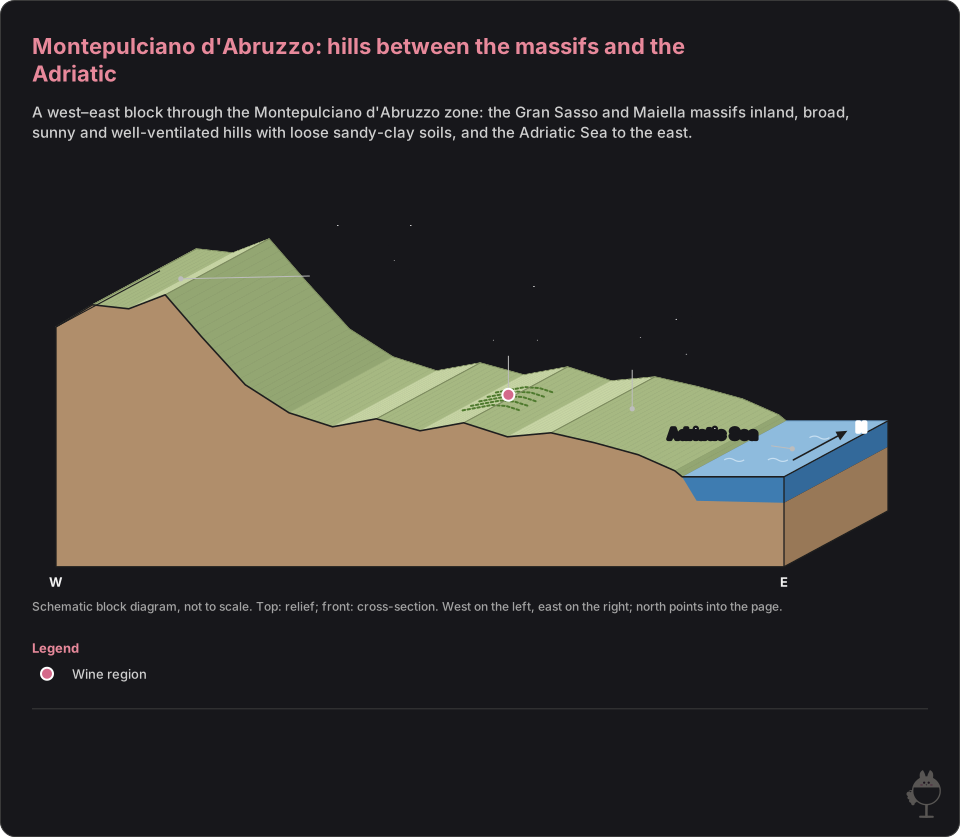
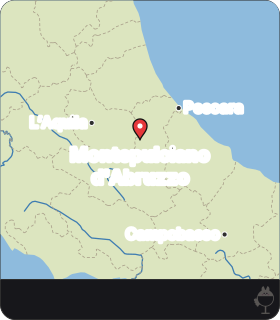
Montepulciano d'Abruzzo is grown on broad, sunny hills with the Adriatic Sea to the east and the Gran Sasso and Maiella massifs to the north-west and south-west respectively. The nearness of the massifs contributes to a marked diurnal range, the hills are well ventilated, and the April–October Winkler index, a measure of accumulated warmth, lies between 1,800 and 2,200 degree days. The soils are sandy-clay and usually loose, with a depth that varies with slope and exposure and a medium to low capacity to hold water.
Read it alongside this wine
Montepulciano is the only grape listed for Ortonese 2023, but this guide does not say where in the appellation its vineyards lie, so the hill, soil and climate description is background, not a portrait of this bottle. Its published profile rates acidity, tannin, alcohol, body and aroma intensity as medium and the finish as medium(-), with five aroma groups: black fruit, red fruit, floral, spice and herbal.
Try it with the review
The diurnal range and good ventilation are linked with healthy grapes and the build-up of aromatic substances. Set that general claim beside this profile, with five aroma groups but medium aroma intensity: what could you attribute to the climate, and what would need information about the vineyard and the 2023 season?
These are learning prompts, not guaranteed tasting results. Separate the published facts from your own observations.