The background that matters
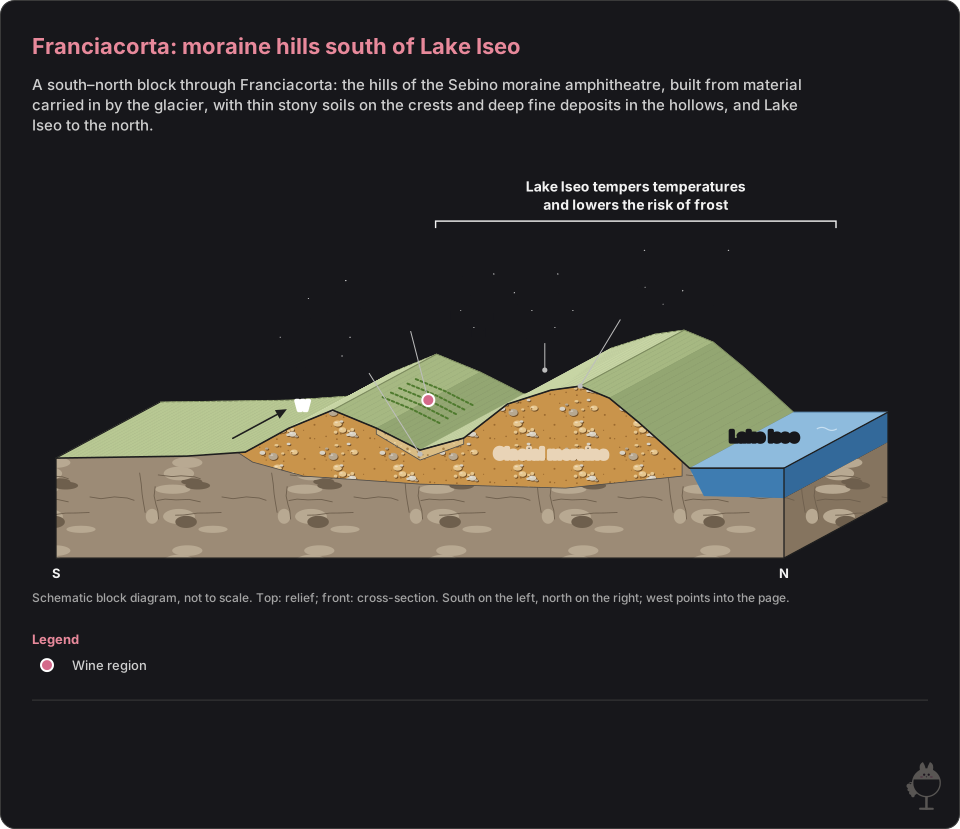
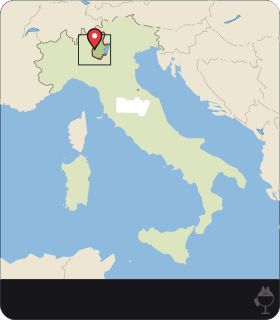
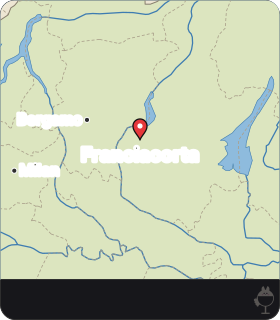
Franciacorta lies south of Lake Iseo, on the hills of the Sebino moraine amphitheatre, and most of its soils formed from material carried in by the glacier. Its soils fall into six units, from thin, stony moraine on crests and steep slopes, which drains quickly and can run short of water in summer, to deep fine deposits and colluvium. The lake brings milder mean temperatures and a lower risk of frost, and vineyards above 550 metres are excluded.
Read it alongside this wine
This Brut is listed here with Chardonnay and Pinot Nero, but the site does not say which vineyards or zoning units the grapes came from, and it gives no vintage. Read the zone description as background for Franciacorta in general, not as a profile of this bottle. This guide quotes no values from a structured profile.
Try it with the review
Read how the expert commentary describes the acidity and the bubbles, and sort each remark into ‘may relate to the place’, ‘relates to winemaking’ or ‘cannot tell’. The lake’s moderating effect is a fact about the zone, not evidence about this glass.
These are learning prompts, not guaranteed tasting results. Separate the published facts from your own observations.
Girolamo Conforti '1570 Libellus de Vino Mordaci' Franciacorta Brut
Sources
- Consorzio per la tutela del Franciacorta — Disciplinare di produzione della DOCG Franciacorta (Allegato A, version of 07/05/2024)Checked 2026-10-06
- Consorzio per la tutela del Franciacorta — Zonazione (unità vocazionali)Checked 2026-10-06
- ISPRA — Carta Geologica d'Italia alla scala 1:50.000, Note illustrative del Foglio 099 IseoChecked 2026-10-06