The background that matters
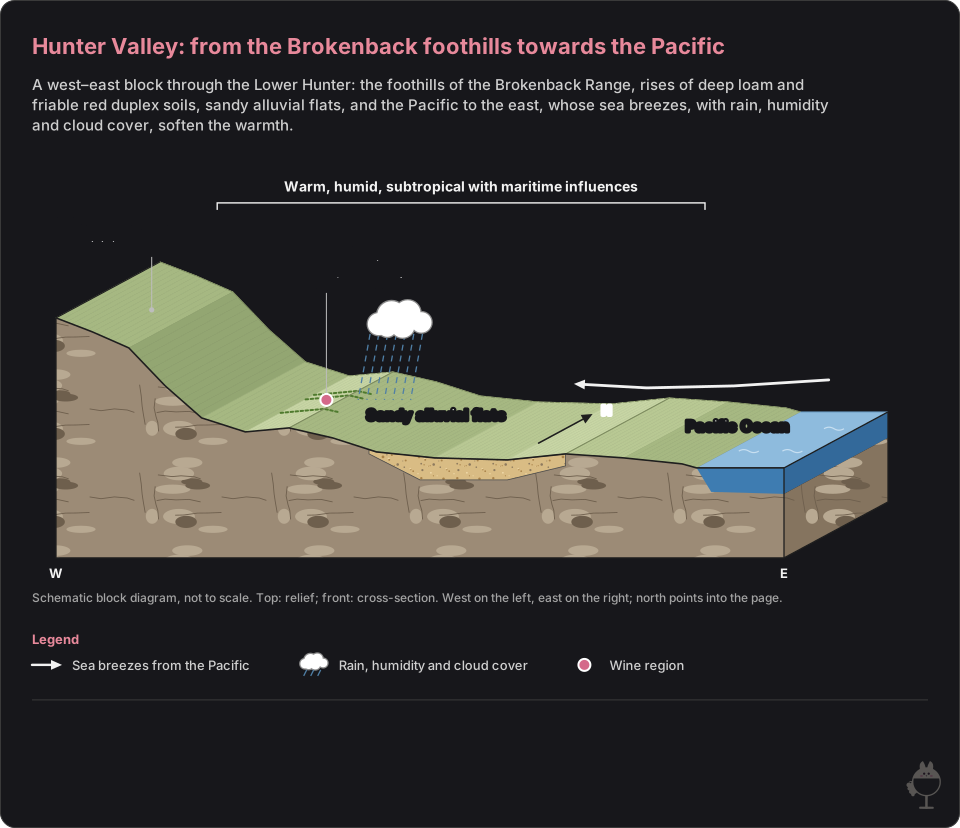
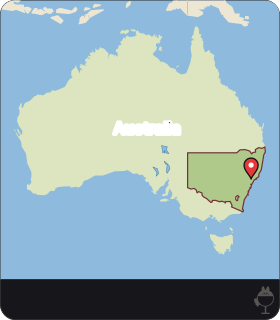
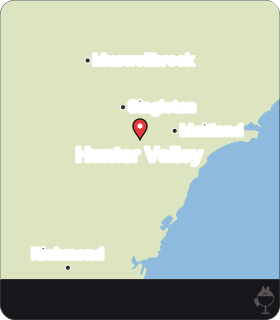
On Australian labels, Hunter Valley is a zone: it contains the Hunter region, registered as a Geographical Indication in 1997, and subregions such as Pokolbin, registered in 2010. The area north-west of Newcastle is warm and humid, with mean rainfall at Cessnock Airport of about 88 mm in January and 105 mm in February. Hunter Valley Semillon is picked early, fermented dry in stainless steel and bottled early: lemony with high acidity at first, gaining toast and honey after several years in bottle.
Read it alongside this wine
The published profile of this 2023 records a dry wine with high acidity, a light body and a youthful nose of medium(-) intensity in the citrus fruit, green fruit and mineral groups, with readiness ‘Can drink, with potential’. Read it as a snapshot of the young stage, not as proof of how the bottle will age. The wine’s name carries the zone name, Hunter Valley; the producer’s Lovedale vineyard is sandy loam over clay, but do not assume this wine comes from that one site.
Try it with the review
Wine Australia links early picking to low alcohol, while the review records medium alcohol: check the figure on the label and ask whether both statements use the same scale. Then check whether any descriptor in the review belongs to the toast-and-honey stage that Wine Australia ties to bottle age.
These are learning prompts, not guaranteed tasting results. Separate the published facts from your own observations.
Sources
- Wine Australia — Hunter Valley (regions and varieties)Checked 2026-10-06
- Wine Australia — Hunter Geographical Indication (Register of Protected GIs)Checked 2026-10-06
- Wine Australia — Pokolbin Geographical Indication (Register of Protected GIs)Checked 2026-10-06
- Wine Australia — Semillon (regions and varieties)Checked 2026-10-06
- Bureau of Meteorology — Climate statistics, Cessnock Airport AWS (061260)Checked 2026-10-06
- Mount Pleasant Wines — Lovedale vineyardChecked 2026-10-06