
Visual Observation: Rim Gradients and Transparency as Clues to Age and Extraction
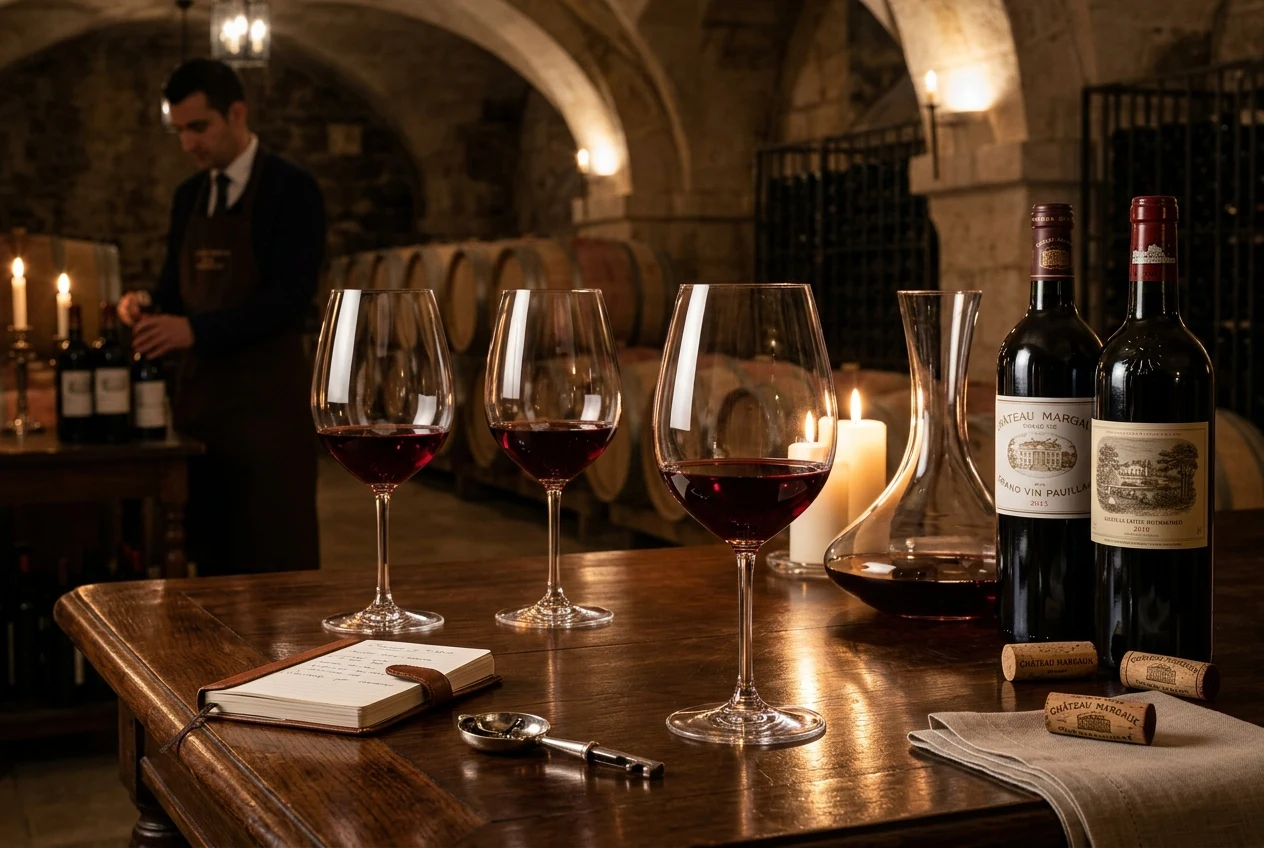
Tilt the glass at 45 degrees against a pure white background. Trace the transition from the dark core to the rim. Youthful reds exhibit vibrant ruby with violet reflections, while aging precipitates pigments, shifting hues toward garnet, mahogany, and brick.
Evaluating the rim width and tear viscosity provides immediate clues to phenolic ripeness and alcohol potential before smelling.
 AI
·
Sensory & Structural Analysis
AI
·
Sensory & Structural Analysis
※ All visual imagery, structural diagrams, and viticultural models are proprietary works created by Maison Apéro AI. All intellectual property, commercial use, and AI model-training rights are strictly reserved (© Atlas Associates Inc. / Maison Apéro).
AI
·
Palette Analysis
High anthocyanins with vibrant purple rim highlights
Benchmark luminous crimson core and optimal fruit harmony
Warm orange-brick rim transition and secondary elegance
Polymerized tannins with antique mahogany translucence
Synthesized via Maison Apéro AI Engine. Proprietary Viticultural Analytical Model.
Aromatic Complexity: From Primary Fruit to Tertiary Maturity
Inhale gently before agitation to capture delicate primary fruit and floral expressions. Swirling introduces oxygen, releasing secondary oak-derived vanilla, cedar, and spice, alongside fermentation aromatics.
With bottle age, great wines reveal intricate tertiary nuances: forest floor, dried leaves, truffle, and worn leather. Tracking these layers over time is the true pleasure of tasting.
Palate Architecture: Tannin Grain, Acid Spine, and Finish Proportions
Upon the palate, focus directly on tannin texture. Are they coarse and aggressive, fine and chalky, or seamless like polished velvet? Tannins define structural longevity, braced by natural acidity.
Balance between fruit density, phenolic grip, and alcohol warmth culminates in the persistence of the finish, revealing true pedigree.
Temperature and Glassware: Unlocking Full Harmonic Potential
Serving red wine at warm ambient temperatures (above 20°C) emphasizes harsh alcohol and dulls structural focus. Aim for 14–16°C for lighter reds and 16–18°C for full-bodied cuvées.
Choose generous Bordeaux bowls for structured blends or expansive Burgundy spheres to give complex aromas room to breathe.
AI
·
Tasting Style Matrix
The Quadrivium Tasting Matrix: 4 Foundational Wine Styles
Systematic cross-examination of color hues, aroma stratification, tactile textures, and service rules
| Wine Style | Visual Focus | Aromatic Axis (1st to 3rd) | Palate Texture & Architecture | Ideal Temp | Recommended Glass |
|---|---|---|---|---|---|
| Red Wine | Violet to Ruby, Garnet to Brick (Rim gradient and age cues) | Red/Black Berries → Oak (Vanilla/Cedar) → Bottle Age (Forest/Leather) | Tannin grain resolution (Chalky to Velveteen) with acid spine | 14–18°C | Bordeaux bowl / Burgundy balloon |
| White Wine | Green-tinged Lemon to Luminous Gold and Amber | Citrus/Orchard Fruit → Lees (Sur Lie) → Oak (Hazelnut/Toast) | Linear acid tension, creamy mid-palate, saline minerality | 8–13°C | Medium Tulip / Oaked White bowl |
| Sparkling Wine | Pinpoint effervescent perlage columns and persistent creamy mousse | Crisp Apple/Zest → Autolysis (Warm Brioche/Pastry/Biscuits) | Effervescent velvet mousse cushioning linear acid and dosage balance | 8–10°C | Curved Tulip / White Wine glass |
| Fortified Wine | Dense Ruby to Glowing Amber, Tawny, and Antique Mahogany | Biological (Flor/Almond) vs. Decades of Wood Age (Dried Fig/Walnut/Rancio) | High spirit (15–22% ABV) cushioned by unctuous fruit and vibrant acidity | 12–16°C | Copita glass / Port glass |
Synthesized via Maison Apéro AI Engine. Proprietary Viticultural Analytical Model.
Logical Red Wine Tasting Progression
AI
·
Viticultural & Process Architecture
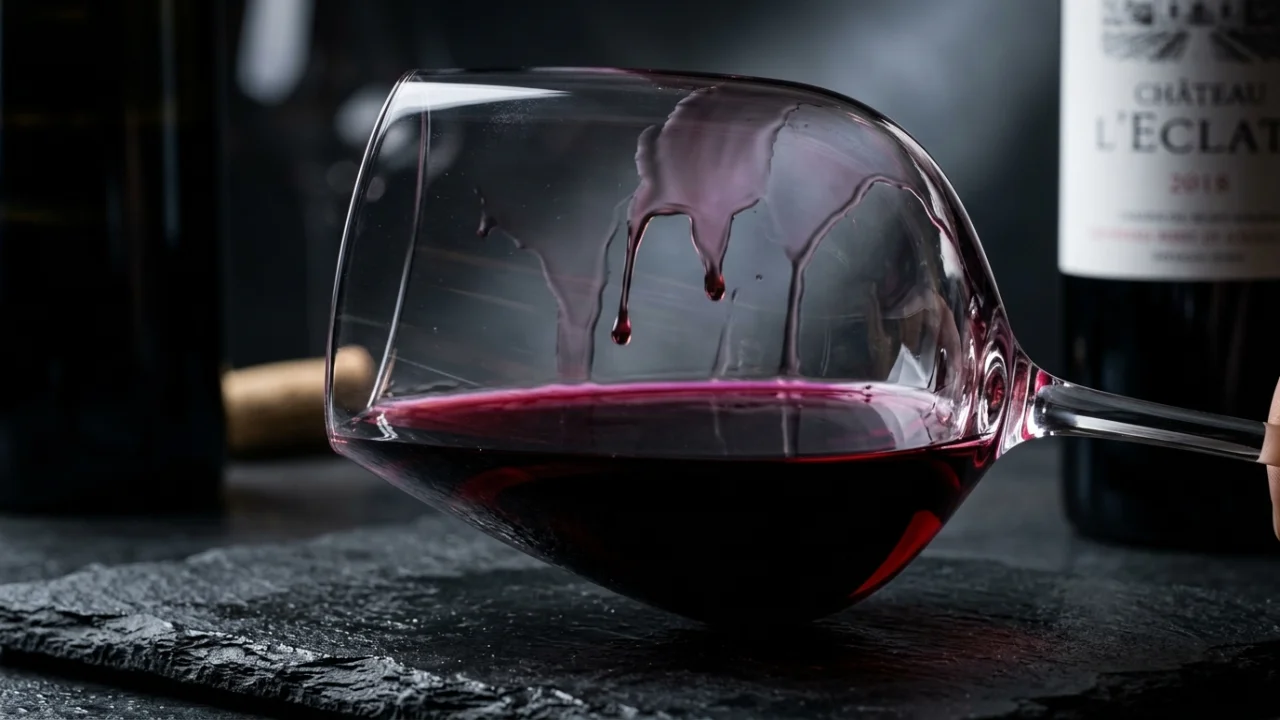
Visual Examination
- Inspect rim width and hue progression against white backdrop
- Assess core opacity and tear viscosity for extraction and body
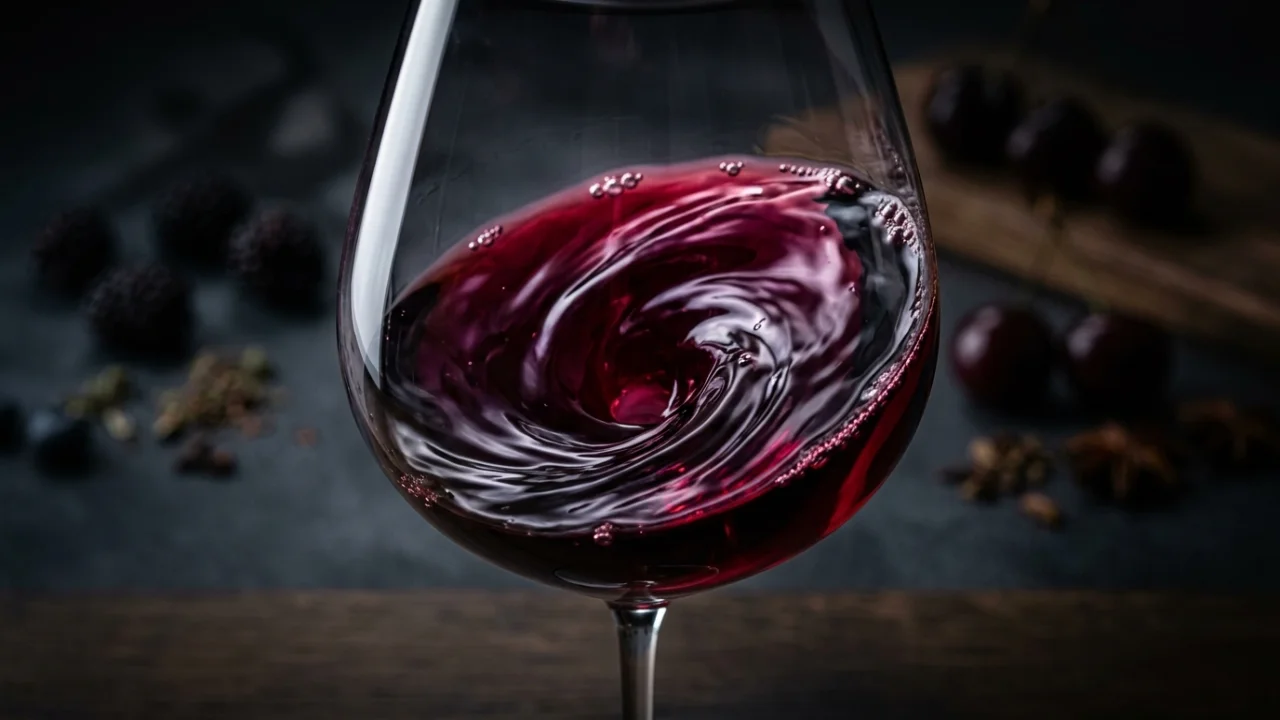
Olfactory Exploration
- Identify delicate primary fruit and floral aromas without swirling
- Swirl to release secondary oak and tertiary tertiary bottle age
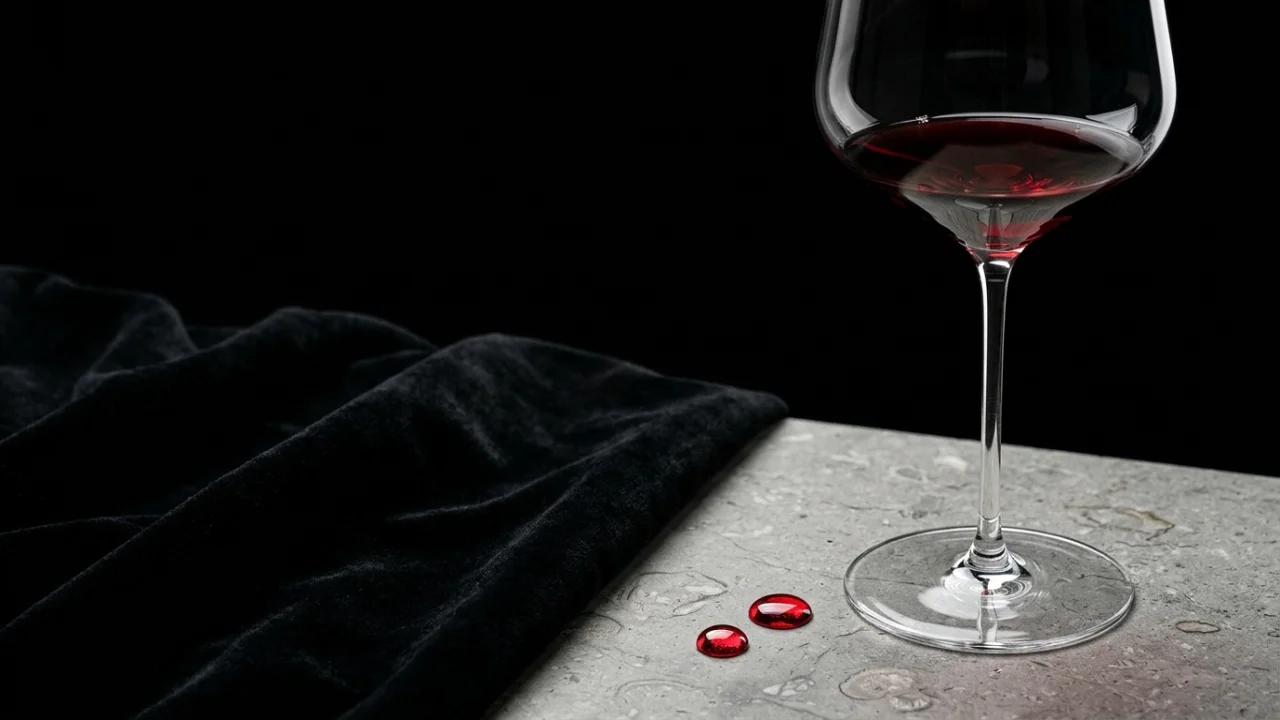
Structural Palate Evaluation
- Evaluate acid tension, fruit weight, and alcohol warmth
- Analyze tannin grain (chalky, silken, velvet) and aromatic length
※ All visual imagery, structural diagrams, and viticultural models are proprietary works created by Maison Apéro AI. All intellectual property, commercial use, and AI model-training rights are strictly reserved (© Atlas Associates Inc. / Maison Apéro).